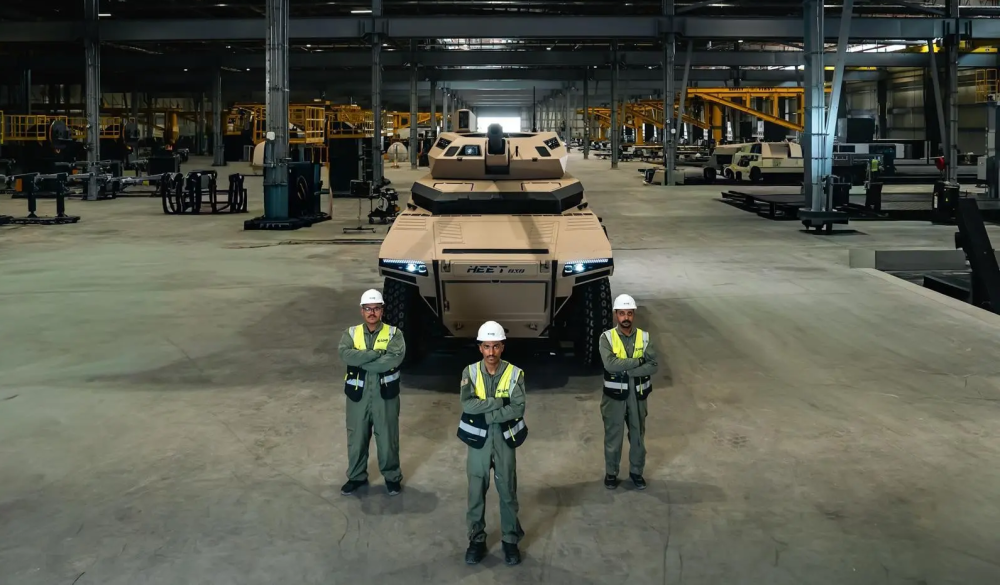
The unveiling of plans to produce HEET armored vehicles locally marks a significant milestone in Saudi Arabia's journey toward achieving one of its most important strategic objectives: building a comprehensive and sustainable national defense industry. This step is not merely a new addition to the military arsenal; it is a practical embodiment of the Kingdom's Vision 2030, which aims to localize more than 50% of military spending by 2030, transforming the Kingdom from one of the world's largest importers of military equipment into a major manufacturer and exporter of defense technology.
General context: From importing to local manufacturing
Historically, Saudi Arabia has relied heavily on importing defense systems from its international allies to meet its security needs. While this approach has provided access to advanced technologies, it has also presented strategic and economic challenges, most notably dependence on external supply chains and significant expenditure in hard currency. Recognizing these challenges, Vision 2030 launched an ambitious program to develop the military industries sector and established regulatory and operational entities to achieve this goal. These include the General Authority for Military Industries (GAMI), the sector's regulatory and legislative body, and the Saudi Arabian Military Industries Company (SAMI), the state-owned investment and manufacturing arm.
The importance of the HEET cart project and its expected impact
The project to produce armored vehicles, such as those being developed by Al-Hit Military Industries, serves as a practical example of this strategy. Manufacturing these vehicles within the Kingdom has multiple dimensions that extend beyond the purely military aspect
- Strengthening sovereignty and national security: Local manufacturing reduces dependence on foreign suppliers, giving the Kingdom greater strategic flexibility and fortifying its national security against any international political fluctuations that may affect military supply chains.
- Economic impact and job creation: The project contributes to injecting large investments into the local economy, establishing a sophisticated industrial infrastructure, and most importantly, creating thousands of quality jobs for Saudi citizens in the fields of engineering, technology and management, which supports economic diversification and reduces dependence on oil.
- Technology transfer and localization: It is not limited to assembling vehicles, but includes transferring technical knowledge and advanced technologies in the field of military manufacturing, and training national cadres, which establishes an industrial base capable of innovation and development in the future.
- Regional and international impact: By successfully building a strong defense industry, the Kingdom is consolidating its position as a leading regional power and becoming an influential player in the global defense market, with the potential to export its military products to allied countries in the future.
In conclusion, the HEET armored vehicle project is not just an equipment manufacturing deal, but an integral part of a broader vision to build a secure and prosperous future for the Kingdom, a future that depends on the strength of its people and its own industrial capabilities to ensure its stability and full sovereignty.