A strategic bet on knowledge to protect heritage
In a strategic move reflecting its deep commitment to cultural heritage, the Kingdom of Saudi Arabia has declared 2025 the “Year of Handicrafts,” culminating in the launch of the “Handicrafts Award” as part of the fifth edition of the “National Cultural Awards” initiative. This award not only honors creative artisans but also represents a qualitative shift towards recognizing the intellectual and academic dimensions that form the foundation for the sustainability of this rich heritage. It is a cultural investment that affirms that knowledge, through documentation, research, and study, is the true guarantor of protecting national identity and transmitting it faithfully and creatively to future generations.
Historical background: Crafts as part of the fabric of Saudi society
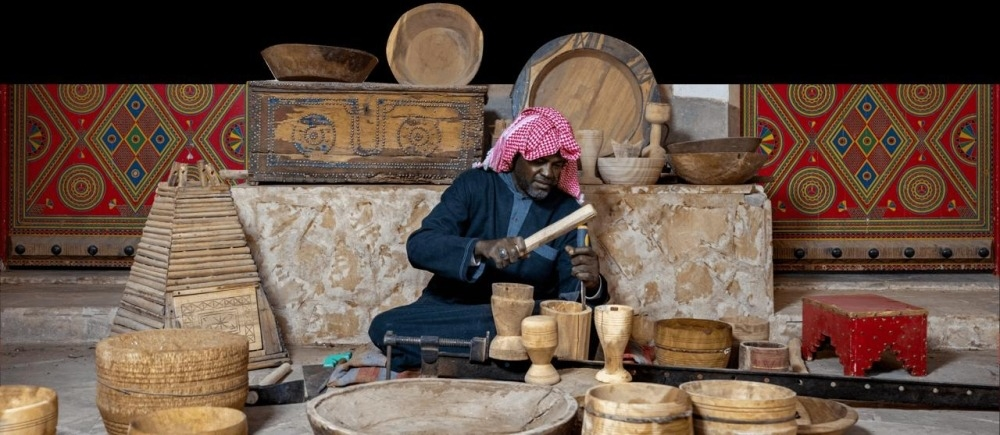
Handicrafts in Saudi Arabia have deep historical roots, having been an integral part of daily life and the local economy for centuries. From the Sadu weaving of the north, which UNESCO has inscribed on its list of intangible cultural heritage, to the vibrant Qatt Al-Asiri art of the south, from palm frond weaving in Al-Ahsa to the intricate carving of wooden doors in Najd, each craft has formed a living record reflecting the region's environment, the skills of its inhabitants, and their social values. With the accelerating pace of modernization, these crafts faced the challenge of extinction, necessitating organized efforts to preserve them, not merely as folkloric artifacts, but as a vital and evolving sector.
The importance of the award and its expected impact
The 2025 Crafts Award affirms that the future of these arts lies not in replicating the past, but in understanding it deeply. By focusing on honoring researchers, authors, and specialists in documenting crafts, the award highlights the importance of building a solid knowledge base. This base includes studying raw materials, documenting traditional techniques, analyzing symbols and motifs, and monitoring the social and economic transformations that have influenced each craft.
At the local level
Locally, the award is expected to encourage universities and research centers to adopt specialized studies in the field of crafts, providing reliable scientific references for designers, entrepreneurs, and artisans themselves. This, in turn, will open up avenues for innovation and the development of contemporary products inspired by heritage, catering to modern market tastes, supporting the creative economy, creating new job opportunities in local communities, and enhancing the status of artisans as guardians of cultural identity.
At the regional and international levels
Regionally and internationally, this initiative reinforces the Kingdom's position as a leading center for preserving cultural heritage. Supporting scientific research in this field aligns with global standards followed by organizations such as UNESCO and opens the door to international cooperation for exchanging expertise and best practices. Furthermore, documenting and disseminating knowledge about Saudi crafts contributes to presenting a rich and authentic image of the Kingdom's culture to the world, thus supporting the cultural tourism sector and attracting those interested in heritage and the arts from around the globe.
In line with Saudi Vision 2030
The award's objectives align directly with the goals of Saudi Vision 2030, which considers culture and heritage fundamental pillars of sustainable development and economic diversification. By transforming heritage from a mere traditional practice into a structured knowledge sector, the award translates this vision into tangible reality, emphasizing that investing in the minds of researchers is no less important than supporting the hands of artisans. The future is built on a solid foundation of knowledge, and handicrafts are an integral part of this foundation, connecting the past, present, and future.