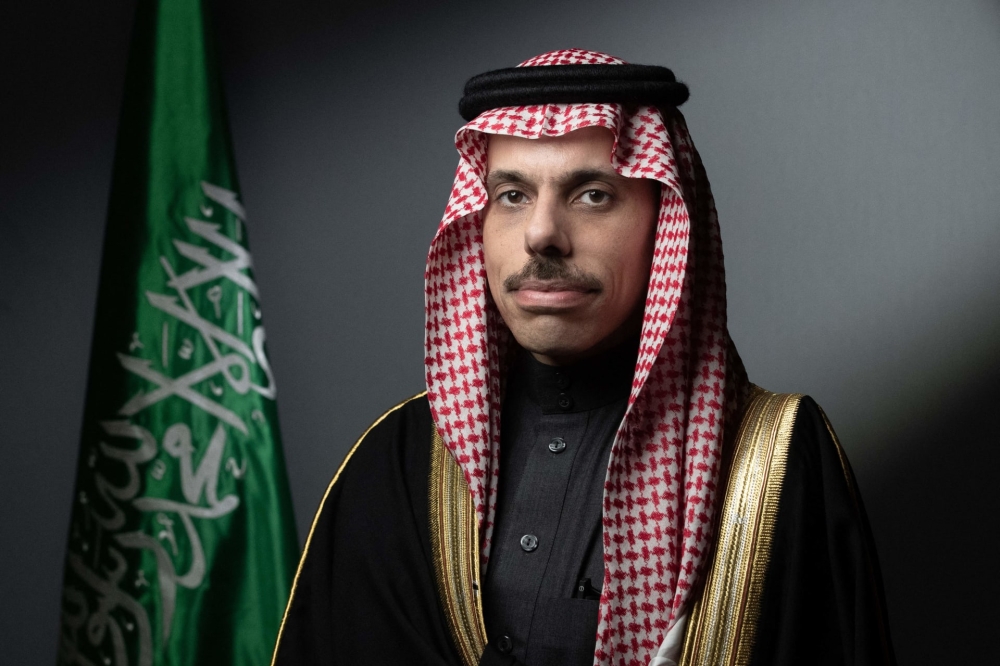
In a firm statement today, Thursday, His Highness Prince Faisal bin Farhan bin Abdullah, the Saudi Minister of Foreign Affairs, affirmed that the Kingdom of Saudi Arabia reserves its full right to respond to Iranian attacks . During telephone conversations with his Algerian counterpart and discussions with several other Saudi counterparts regarding current developments, His Highness explained that Tehran's continued targeting of energy supplies not only poses a threat to the Kingdom but also has a negative impact on the entire global economy.
The roots of tension and the pursuit of regional hegemony
To understand the current situation, it is necessary to consider the broader context and historical background of the events. The past decades have witnessed persistent tensions stemming from Tehran's expansionist policies in the Middle East. Historically, Iranian strategy has relied on interfering in the internal affairs of neighboring countries by funding and arming local proxies. This approach has led to an unprecedented escalation, particularly with the repeated targeting of civilian and economic infrastructure in the Gulf states, recalling previous attacks that struck vital facilities and directly impacted global oil markets and international shipping.
The repercussions of Iranian attacks on international security
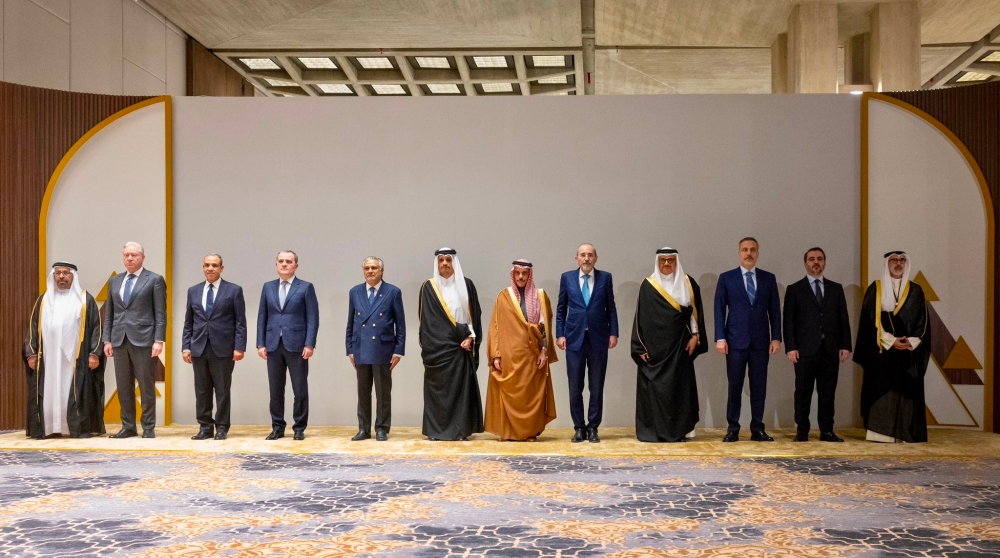
The significance of this event and its anticipated impact are evident on several levels. Domestically, the Kingdom reaffirms its unwavering commitment to protecting its territory and citizens from any external threat. Regionally, these attacks represent a clear violation of the principles of good neighborliness, as the Foreign Minister indicated that the Iranians have failed to heed the messages of de-escalation and have persisted in their transgressions against their neighbors. Internationally, targeting a capital city the size of Riyadh, especially during high-level diplomatic meetings that included representatives from Gulf and Islamic countries, constitutes a blatant challenge to international laws and norms, and sends a negative message confirming Tehran's continued escalation, which threatens international peace and security.
Supporting militias and shirking responsibility
At a press conference held on the sidelines of the ministerial meeting in Riyadh, Prince Faisal bin Farhan stressed the need for Tehran to immediately cease its attacks and abandon its hostile policies. He added that Iranian behavior has clearly included supporting militias and extremist groups, while Tehran continues to deny responsibility for attacks targeting civilians. His Highness emphasized that the Iranian regime has a history of instigating crises and committing crimes, then denying them, and called on them to reconsider their miscalculations that assume the Gulf states are incapable of a decisive response.
A firm stance to protect the stability of the region
The Foreign Minister explained that Tehran, which claims to be a champion of Islam, is in reality attacking Muslim countries, pointing to its blatant interference in Saudi Arabia, Bahrain, Kuwait, Qatar, Oman, the UAE, Jordan, Azerbaijan, Turkey, and Lebanon. He emphasized that Tehran hides behind empty slogans and uses its resources solely to serve its own narrow interests. He noted that this war will end one day, but any future trust with Iran has been completely shattered.
His Highness concluded his remarks with a strong and direct message, emphasizing that the attack on Riyadh during the diplomatic gathering was not a coincidence, but rather a message confirming their continued hostile approach. The Kingdom responded firmly, stating that it fears nothing and reserves the right to respond militarily if necessary to protect its sovereignty and national security, to ensure regional stability, and to deter any attempts to undermine its security.