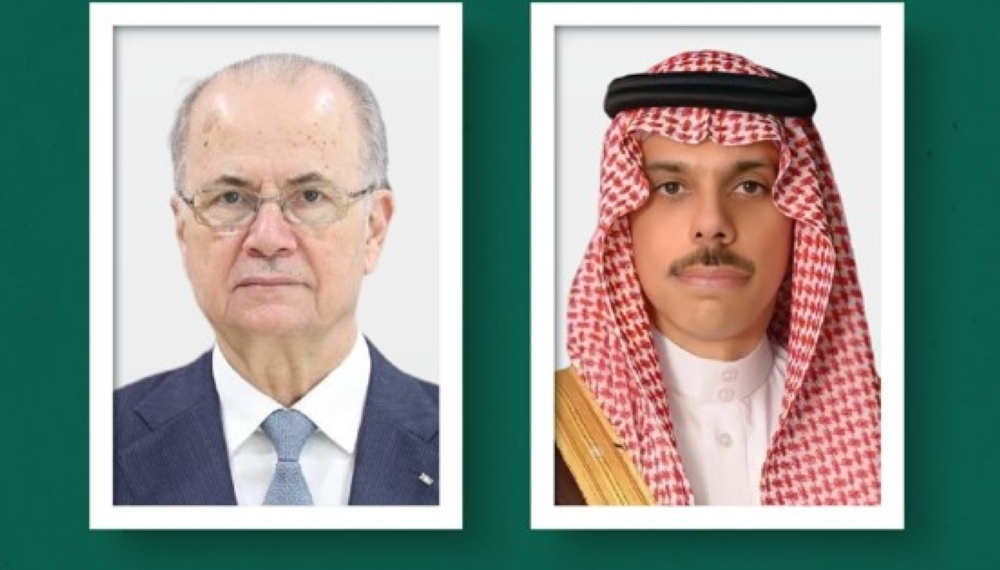
His Royal Highness Prince Faisal bin Farhan bin Abdullah, the Saudi Minister of Foreign Affairs, received a telephone call today from His Excellency Dr. Mohammad Mustafa, the Prime Minister and Minister of Foreign Affairs of Palestine. The call addressed in detail the latest developments in the region and the diplomatic efforts being made in light of the current tensions. These discussions come within the framework of the ongoing and close coordination between the Kingdom of Saudi Arabia and the Palestinian leadership to unify visions and positions on critical issues affecting Arab national security, and to ensure the protection of innocent civilians and the provision of safe passage for urgent humanitarian aid.
In a related development, His Royal Highness the Saudi Foreign Minister received another telephone call from His Excellency Dato' Erywan Pehin Yusof, the Second Foreign Minister of Brunei Darussalam. During this call, they discussed the military and political escalation in the Middle East, as well as a number of other topics and issues of mutual interest to the two brotherly countries. This reflects the Kingdom's ongoing commitment to effective communication with all regional and international parties to ensure the stability of the region and prevent further conflicts.
The historical context and the Saudi role in supporting the Palestinian cause
Historically, the Kingdom of Saudi Arabia has played a pivotal and leading role in supporting the Palestinian cause on all political, economic, and humanitarian levels. From the era of its founder, King Abdulaziz Al Saud, to the present era under the leadership of the Custodian of the Two Holy Mosques, King Salman bin Abdulaziz, and his Crown Prince, the Kingdom has remained the foremost defender of the legitimate rights of the Palestinian people. This has been demonstrated in numerous historic initiatives, most notably the Arab Peace Initiative launched in 2002, which affirms the right of Palestinians to establish their independent state with East Jerusalem as its capital. This unwavering historical support underscores the importance of continuous communication between the two leaderships to coordinate positions in international forums and to work together to counter any violations targeting Islamic holy sites and the occupied Palestinian territories.
The importance of examining the latest developments in the region and their regional and international impact
These intensive diplomatic contacts are of paramount importance at present, as discussions on the latest developments in the region are taking place amidst exceptional circumstances and an unprecedented escalation that threatens international peace and security. At the local and regional levels, these talks contribute to unifying Arab and Islamic ranks and developing joint strategies to confront the growing security and political challenges. They also aim primarily to alleviate the severe humanitarian suffering endured by the Palestinian people by mobilizing international support and facilitating the delivery of relief and medical aid.
On the international stage, Saudi Arabia’s diplomatic efforts, including engagement with Islamic and friendly nations such as Brunei, reflect the Kingdom’s wise strategy of building broad international alliances to push for de-escalation and a reduction in tensions. The stability of the Middle East is not merely a regional matter, but a cornerstone of global stability, given the region’s geopolitical and economic importance. Therefore, the efforts led by the Saudi Foreign Minister send a clear message to the international community about the necessity of upholding its legal and moral responsibilities to end conflicts and establish a just and comprehensive peace, thus ensuring a secure and prosperous future for all the peoples of the region, free from the language of war and destruction.