Official announcement from the Ministry of Education
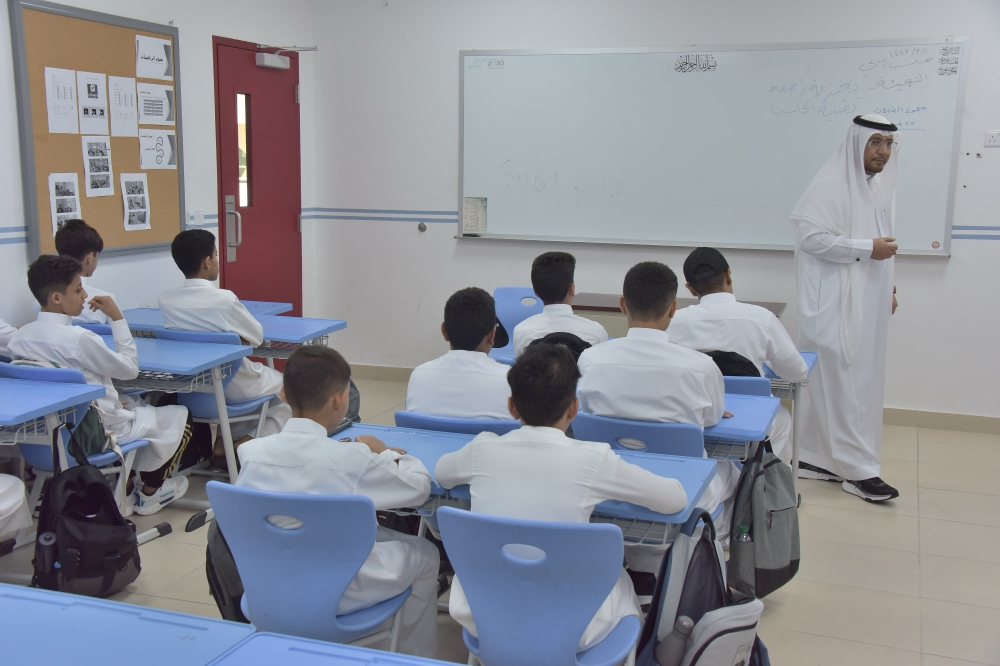
The Saudi Ministry of Education has officially announced the approved schedules for the first-term exams of the 1447 AH academic year. This announcement clarifies all details regarding exam dates for all educational levels, from early childhood to secondary school, which are scheduled to take place during the holy month of Ramadan. The Ministry emphasized that the educational process will proceed according to specific timelines to ensure the achievement of educational objectives.
General context of the Saudi academic calendar
This decision comes as part of the ongoing restructuring of the academic calendar in the Kingdom, which has adopted a three-semester system since its implementation in recent years. This system aims to enhance students' academic achievement and reduce learning gaps by distributing the curriculum throughout the year and intensifying continuous assessment. This system requires meticulous scheduling of exams and official holidays, such as the Founding Day holiday immediately preceding the exam period and the Eid al-Fitr holiday following it, to ensure an effective balance between educational activities and national and religious occasions.
The importance and impact of the decision on students and families
The timing of exams during Ramadan is of particular importance, as the Ministry aims, through these schedules, to balance academic assessment requirements with the specific circumstances of fasting students. This decision directly impacts millions of students and their parents across the Kingdom, requiring them to manage their time effectively between studying, worship, and family obligations. The decision also reflects the education system's commitment to ensuring the continuity of academic achievement without interruption, while accommodating the necessary flexibility required during the holy month. This aligns with the goals of the Kingdom's Vision 2030 to build a vibrant society and enhance the quality of life.
Details of the timelines for the different phases
According to the approved schedules, the actual examinations for all grade levels will begin on Monday, the 6th of Ramadan, 1447 AH, immediately following the end of the Foundation Day holiday. The schedules have been designed to include a variety of assessments combining written examinations and continuous formative assessments.
- Early childhood and primary stage: The tests begin with mathematics and continue until Thursday, the 16th of Ramadan, concluding with Arabic language, with a focus on assessments that measure basic skills.
- Intermediate stage: The tests for this stage also begin with mathematics and include various subjects such as digital skills, and end with science on the 16th of Ramadan for all grades.
- Secondary school (with its various tracks): Detailed schedules have been set for each track. In the first year of secondary school (common track), exams begin with mathematics and include specialized subjects such as physics and environmental science. The second and third years of secondary school begin with different subjects such as English and mathematics, and cover advanced science subjects such as biology, chemistry, and earth and space sciences, with all exams concluding on the 16th of Ramadan.
Balanced assessment methodology
The ministry affirmed that the adopted methodology focuses on balancing written exams for core subjects with continuous formative assessments in other subjects such as life skills and physical education. This strategy aims to avoid overburdening students during fasting days and to ensure a comprehensive and objective assessment of their academic and skill levels, thus promoting genuine learning outcomes rather than mere rote memorization.