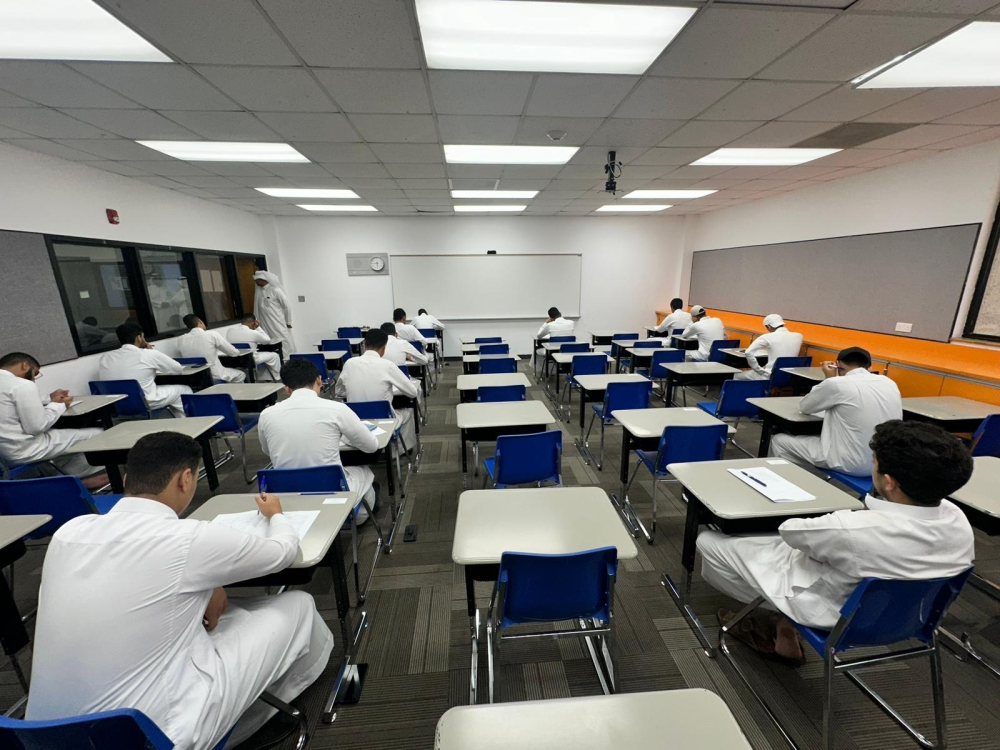
The Saudi Ministry of Education has issued an official decision exempting seven specific categories of students from taking the standardized tests scheduled for the first semester. This decision is part of a package of administrative and educational regulations through which the Ministry aims to achieve the highest standards of fairness in assessment processes, taking into account individual differences and diverse educational environments, thus ensuring the accuracy and validity of the results.
Decision context and development of the evaluation system
This measure comes within the context of the significant transformations taking place in the Kingdom's education sector. Centralized tests are one of the standardized tools introduced by the Ministry to accurately and impartially measure learning outcomes, moving beyond purely internal school assessments. Historically, these tests have aimed to bridge the gap between students' actual performance and recorded scores, providing reliable data for decision-makers. However, recognizing the need for flexibility in educational systems, the Ministry determined that standardizing tests for all groups could compromise the principle of fairness, particularly for groups requiring special attention or those that have demonstrated institutional excellence worthy of trust.
Details of categories exempt from tests
The ministry clarified in its circular that the exceptions included various categories to ensure the decision's comprehensiveness, namely:
- Distinguished schools: These are schools that have achieved excellence in educational achievement. This exception is a kind of incentive and reward for schools that maintain the quality of their outputs, which promotes positive competition among educational institutions.
- Continuing Education Schools: Due to the nature of the students in them and the difference in the time and academic programs allocated to them.
- Special education students: This includes students in public schools who take tests with adapted questions that differ from their peers, as well as students in special education institutes and centers, taking into account their individual characteristics and needs.
- Scholarship programs and students outside the Kingdom: such as students of the “Future Falcons” program, and students who take their exams remotely due to compelling regulatory circumstances, given the difference in the educational environment and supervision mechanisms.
- Private schools with alternative curricula: provided they obtain official approval and implement approved non-enrichment curricula.
Technical mechanisms and the role of the “Monitoring” program
Despite these exceptions, the Ministry affirmed its commitment to maintaining technical quality control systems, with the "Monitoring" initiative serving as a key analytical tool. The Ministry indicated that data processing will be conducted through the "Noor" system, by extracting Excel files containing student data and grades for uploading to the consolidated files. It emphasized the necessity of retaining all examination documents (question papers and answer keys) as official records, reflecting the Ministry's commitment to governing educational processes even under these exceptional circumstances.
Expected impact and importance of the decision
This decision is expected to have multiple positive effects at both the local and national levels. Psychologically and socially, it will alleviate pressure on special education students and their families, thus facilitating their smoother integration into the educational system. In terms of institutional efficiency, exempting high-achieving schools will create a strong incentive for other schools to improve their performance in order to achieve this "relative autonomy" in assessment.
In conclusion, this approach contributes to achieving the objectives of the Human Capability Development Program (one of the Kingdom’s Vision 2030 programs), by building a flexible educational system that is efficient and fair, and focuses on real learning outcomes instead of standardized formal procedures that may not suit everyone.