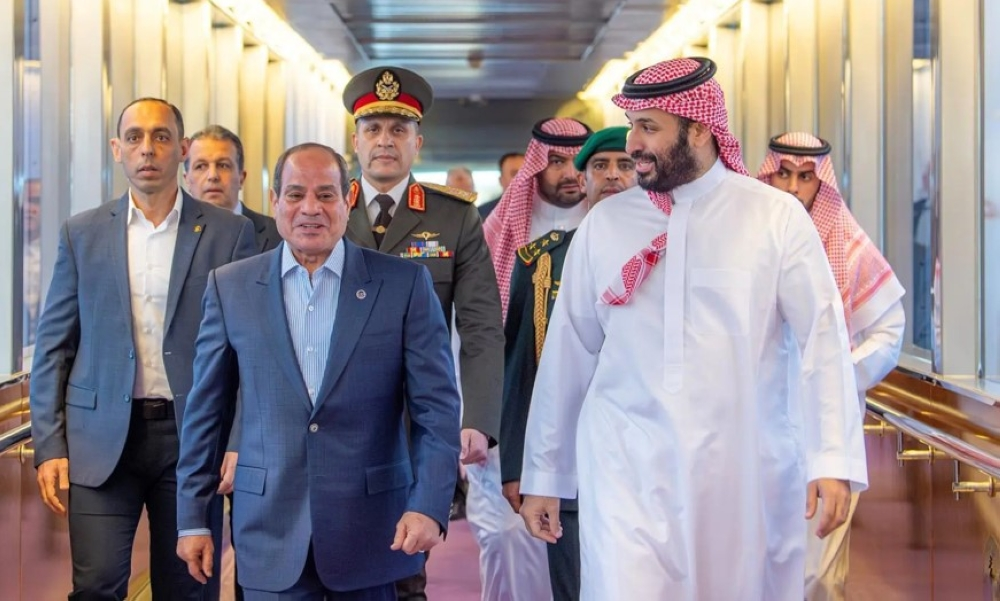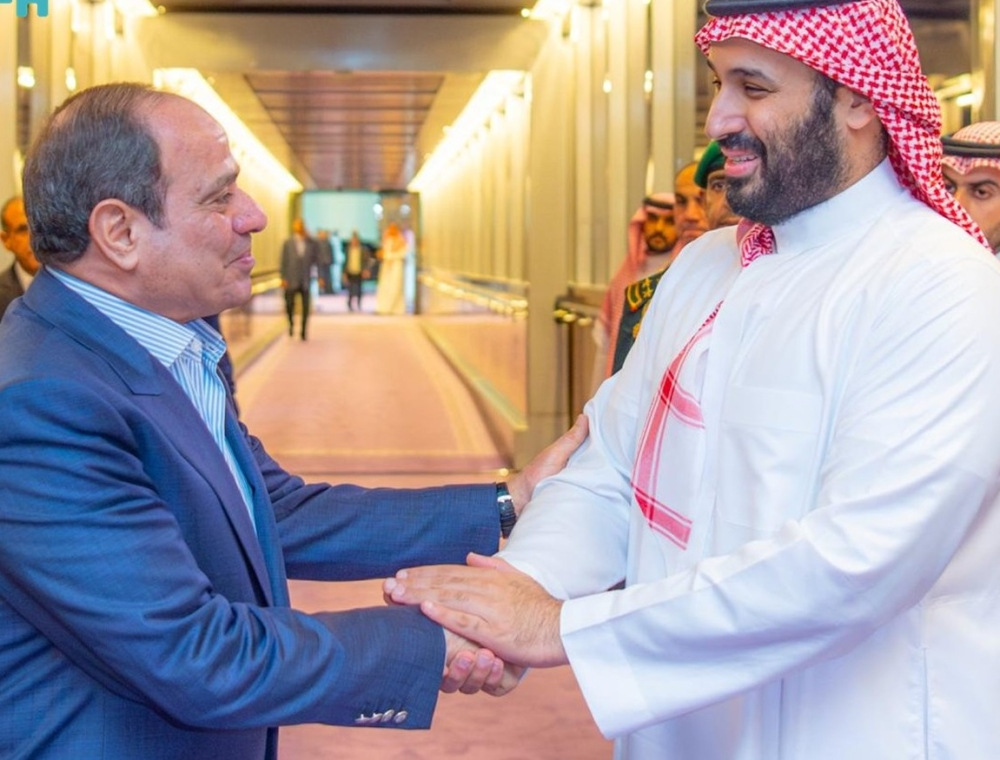
His Excellency President Abdel Fattah El-Sisi, President of the Arab Republic of Egypt, left Jeddah this evening, after a working visit to the Kingdom of Saudi Arabia, where His Royal Highness Prince Mohammed bin Salman bin Abdulaziz Al Saud, Crown Prince and Prime Minister, was at the forefront of those who bid him farewell at King Abdulaziz International Airport.
This visit comes within the framework of ongoing coordination and consultation between the leaderships of the two countries, and embodies the depth of the historical and strategic relations that bind Riyadh and Cairo. Saudi-Egyptian relations are a cornerstone of the joint Arab action system, with roots extending back decades of political, economic, and cultural cooperation, and have consistently served as a bulwark of stability for the Arab region in the face of various challenges.
During the visit, the Crown Prince and the Egyptian President reviewed ways to develop bilateral relations across various fields, in addition to discussing developments on the regional and international scenes. This coordination is of paramount importance given the delicate circumstances the region is experiencing, including the situations in Sudan, the Palestinian issue, and the crises in Libya and Yemen, as both countries seek to unify their visions and positions in a way that serves the interests of the Arab nation and enhances its security and stability.
On the economic front, the partnership between the Kingdom and Egypt represents a model of fruitful cooperation. The Kingdom is one of the largest investors in Egypt, and its investments play a vital role in supporting the Egyptian economy and contributing to job creation. This cooperation also aligns with the goals of the Kingdom's Vision 2030 and Egypt's Sustainable Development Strategy, opening up broader horizons for joint growth in the energy, technology, tourism, and infrastructure sectors.
President Sisi’s departure and the Crown Prince’s warm farewell to him not only reflect diplomatic protocol, but also send a clear message about the strength of the alliance between the two major regional powers, and confirm the continuation of joint work to confront future challenges and achieve the aspirations of their people for development and prosperity.