The building materials markets in the Kingdom of Saudi Arabia witnessed mixed movements in price indicators during the past month of November, as concrete prices recorded a significant decrease on a monthly basis, while cement prices varied between increases and decreases, according to the latest data issued by the General Authority for Statistics within the bulletin of average prices of goods and services.
Details of cement and concrete price movements
Official data revealed a clear disparity in cement prices, with the price of locally produced white cement decreasing slightly by 0.1% to settle at SAR 37.9. In contrast, locally produced black cement saw a 0.5% increase compared to the previous month, reaching SAR 15.5 per 50 kg bag.
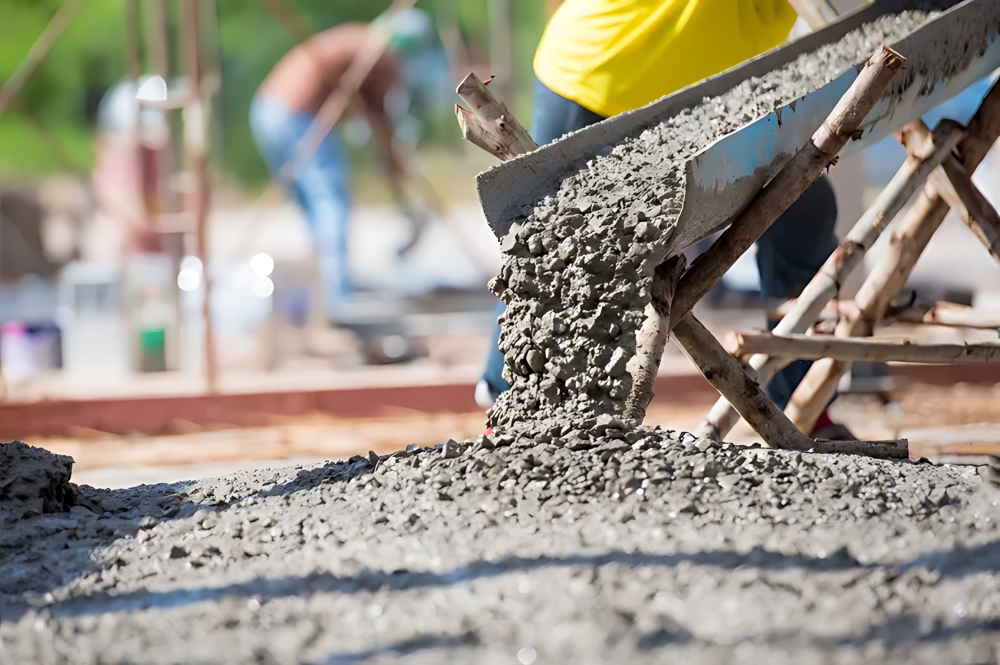
Regarding ready-mix concrete, the decline affected all types. The price of "350 kg-strength" concrete decreased by 0.7% to reach SAR 224.2 per cubic meter, and the "250 kg-strength" type also fell by the same percentage (0.7%), registering SAR 204.6. The decline also extended to regular concrete, with "350 kg-strength" reaching SAR 214.4, a decrease of 0.3%, and "250 kg-strength" reaching SAR 196.3 per cubic meter, a similar decrease of 0.3%.
Prices of other building materials
Price changes weren't limited to cement and concrete; they extended to other essential building materials. The price of locally produced gypsum decreased by 0.3% to SAR 15.6, and the prices of black concrete blocks in various sizes (15 cm and 20 cm) fell by 0.2%. Conversely, the price of fine white sand rose by 1.1% to SAR 77.3, and the price of mixed sand and gravel increased slightly by 0.1%.
Price impacts on the construction sector
This data is of paramount importance in light of the major urban development boom that the Kingdom of Saudi Arabia is witnessing in line with Vision 2030. The construction sector is one of the main pillars in diversifying the non-oil economy, as mega projects and housing initiatives depend directly on the stability of supply chains and raw material prices.
Experts indicate that the decline in concrete prices, a key component in the structural cost of buildings, could contribute to lower construction costs for developers and homeowners, thus boosting activity in the real estate market. Price fluctuations also reflect the dynamics of supply and demand in the local market, as well as the impact of transportation costs and production inputs.
The importance of regularly monitoring indicators
The periodic reports issued by the General Authority for Statistics are a vital resource for investors and contractors to accurately estimate project costs. Monitoring these monthly changes helps in making informed investment decisions and anticipating future market trends, especially given the ongoing expansion of infrastructure and major housing projects launched by the Ministry of Municipal and Rural Affairs and Housing.