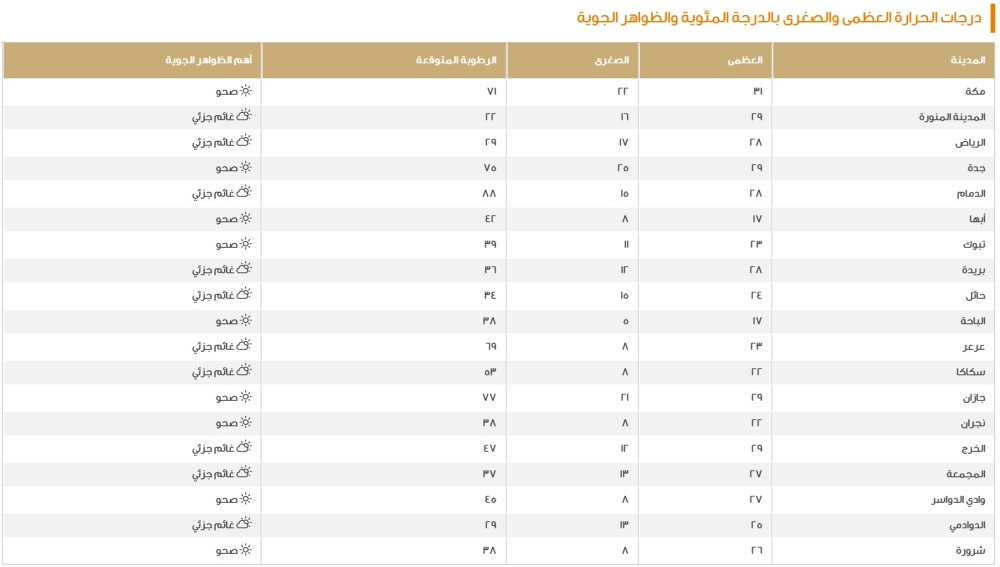
The National Center for Meteorology in Saudi Arabia issued its daily weather report, revealing the expected maximum temperatures for Tuesday across the Kingdom's cities and regions. Dammam, the capital of the Eastern Province, recorded a temperature of 28 degrees Celsius, a moderate temperature reflecting the autumnal weather the region is experiencing. The capital, Riyadh, recorded the same temperature, while Mecca recorded the highest temperature among the major cities at 31 degrees Celsius.
This variation in temperatures reflects the diverse geographical and climatic nature of the Kingdom, which spans a vast area encompassing varied terrain. While coastal areas such as Jeddah (29°C) and Dammam (28°C) enjoy more humid conditions, the southwestern highlands experience milder, cooler weather, with Abha and Al-Baha recording only 17°C, making them popular destinations for those seeking pleasant weather.
Statement of maximum temperatures in the cities of the Kingdom:
- Mecca: 31 degrees Celsius
- Medina: 29 degrees Celsius
- Jeddah: 29 degrees Celsius
- Al-Kharj: 29 degrees Celsius
- Riyadh: 28 degrees Celsius
- Dammam: 28 degrees Celsius
- Buraidah: 28 degrees Celsius
- Wadi Al-Dawasir: 27 degrees Celsius
- Combined: 27 degrees Celsius
- Sharurah: 26 degrees Celsius
- Dawadmi: 25 degrees Celsius
- Hail: 24 degrees Celsius
- Tabuk: 23 degrees Celsius
- Arar: 23 degrees Celsius
- Sakaka: 22 degrees Celsius
- Najran: 22 degrees Celsius
- Jazan: 29 degrees Celsius
- Abha: 17 degrees Celsius
- Courtyard: 17 degrees Celsius
Rain and fog are expected
The National Center for Meteorology's report not only included temperature readings but also forecasts for associated weather phenomena. The report indicated that there remains a chance of scattered rainfall in parts of Jazan, Asir, Al-Baha, and Makkah regions, as well as the northern parts of the Kingdom. This rainfall is considered vital for these areas, particularly for the agricultural regions in the southwest.
In the Eastern Province, the center warned of the possibility of fog formation during the night and early morning hours, which could lead to reduced horizontal visibility on roads. This warning directly impacts transportation and traffic, requiring drivers to exercise caution to ensure their safety. The National Center of Meteorology plays a pivotal role in providing accurate and up-to-date information that contributes to the daily planning of citizens and residents and supports vital sectors such as transportation, agriculture, and aviation.