The National Center for Meteorology issued its daily weather report for Saudi Arabia, revealing a significant variation in maximum temperatures recorded across different cities and regions. While the coastal city of Dammam recorded 27 degrees Celsius, other cities reflected a broader picture of the climatic diversity that characterizes the Kingdom's vast geography, with temperatures ranging from 32 degrees in Mecca to only 15 degrees in Tarif in the north.
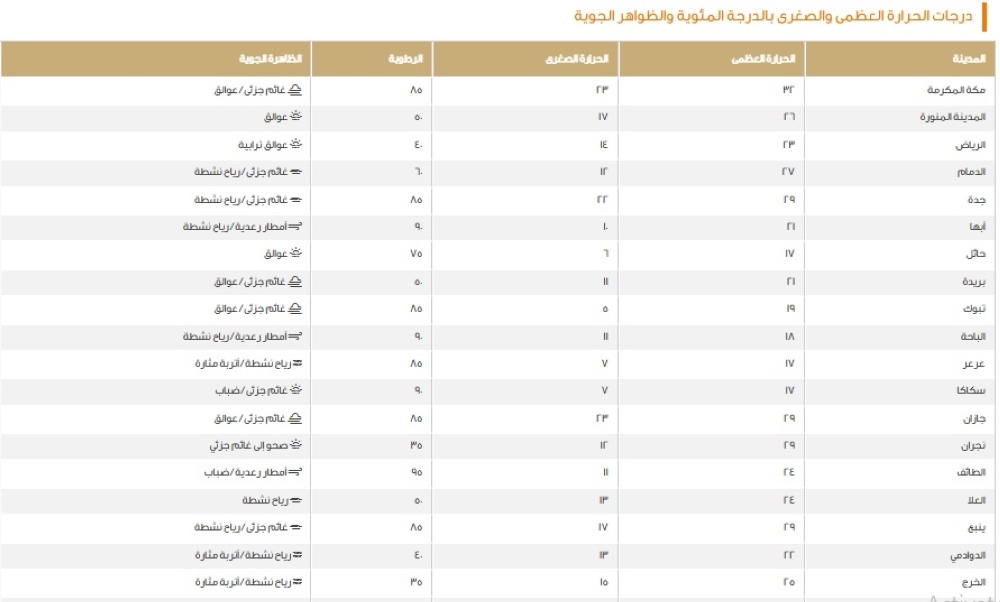
Temperature map of cities in the Kingdom:
According to the center's statement, the maximum temperatures were as follows:
- Eastern Province: Dammam 27°, Al-Ahsa 26°, Hafr Al-Batin 21°.
- Western Region: Makkah 32°, Jeddah 29°, Madinah 26°, Taif 24°, Yanbu 29°.
- Central Region: Riyadh 23°, Buraidah 21°, Al-Kharj 25°, Al-Majma’ah 20°.
- Northern region: Hail 17°, Tabuk 19°, Arar 17°, Sakaka 17°, Tarif 15°.
- Southern region: Abha 21°, Al-Baha 18°, Jazan 29°, Najran 29°, Bisha 28°, Sharurah 31°.
The climatic and geographical context of temperature variations
This significant temperature variation is due to Saudi Arabia's unique geographical diversity. Coastal areas like Dammam and Jeddah are influenced by the waters of the Arabian Gulf and the Red Sea, resulting in relatively moderate temperatures and high humidity. In contrast, the interior and central regions, such as Riyadh, have a continental desert climate with a large difference between daytime and nighttime temperatures.
The southwestern highlands, home to cities like Abha and Al-Baha, enjoy a more temperate and cooler climate thanks to their higher altitude, making them a major tourist destination during the summer. In stark contrast, the northern regions, such as Tarif and Arar, experience the lowest temperatures in the Kingdom during winter due to their proximity to cold air masses originating from the north of the continent.
The importance and impact of weather reports
Reports issued by the National Center of Meteorology are of paramount importance on various levels. Locally, this data helps residents plan their daily activities and choose appropriate clothing. It is also essential for vital sectors such as agriculture, which relies on temperature and rainfall patterns. Economically, weather conditions directly impact the tourism and energy sectors, as electricity consumption increases for cooling in hot regions and heating in cold ones. This information is also crucial for ensuring the safety of air and sea navigation and contributes to issuing early warnings for extreme weather events.