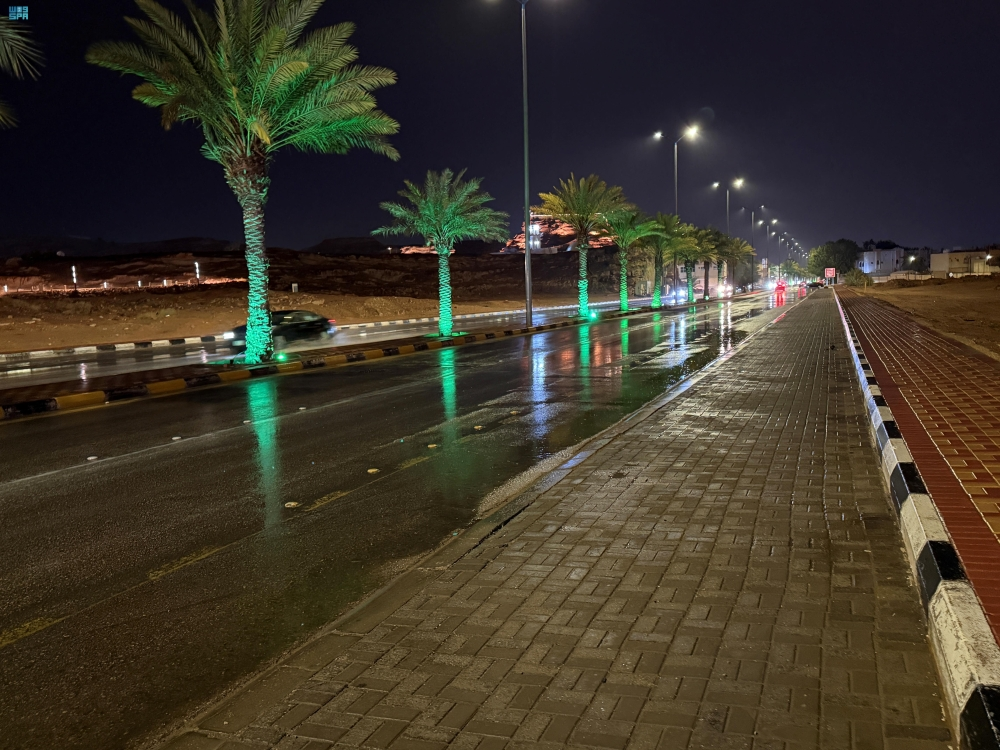
Weather developments in Saudi Arabia and the impact of the rainy weather system
Northern regions of the Kingdom witnessed noticeable changes in the current Saudi weather pattern, with moderate to light rain falling last night on Al-Qurayyat Governorate in the Al-Jawf region. This rainfall extended to vital centers such as the Al-Haditha border crossing and the Al-Uqaylah center. The sky remains overcast, indicating a chance of continued rainfall in the coming hours. Residents are delighted by this refreshing winter weather, which alleviates the drought and moderates the temperatures.
The geographical and climatic nature of Al-Qurayyat Governorate
Al Qurayyat Governorate is located in the far north of Saudi Arabia, distinguished by its strategic location near the Jordanian border. Climatically, the region is directly affected by weather systems originating from the Mediterranean basin and the Levant, making it one of the first Saudi governorates to receive rainfall during the rainy season. Historically, these rainfalls have been a fundamental part of the region's climatic cycle, upon which the natural vegetation heavily depends. These conditions contribute to transforming vast areas of desert land into temporary green oases, reflecting the environmental and climatic diversity enjoyed throughout the Kingdom.
Environmental and agricultural importance of rainfall in the Al-Jawf region
The importance of these rainfalls extends beyond simply moderating the weather; they have widespread positive impacts at the local and regional levels. The Al-Jawf region, home to the Al-Qurayyat governorate, is a vital food basket for the Kingdom, renowned for its millions of olive and date palm trees and diverse agricultural crops. Rainwater plays a crucial role in irrigating these vast farms, as well as replenishing the strategic groundwater reserves. Furthermore, the revitalization of vegetation supports grazing activities and encourages domestic ecotourism, as locals and visitors alike venture out to enjoy the rainy weather and the stunning natural scenery that follows the downpour.
Early warning system and safety guidelines
Amidst the ongoing weather fluctuations, the National Center of Meteorology is closely monitoring the weather and issuing necessary alerts to ensure the safety of citizens and residents. The early warning system, which uses a color-coded system to classify the intensity of rainfall, has been activated. The "red" level is the most severe, indicating heavy rain that may be accompanied by flash floods and strong downdrafts. Relevant authorities, such as the General Directorate of Civil Defense, urge everyone to exercise caution, stay away from valleys and water accumulations, and adhere to official instructions to ensure the safe passage of this weather event.
Three levels, the most severe being "red"... Early warning stages for heavy rain #Today
For details | https://t.co/577gy75b31 pic.twitter.com/TvdGJwVlKf— Al-Youm Newspaper (@alyaum) March 14, 2026