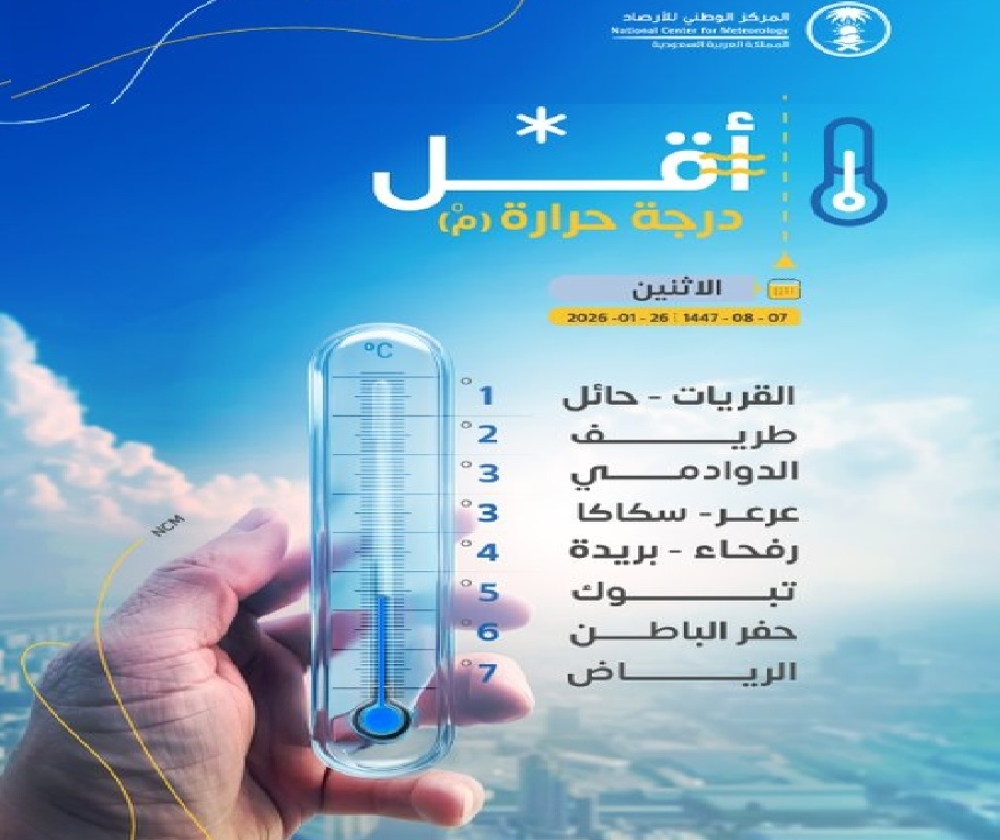
Record low temperatures in northern Saudi Arabia
The National Center for Meteorology in Saudi Arabia announced a significant drop in temperatures across several northern cities and provinces on Monday, with Al-Qurayyat and Hail recording the coldest temperatures in the Kingdom at just 1 degree Celsius. This drop is part of a cold wave affecting the region, reflecting the Kingdom's changing climate during winter.
Temperature details in different cities
According to the report issued by the center, minimum temperatures were recorded in a number of regions, and the detailed list is as follows:
- Al Qurayyat: 1 degree Celsius
- Hail: 1 degree Celsius
- Tarif: 2 degrees Celsius
- Dawadmi: 3 degrees Celsius
- Arar: 3 degrees Celsius
- Sakaka: 3 degrees Celsius
- Rafha: 4 degrees Celsius
- Buraidah: 4 degrees Celsius
- Tabuk: 5 degrees Celsius
- Hafar Al-Batin: 6 degrees Celsius
- Riyadh: 7 degrees Celsius
The climatic context of winter in the Kingdom
Although the common image of Saudi Arabia is one of a hot desert climate, its northern and central regions experience cold winters, with temperatures dropping significantly, especially during the night and early morning hours. These areas are affected by cold air masses from the north, leading to frost and temperatures that sometimes fall below freezing, with the possibility of snowfall in mountainous regions such as the Al-Lawz Mountains in Tabuk. This climatic variation is a distinctive geographical feature of the vast kingdom.
Expected effects of the current cold wave
This drop in temperatures has a direct impact on the daily lives of residents. Locally, the demand for heating increases, and relevant authorities such as the Civil Defense and the Ministry of Health issue warnings to citizens and residents, especially the elderly and children, urging them to take precautions and wear heavy winter clothing to protect themselves from cold-related illnesses. The agricultural sector in these areas is also affected, as frost poses a threat to some exposed crops, requiring farmers to take preventative measures to protect their crops. Following the National Center of Meteorology's reports is crucial for various sectors to avoid potential risks and plan their daily activities safely.