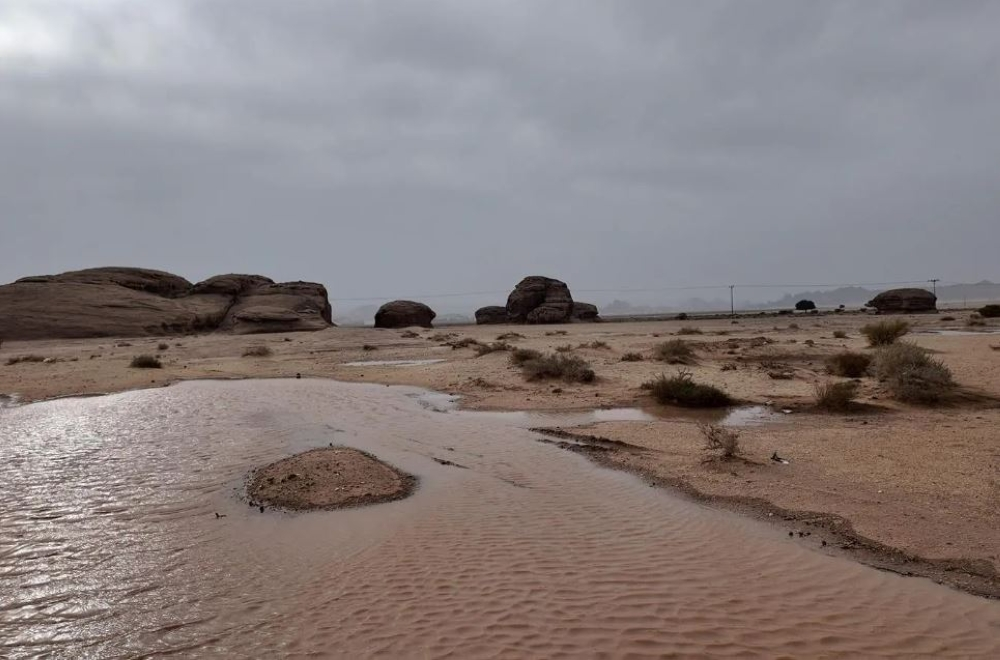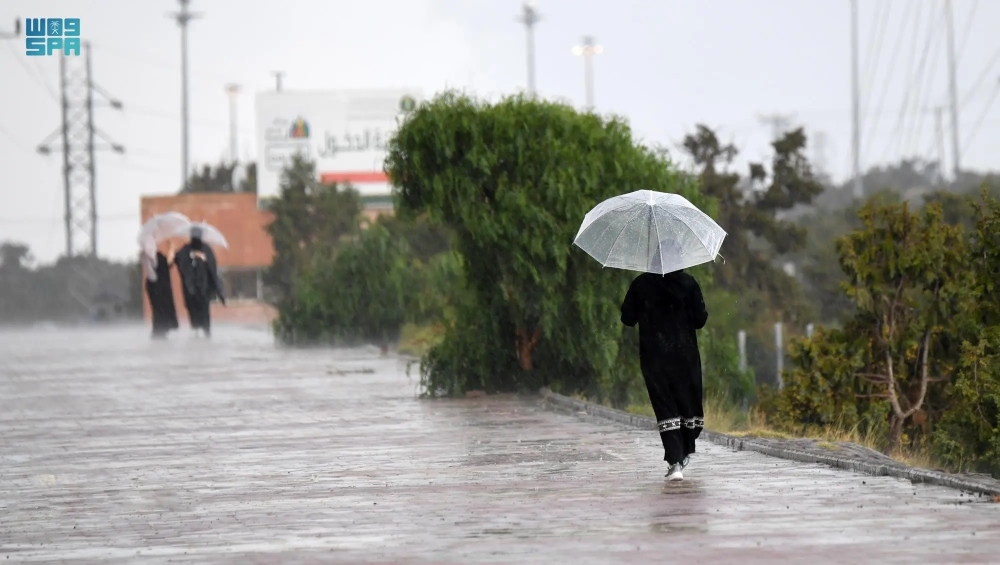
Amidst fluctuating weather conditions in Saudi Arabia, the city of Hail recorded the lowest temperature in the country at just 3 degrees Celsius, highlighting the harsh winter conditions characteristic of the northern regions. This significant drop in temperature coincides with warnings issued by the National Center for Meteorology and Environmental Protection about continued thunderstorms and strong winds that could reduce horizontal visibility in several areas, necessitating caution.
Climate background of Saudi winter
Despite the common perception of the Kingdom as a hot desert country, its climate is quite diverse, especially during winter. The northern and central regions are affected by cold air masses from the north, leading to a sharp drop in temperatures that can sometimes fall below freezing, with frost and occasional snowfall in the highlands, such as the Al-Lawz Mountains in Tabuk. Hail, with its long agricultural history, is among the areas most affected by these cold waves, as frost directly impacts crops, making monitoring weather forecasts vital for both farmers and residents.
Temperature details and weather forecast
Besides Hail, other northern cities also experienced a drop in temperatures, with Sakaka recording 5 degrees Celsius, Tarif 6 degrees, while Dawadmi, Qurayyat, Rafha, and Buraydah all reached 7 degrees, and Arar 8 degrees Celsius. According to the National Center of Meteorology and Environmental Protection, the chance of thunderstorms, possibly accompanied by hail, continues in parts of the Eastern Province, Riyadh, Makkah, Al-Baha, Asir, and Jazan. Active winds stirring up dust and sand will also continue to affect parts of Al-Jawf and the Northern Borders regions, with the possibility of dense fog forming during the night and early morning hours.
Expected impacts and maritime navigation conditions
These weather conditions have far-reaching effects beyond just a feeling of cold. Active winds and heavy rain can affect road safety and land transport, while the unstable weather poses a challenge to maritime navigation in major waterways. In the Red Sea, surface winds are expected to be northwesterly to northerly, with waves reaching up to 2.5 meters and thunderstorms developing in the southern part. In the Arabian Gulf, southeasterly to southerly winds are expected, with gusts reaching 50 km/h and thunderstorms, resulting in moderate to rough sea conditions in some areas. This will impact shipping, fishing operations, and commercial navigation in these vital waterways.