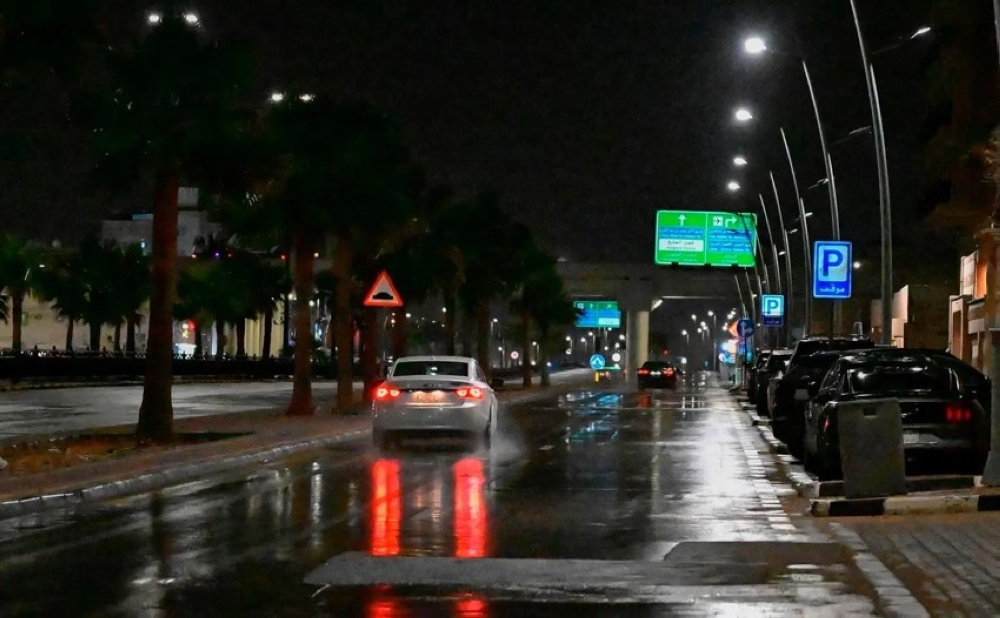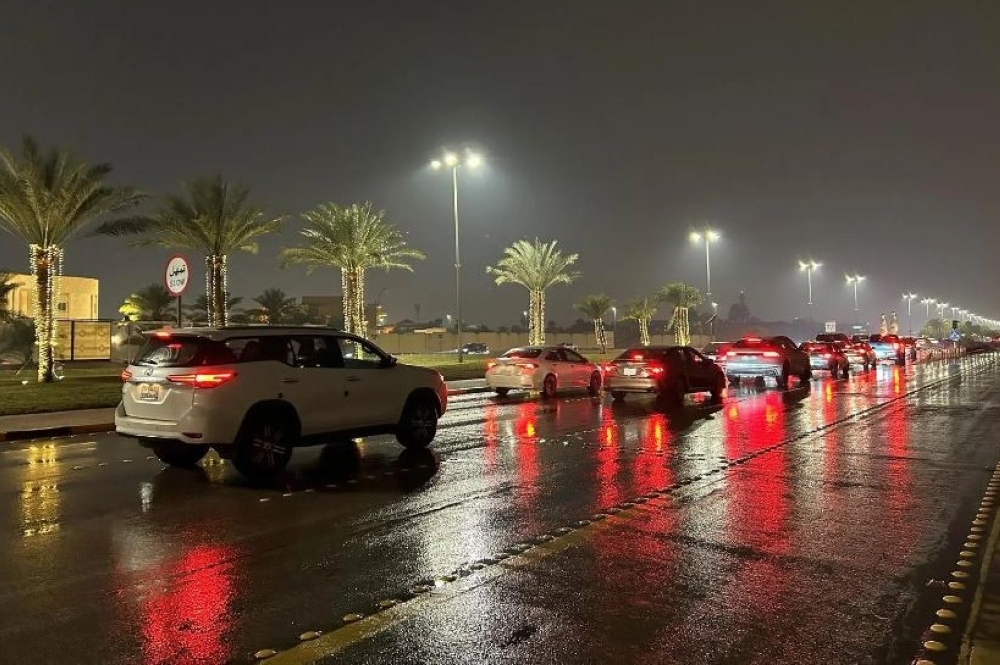
The daily weather report for Saudi Arabia revealed significant weather fluctuations, with many regions experiencing a noticeable drop in temperatures, reaching very low levels, accompanied by widespread moderate to heavy rainfall. This report highlights the stark climatic variations across the Kingdom, from the warm coastal areas to the bitterly cold northern regions.
Weather and temperature analysis
Rafha recorded the lowest minimum temperature at 1 degree Celsius , indicating a strong cold wave affecting the northern regions, followed by Tarif and Arar with minimum temperatures approaching 2 degrees Celsius. In contrast, Mecca and Jeddah maintained relatively warm weather with maximum temperatures reaching 33 degrees Celsius.
The forecast also indicates a state of atmospheric instability, with the possibility of thunderstorms accompanied by active winds and dust storms that reduce horizontal visibility in several regions, especially in Hail, Tabuk, and the Northern Borders, in addition to the southwestern highlands.
Table of temperatures and weather phenomena in the cities of the Kingdom
| City | Great | The minor | Humidity | weather conditions |
|---|---|---|---|---|
| Mecca | 33 | 23 | 85 | Active winds / Dust storms |
| AL Madinah AL Munawwarah | 25 | 12 | 35 | Thunderstorms / Strong winds |
| Riyadh | 18 | 6 | 30 | Partly cloudy/dust haze |
| Dammam | 18 | 7 | 55 | Partly cloudy / Hazy |
| grandmother | 33 | 23 | 85 | Active winds / Dust storms |
| Abha | 20 | 8 | 70 | Rainy thunderstorms |
| Hail | 15 | 3 | 25 | Moderate to heavy rain |
| Buraydah | 15 | 4 | 25 | Thunderstorms / Strong winds |
| Tabuk | 23 | 9 | 55 | Moderate to heavy rain |
| The courtyard | 19 | 9 | 75 | Rainy thunderstorms |
| Juniper | 13 | 2 | 30 | Moderate to heavy rain |
| Sakaka | 14 | 3 | 35 | Moderate to heavy rain |
| Jazan | 29 | 24 | 85 | Active winds / Dust storms |
| Najran | 20 | 9 | 55 | Partly cloudy/dust haze |
| Taif | 23 | 11 | 80 | Rainy thunderstorms |
| Al-Ula | 25 | 13 | 35 | Moderate to heavy rain |
| Yanbu | 31 | 16 | 85 | Thunderstorms / Strong winds |
| Dawadmi | 18 | 6 | 20 | Active winds / Dust storms |
| Al-Kharj | 16 | 6 | 35 | Partly cloudy/dust haze |
| Wadi Al-Dawasir | 18 | 8 | 25 | Active winds / Dust storms |
| Sharurah | 22 | 11 | 25 | Partly cloudy/dust haze |
| The complex | 14 | 3 | 25 | Active winds / Dust storms |
| face | 31 | 17 | 90 | Moderate to heavy rain |
| Rafha | 13 | 1 | 60 | Moderate to heavy rain |
| Al Qurayyat | 14 | 6 | 45 | Thunderstorms / Strong winds |
| Funny | 12 | 2 | 45 | Thunderstorms / Strong winds |
| Al Qunfudhah | 31 | 22 | 85 | Active winds / Dust storms |
| Al-Ahsa | 18 | 6 | 40 | Partly cloudy / Hazy |
| Hafr Al-Batin | 14 | 2 | 25 | Moderate to heavy rain |
| Bisha | 24 | 9 | 35 | Partly cloudy / Hazy |
| Al-Sawda | 15 | 3 | 75 | Rainy thunderstorms |
| Rawdat Al-Tanhat | 13 | 3 | 25 | Active winds / Dust storms |
| Al-Dahna desert | 13 | 2 | 25 | Moderate to heavy rain |
| Al-Saman | 13 | 3 | 25 | Moderate to heavy rain |
The climatic context and diverse terrain of the Kingdom
The Kingdom of Saudi Arabia enjoys a unique geographical diversity that is directly reflected in its climate. While dry desert weather prevails in the central regions such as Riyadh and Qassim, the northern regions are characterized by a climate closer to the Mediterranean climate in winter, where they are exposed to cold air masses coming from the north, which leads to a sharp drop in temperatures, and sometimes snowfall in areas such as Jabal Al-Lawz in Tabuk.
The southwestern highlands (Asir, Al-Baha, and Jazan) enjoy a temperate climate and seasonal rainfall due to their mountainous terrain, which condenses clouds, making them attractive tourist destinations even during periods of unstable weather. This diversity makes monitoring weather forecasts essential for travel between regions.
The importance of warnings and the impact of weather conditions
This data is of utmost importance to public safety, as the relevant authorities, such as the Civil Defense, call on citizens and residents to exercise caution during heavy rainfall and the flow of valleys and torrents, especially in open and desert areas such as Al-Saman and Al-Dahna, which are experiencing heavy rainfall, according to the report.
This weather condition also affects economic and agricultural activities; the winter rains (Al-Wasam and what follows) herald a prosperous spring season and the growth of natural pastures, which is what the people of the desert and lovers of desert trips are looking forward to, but this requires full compliance with traffic safety instructions due to the possibility of reduced visibility due to dust particles or fog in the early morning hours.