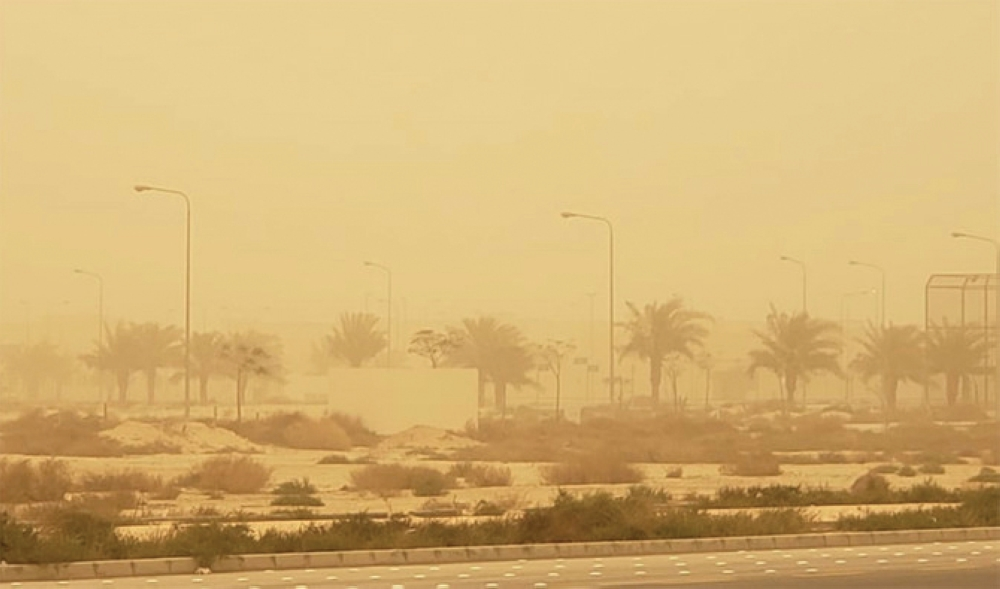
The weather is experiencing ongoing fluctuations during this period, with the National Center for Meteorology announcing details of the weather forecast for Saudi Arabia in the coming days. The center predicted strong surface winds that will stir up dust and sand across most regions of the Kingdom on Wednesday and Thursday, March 25th and 26th. These winds are expected to reach speeds exceeding 60 kilometers per hour, necessitating caution and vigilance from all citizens and residents.
Weather conditions in Saudi Arabia affect visibility and maritime navigation
The center explained in its periodic reports that this expected rainfall and strong winds will cause near-zero or even zero horizontal visibility in several directions, directly impacting traffic and travel on highways. The forecast also warned of a sharp rise in waves along the coast, with wave heights potentially exceeding two and a half meters. This necessitates extreme caution from seafarers and fishermen, and advises avoiding maritime activities during this period to ensure public safety.
Climatic context: Typical spring fluctuations in the Arabian Peninsula
Historically, the transitional period between winter and spring in the Arabian Peninsula, specifically in March, is known for its sharp weather fluctuations. Locally, this period is called the "Sarayat" season, or spring disturbances, where warm air masses from the south collide with the remaining cold air masses in the north. This thermal clash is the primary cause of surface wind activity and the formation of rain-bearing thunderstorms. Therefore, the current weather changes in the Kingdom are consistent with the region's historical climate records, which have long documented dust storms and varying intensities of rainfall at this time of year.
The importance and expected impact of current weather fluctuations
These weather changes are of paramount importance due to their direct impact on several vital sectors. Locally, dust storms disrupt land and air transport, necessitating close coordination among relevant authorities to manage traffic flow and ensure passenger safety. Furthermore, the varying rainfall plays a positive role in replenishing groundwater reserves and stimulating the agricultural sector across different governorates. Regionally, this situation reflects the extension of low-pressure systems affecting the Arabian Gulf region as a whole, underscoring the importance of exchanging climate data among neighboring countries to mitigate potential weather-related risks.
Official guidelines to ensure safety and keep up-to-date
For his part, the official spokesperson for the National Center for Meteorology, Hussein Al-Qahtani, urged all citizens and residents to follow the instructions of the relevant authorities, given the continued chances of varying intensities of rainfall. Al-Qahtani emphasized the importance of using the official “Anwaa” application to monitor weather updates across different regions to ensure public safety. He affirmed that the center is closely monitoring all developments to provide real-time updates on the weather fluctuations the Kingdom is experiencing during this period.
The spokesperson noted that the accompanying weather phenomena include strong downdrafts, hail, and a noticeable drop in temperatures. Dense fog is also expected in the mountainous regions, with the possibility of snowfall on the Al-Lawz Mountains in the Tabuk region. This weather phenomenon typically attracts the attention of residents and tourists, but it also necessitates strict adherence to traffic safety guidelines and staying away from floodplains and valleys.