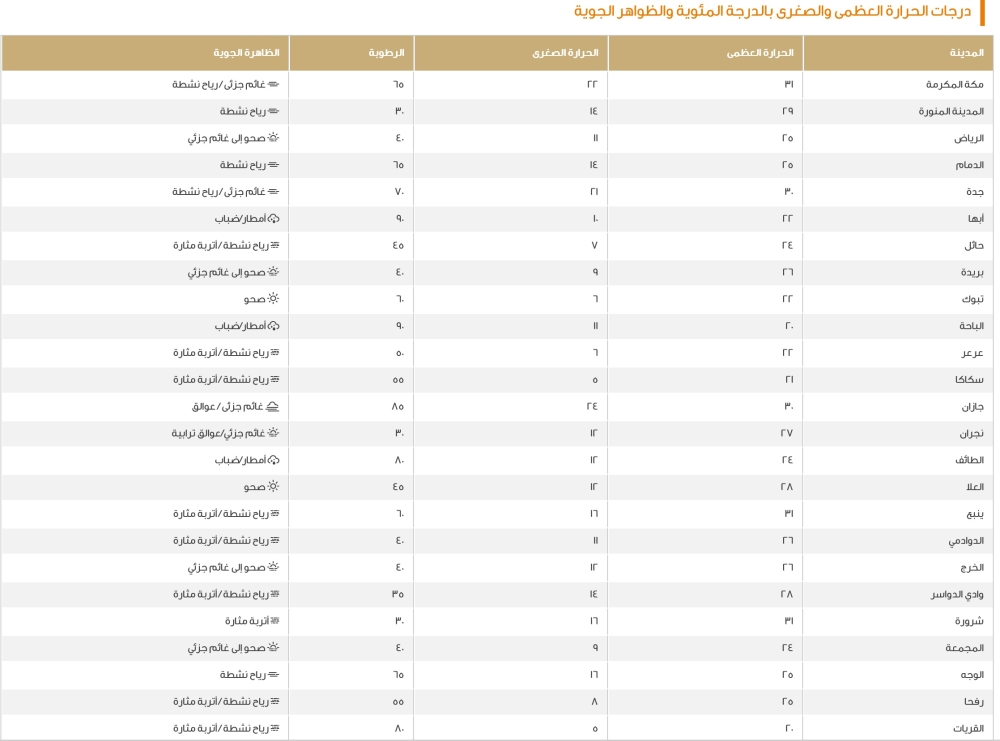
The National Center for Meteorology in Saudi Arabia issued its daily weather report, forecasting continued weather fluctuations across the country. The report indicated that surface winds will continue to stir up dust and sand, reducing horizontal visibility in large parts of nine regions, with a chance of light rain in the southwestern highlands.
Climatic background of weather phenomena in the Kingdom
Dust storms and strong winds are common weather phenomena in Saudi Arabia, given its geography, which consists mostly of vast deserts such as the Rub' al Khali and the Great Nafud Desert. These phenomena increase in frequency during the transitional periods between seasons, particularly in spring and autumn, when the region is affected by low-pressure systems and shifting air currents. The National Center of Meteorology plays a vital role in monitoring these changes and issuing early warnings, contributing to the protection of lives and property and guiding various sectors, such as aviation and land transport, to take necessary precautions.
Weather details and affected areas
According to the weather report, the areas affected by dust-laden winds include Al-Jawf, the Northern Borders region, Hail, Madinah, Makkah, Riyadh, and Najran. The effects also extend to the eastern parts of the Asir and Al-Baha regions. Meanwhile, light rain and fog formation are possible during the night and early morning hours in parts of the southwestern highlands of the Kingdom.
Expected effects and safety guidelines
This weather condition will have several direct impacts on daily life and public safety. On the health front, asthma and respiratory patients are advised to avoid going out unless absolutely necessary and to wear protective masks. Regarding transportation, reduced horizontal visibility, which may drop to between 1 and 3 kilometers in some areas such as Riyadh, increases the risk of accidents on highways, requiring drivers to exercise extreme caution and reduce their speed. Air traffic at some airports may also be affected by delays or rescheduling of flights. Relevant authorities, such as Civil Defense and Highway Patrol, urge citizens and residents to follow official updates and adhere to safety instructions.
State of the Red Sea and the Arabian Gulf
Red Sea:
- Surface winds: Northwesterly to northerly at a speed of 25-50 km/h on the northern and central parts, and northwesterly turning to southeasterly in the evening at a speed of 12-38 km/h on the southern part.
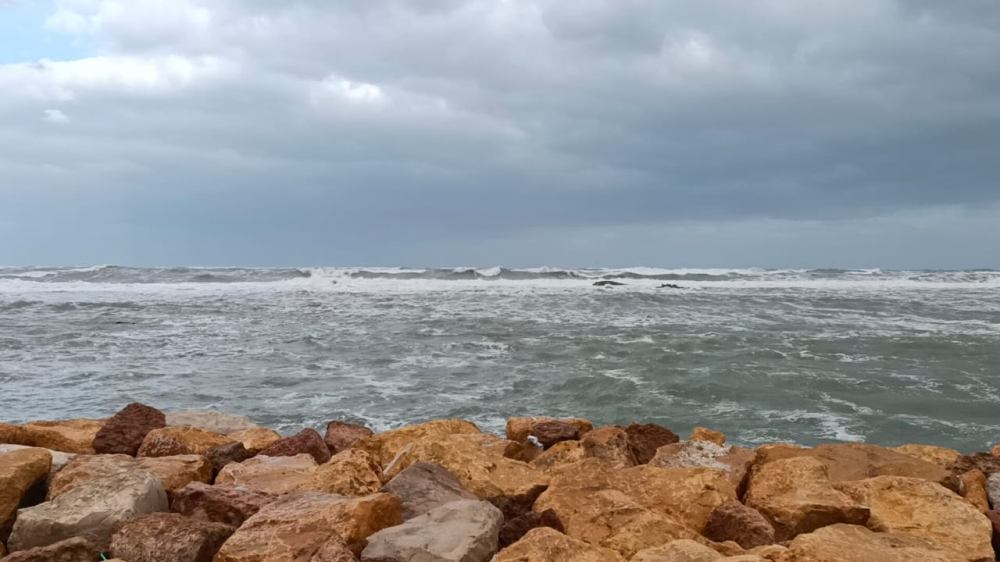
- Wave height: from one and a half to two and a half meters on the northern and central parts, and from half a meter to one and a half meters on the southern part.
- Sea state: Moderate to rough in the northern and central parts, and slight to moderate in the southern part.
The Arabian Gulf:
- Surface winds: Northwesterly at 12-32 km/h in the northern part, and northwesterly to southwesterly at 20-40 km/h in the central and southern parts.
- Wave height: from half a meter to one and a half meters on the northern part, and from one meter to two meters on the central and southern parts.
- Sea state: Light to moderate waves in the northern part, and moderate waves in the central and southern parts.