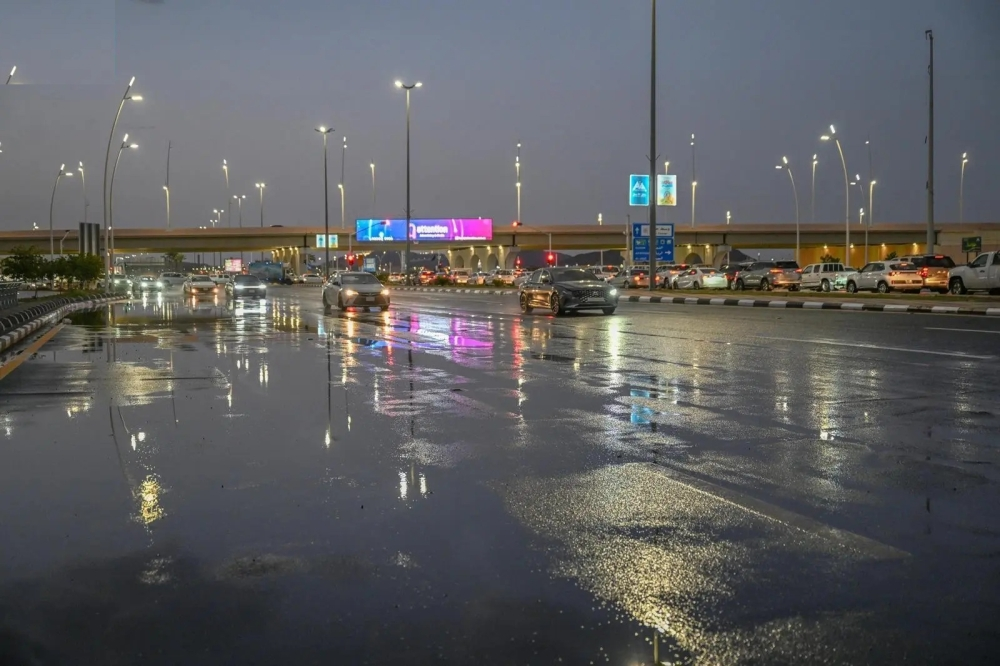
Northern regions of Saudi Arabia experienced a sharp and noticeable drop in temperatures on Tuesday, with Al-Qurayyat recording the lowest temperature in the Kingdom at just 2 degrees Celsius. This decrease is part of a cold wave affecting large parts of the north, with other cities also recording very low temperatures. Tabuk and Hail reached 3 degrees Celsius, Arar and Sakaka 4 degrees, Buraidah 5 degrees, and Rafha 6 degrees.
Climatic background of the northern region
The northern regions of the Kingdom, such as Al-Jawf, the Northern Borders, Tabuk, and Hail, are known for their continental desert climate, characterized by very cold winters and hot, dry summers. This severe winter cold is due to the region's exposure to cold air masses originating from the Siberian High and polar regions, which often cause temperatures to drop below freezing and frost to form, covering open areas and crops during the early morning hours.
National Center for Meteorology warnings
The National Center for Meteorology issued its daily report, indicating that this noticeable drop in temperatures will be accompanied by dense fog and active surface winds in parts of Tabuk, Al-Jawf, Hail, and the Northern Borders regions, as well as the northern parts of Al-Qassim and the Eastern Province. The center warned of a high probability of frost formation during the early morning hours, which could affect road safety and crops.
Expected effects of the cold wave
These cold waves have direct impacts on various aspects of life. In agriculture, frost poses a significant threat to exposed crops, particularly in regions like Al-Jawf, which is renowned for its olive groves. Regarding public safety, dense fog drastically reduces horizontal visibility, necessitating caution from drivers on highways. Health authorities are also warning the elderly, children, and those with chronic illnesses to take necessary precautions and wear warm winter clothing to avoid health problems associated with the extreme cold.
Weather conditions in other regions and maritime navigation
In contrast, the center predicted partly cloudy to cloudy skies with a chance of light rain and fog in parts of the Jazan, Asir, and Al-Baha regions in southwestern Saudi Arabia. Regarding maritime traffic in the Red Sea, surface winds will be northwesterly to northerly at speeds reaching 40 km/h in the northern and central parts, with wave heights potentially reaching two meters towards the Gulf of Aqaba. In the Arabian Gulf, active northwesterly winds are expected in the northern part, resulting in slight to moderate sea conditions.