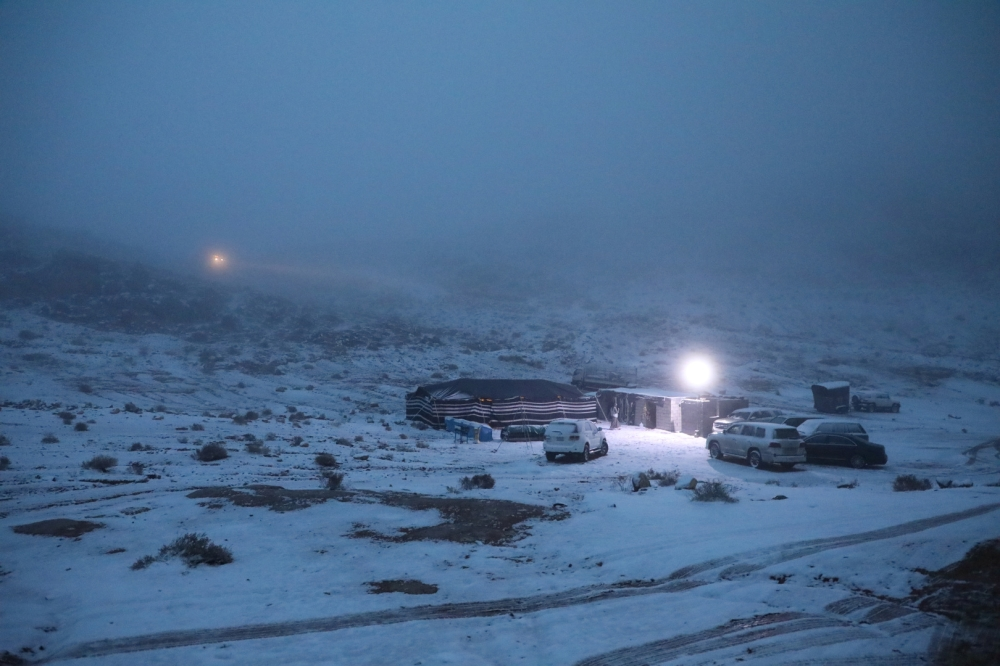
The National Center for Meteorology in Saudi Arabia issued its daily weather report, revealing a severe cold wave affecting the northern and central regions of the Kingdom. The cities of Qurayyat and Hail recorded the lowest temperatures in the country, at just one degree Celsius. This significant drop in temperature is accompanied by strong surface winds that are stirring up dust and sand, leading to a considerable decrease in horizontal visibility in several areas.
According to the center's data, the list of cities that recorded low temperatures included Tarif, where the temperature reached 2 degrees Celsius, followed by Sakaka, Dawadmi, and Arar at 3 degrees. Rafha and Buraidah recorded 4 degrees Celsius, Tabuk 5 degrees, and Hafr al-Batin 6 degrees, while the minimum temperature in the capital, Riyadh, reached 7 degrees Celsius, reflecting the widening impact of the cold air mass.
The climatic context of Saudi winter
Such cold waves are a characteristic climatic feature of winter in the northern and central parts of Saudi Arabia. These regions are directly affected by cold air masses originating from Central Asia and Europe, leading to a sharp drop in temperatures that can sometimes fall below freezing, especially in the highlands. This period is known locally for its extreme weather fluctuations, where intense cold coincides with strong winds that exacerbate the feeling of cold and contribute to dust storms.
Expected effects and calls for caution
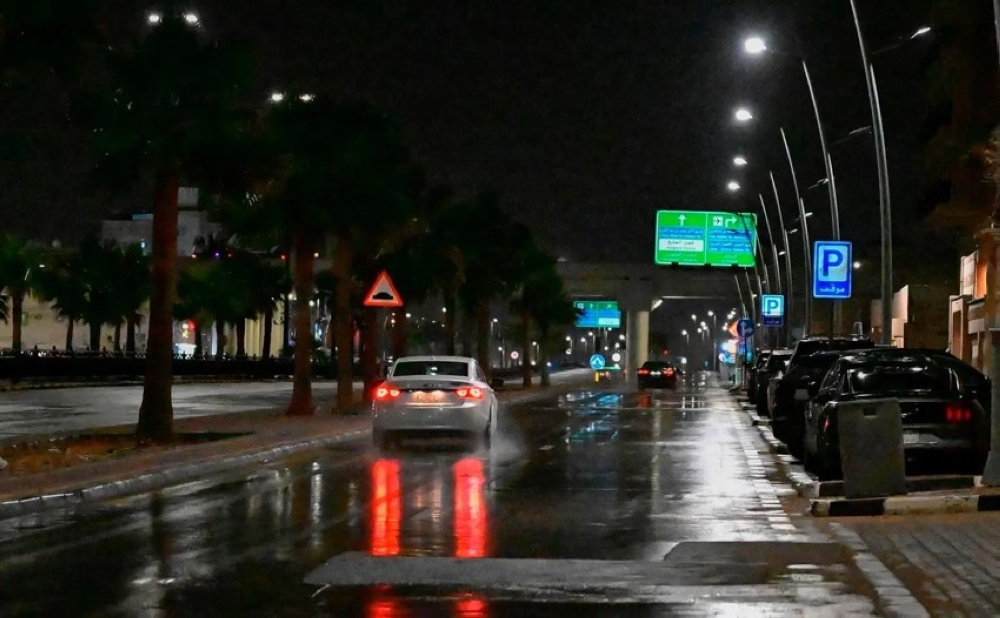
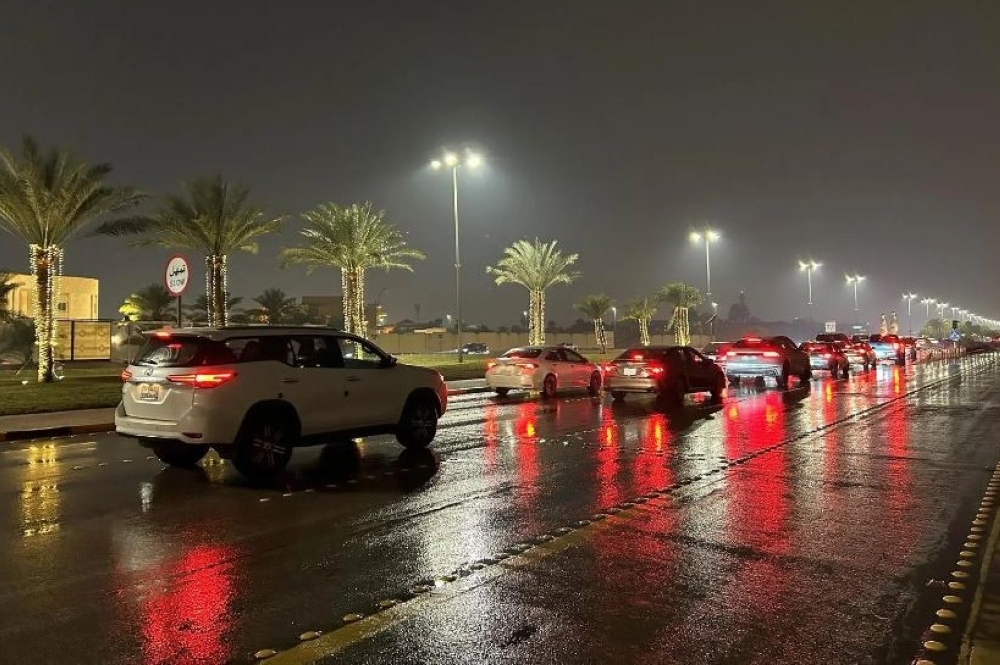
The National Center for Meteorology warned of the continued impact of active winds stirring up dust and sand, which may reduce horizontal visibility to near zero in parts of the Riyadh, Eastern Province, and Najran regions. This impact extends to the eastern parts of the southwestern highlands and the Makkah, Madinah, and Tabuk regions. These weather conditions pose a significant challenge to road users, and relevant authorities, including Civil Defense and Highway Patrol, have urged drivers to exercise extreme caution and adhere to safety instructions. Those with respiratory illnesses and asthma are also advised to avoid going out in such conditions to ensure their safety.
In a related context, the report indicated that light rain and fog formation are not unlikely in parts of the Jazan and Asir regions, adding another factor that requires caution on the roads in those areas.
Sea conditions and navigation
Regarding maritime traffic, the report indicated that surface winds over the Red Sea will be northwesterly to northeasterly in the northern and central parts, while they will be southeasterly to southwesterly in the southern part, with wave heights potentially reaching two meters towards the Bab el-Mandeb Strait. In the Arabian Gulf, winds will be active northwesterly, with wave heights ranging between one and two meters, resulting in moderate sea conditions.