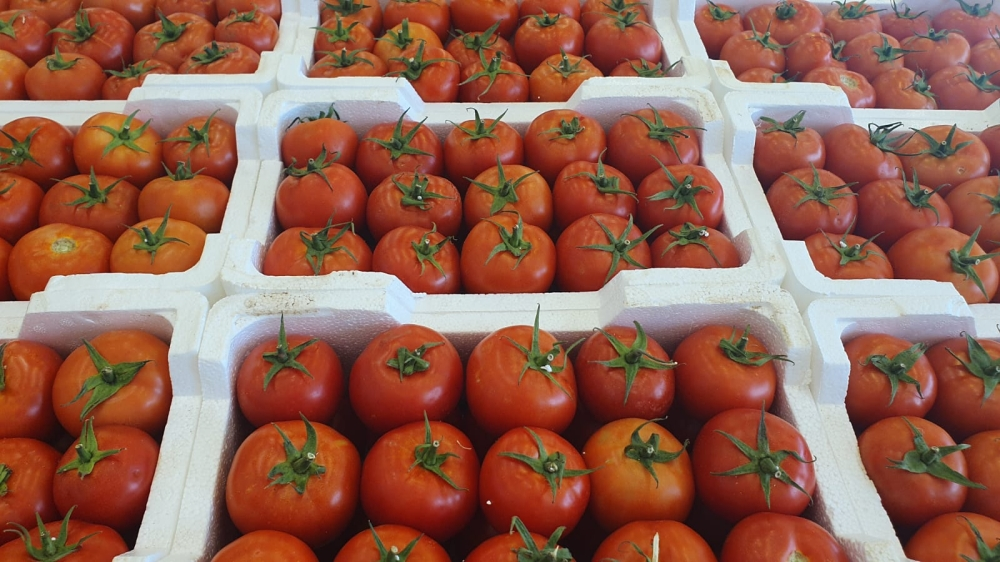
Recent data released by the General Authority for Statistics in Saudi Arabia revealed mixed price movements in vegetable and legume markets during December 2025. Prices for 11 items increased, while prices for 10 others decreased, and 4 remained stable compared to November of the same year. The most notable development was the sharp decline in the price of locally grown tomatoes, a staple ingredient in Saudi cuisine.
Background of the Saudi agricultural market
This price variation comes within the context of the Kingdom's ongoing efforts to enhance its food security and support the local agricultural sector, a key objective of Saudi Vision 2030. Agricultural product prices are significantly influenced by seasonal factors, with winter typically witnessing peak production for many local crops such as tomatoes, cucumbers, and leafy greens, leading to increased supply and lower prices for consumers. Conversely, the market relies on imports to meet demand for other varieties, making their prices dependent on shipping costs and global market conditions.
Tomato prices have dropped significantly
According to the average commodity price bulletin, locally grown tomatoes the price declines, falling by 21.4% , with the average price per kilogram dropping from SAR 6.7 in November to SAR 5.3 in December. Imported tomato prices also decreased by 7.2%, reaching SAR 6.4 per kilogram. This decline is primarily attributed to the abundance of local production during this time of year, which eases the burden on Saudi household budgets.
The impact of price changes on consumers and the economy
These price fluctuations are a vital indicator for both economists and consumers. Lower commodity prices help curb inflation and increase individuals' purchasing power. Conversely, rising prices for other products reflect the complex dynamics of the supply chain, including domestic production costs, logistics, and import prices. This data highlights the importance of balancing support for local farmers to ensure sustainable production with the need to provide affordable goods for the end consumer.
Price movement details for the remaining items
Other price drops included a variety of items, with green beans 5.1%, local green bell peppers down 5.4%, and white cabbage down 5.4%. Local lettuce also fell by 1.4%, and Chinese garlic by 1.5%.
Conversely, some items saw price increases, most notably local molokhia , which rose by 8.9%. Local carrots also increased by 4.9% to reach 6 riyals per kilogram, while medium-sized local potatoes rose by 3.8%, and imported round onions saw a 3.6% increase.
As for the items that maintained stable prices, they included local chili peppers, local onions, arugula, and spinach, in addition to some canned products such as fava beans and tomato sauce.