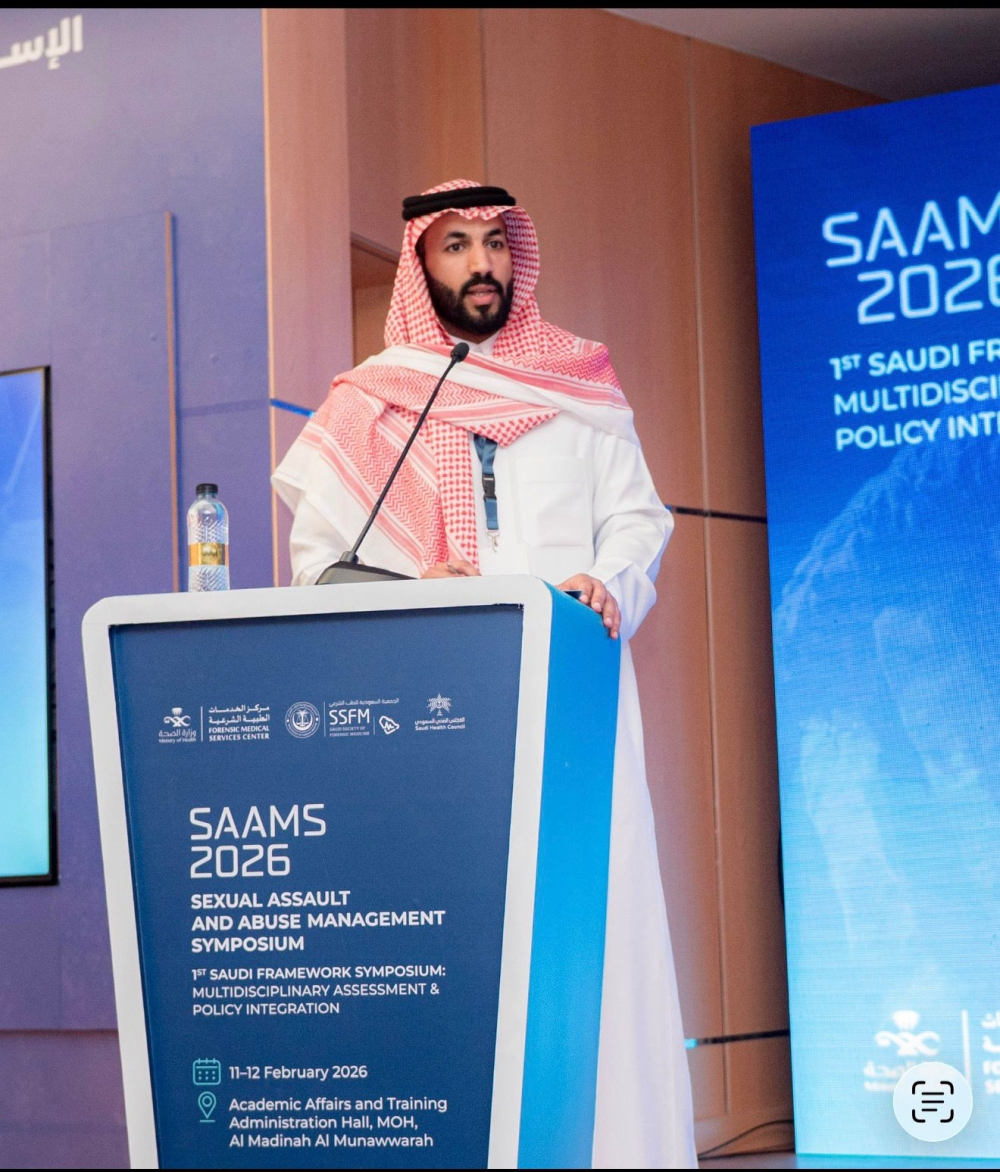
A pioneering step to promote justice and protect victims
In a significant step aimed at standardizing procedures and strengthening the justice system, Dr. Faisal Al-Zubaidi, Executive Director of the Saudi Society for Forensic Medicine, announced the adoption of a package of recommendations and regulatory initiatives to improve the national response to cases of sexual abuse and assault. This announcement came at the conclusion of the “First Saudi Forum for Multidisciplinary Medical Assessment and Policy Integration in Cases of Sexual Abuse and Assault,” which brought together leading experts from the health, security, judicial, and legal sectors.
The general context within Vision 2030
The launch of this unified protocol comes within the context of the comprehensive legislative and social transformations taking place in the Kingdom of Saudi Arabia as part of Vision 2030. The Vision seeks to modernize systems and build a modern state based on the rule of law and the protection of human rights. Over the past years, the Kingdom has enacted important legislation, such as the Anti-Harassment Law and the Child Protection Law, which have formed the necessary legal basis for criminalizing such acts and providing protection for victims. This protocol represents the practical and procedural application of these laws, aiming to close any procedural gaps and ensure that these sensitive issues are handled with the highest levels of professionalism and efficiency.
Key outcomes of the forum and details of the protocol
Dr. Al-Zubaidi explained that the most significant outcome of the forum was the adoption of a unified and comprehensive clinical pathway for handling cases of sexual assault across all age groups. This pathway ensures standardized procedures for reception, assessment, examination, and treatment, adhering to professional standards that preserve the dignity of victims and uphold the integrity of legal proceedings. Key provisions of the protocol include:
- Standardizing medical procedures: Adopting a unified medical protocol for examining physical injuries, providing necessary treatment, and implementing preventive measures after exposure to assault.
- Dealing with cases of anesthesia: Establishing a clear policy for dealing with suspected cases of anesthesia or poisoning, including mechanisms for collecting and preserving biological samples according to the forensic custody chain and sending them to accredited laboratories.
- Accelerating procedures: Focusing on reducing the time required to initiate procedures and unifying communication channels with the Public Prosecution to ensure that cases are handled with high efficiency from the moment of reporting.
- Electronic linking: Activating the electronic linking between the forensic medicine departments, the Public Prosecution and security agencies to speed up procedures and ensure the reliability of forensic medical documentation.
- Psychosocial support: Involving the social worker in the initial assessment, and activating referrals to psychological assessment services and a psychiatrist when needed, to provide comprehensive care for victims.
Importance and expected impact
This protocol is of paramount importance at both the local and regional levels. Locally, it is expected to revolutionize how institutions handle victims of abuse, thereby strengthening public trust in the health and judicial systems. Furthermore, standardizing procedures ensures the collection of evidence in a sound scientific manner, thus bolstering the legal position in cases and contributing to the swift administration of justice. Internationally, this step positions the Kingdom among the leading nations that adhere to global best practices in forensic medicine and the protection of victims of violence, reflecting its commitment to promoting human rights and safeguarding the most vulnerable members of society.