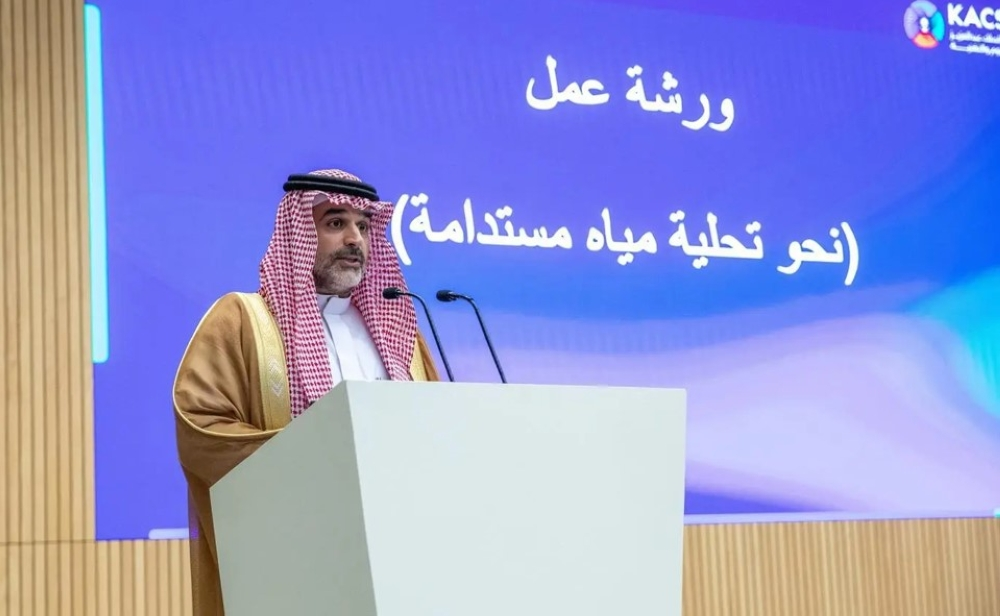
In a strategic move aimed at enhancing water security in the Kingdom of Saudi Arabia, the King Abdulaziz City for Science and Technology (KACST), in cooperation with the Saudi Water Authority, organized a specialized workshop entitled “Towards Sustainable Desalination.” The workshop hosted a select group of experts and specialists to discuss the current and future state of the desalination system in the Kingdom, and to review the latest technological and innovative solutions to improve its operational efficiency and ensure its environmental and economic sustainability.
Historical context and strategic importance of water desalination
Saudi Arabia is the world's largest producer of desalinated water, a reality dictated by its challenging geographical and climatic conditions. Located in an arid desert region with scarce natural freshwater sources such as rivers and lakes, the Kingdom has relied for decades on seawater desalination as an indispensable strategic option to meet the growing demand for water for urban, industrial, and agricultural purposes. This industry has developed significantly over the years, becoming a cornerstone of achieving sustainable development and supporting the country's population and economic growth.
Workshop themes and integration of national efforts
Dr. Abdullah Al-Khudairi, Vice President of Sustainability and Environment at KAUST, explained that the desalination system is an integrated system that encompasses not only the technical aspects but also intersects with national policies, legislation, innovation, energy, the economy, and environmental impact. He emphasized that this workshop represents a vital platform for exchanging expertise and unifying efforts among research, industrial, and regulatory bodies, with the aim of developing practical solutions that contribute to achieving the goals of the Kingdom's Vision 2030 .
For his part, Engineer Abdullah Al-Zwaid, Head of Desalination Operations at the Saudi Water Authority, reviewed the key features of the National Water Strategy 2030. He focused on its main objectives, which include ensuring a safe and sustainable water supply, improving demand management, and increasing efficiency in water use, while preserving water resources and protecting the environment. He noted that achieving these objectives requires concerted efforts to adopt advanced technologies, localize expertise, and support local innovation.
Future impact: Towards global leadership in sustainable desalination
The importance of these efforts extends beyond national borders, as the Kingdom seeks not only to secure its water needs but also to become a global leader in low-cost, environmentally friendly desalination technologies. This includes focusing on integrating renewable energy sources, such as solar power, into the operation of desalination plants to reduce carbon emissions, and developing advanced technologies for treating brine to minimize its impact on the marine environment. Success in this area will enhance the Kingdom's position as a global hub for innovation in the water sector and provide a viable model for many countries around the world facing similar water scarcity challenges.
The workshop participants concluded their discussions by reviewing the research and industrial challenges, emphasizing the pivotal role played by the National Laboratory at KAUST in conducting applied research, building strategic partnerships, and transforming research and innovation outputs into practical solutions that serve the water sector and support the national economy.