The process of sighting the crescent moon of Shawwal has begun in the Kingdom
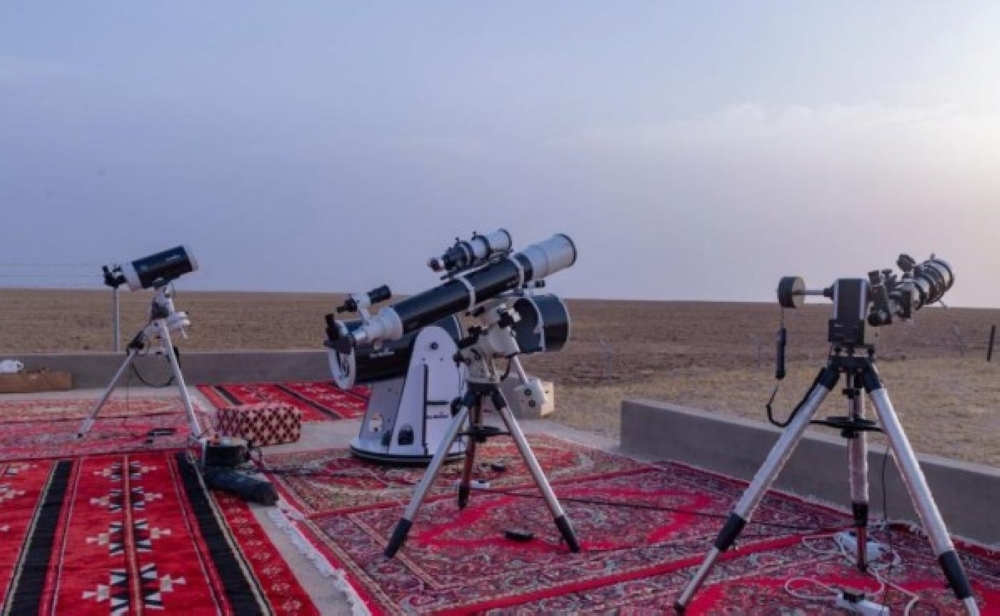
Millions of Muslims are turning their attention to Saudi Arabia, where authorities are preparing to observe the crescent moon of Shawwal for this year. Twelve astronomical observatories, strategically located across the Kingdom, are working in close coordination with the Supreme Court to carry out this religious and scientific task. This on-site observation is a crucial moment, as it officially marks the beginning of Eid al-Fitr, with widespread anticipation for the official announcement of the results after sunset.
The historical roots and religious significance of crescent moon observation
The tradition of observing and monitoring the new moon dates back to the dawn of Islamic history, as the Islamic calendar is entirely based on the lunar cycle. The Prophet Muhammad (peace be upon him) encouraged the beginning and end of Ramadan based on the sighting of the new moon with the naked eye. Over time, the Kingdom of Saudi Arabia has integrated this established Prophetic tradition with the latest astronomical technologies and advanced observatories. This integration ensures the highest degree of accuracy in determining the beginnings of the Islamic months, reflecting the leadership's commitment to performing religious rites according to sound, unambiguous legal and scientific principles, while keeping pace with technological advancements in astronomy.
A precise timetable: From Dammam to the Two Holy Mosques
The astronomical observation journey begins geographically in the Eastern Province, specifically from the Dammam Observatory, which records the first sunset at 5:50 PM. Following this, field observation efforts continue at other observatories electronically and organizationally linked to the Supreme Court. Sunset times are distributed sequentially, including Al-Uyaynah and Al-Hariq at 6:05 PM, followed by Tamir at 6:07 PM, and then Hawtat Sudair one minute later at 6:08 PM.
The meticulous monitoring continues at the Shaqra Observatory at 6:10 PM, then moves to Buraidah and Hail at 6:15 PM and 6:24 PM respectively. The daily observation cycle concludes in the holiest of places, where attention turns to the observatories of Mecca and Medina, where sunset occurs simultaneously at 6:32 PM. This precise organizational procedure aims to ensure the rapid transmission of data and the unification of religious and astronomical decisions across the Kingdom.
Regional and international dimensions of the Eid al-Fitr declaration
The significance of announcing the moon sighting results extends far beyond the local sphere within Saudi Arabia, encompassing broad regional and international dimensions. As the custodian of the Two Holy Mosques and the Qibla of Muslims, the Kingdom holds a leading religious position, making the decisions of its Supreme Court a fundamental reference point for many Islamic countries and Muslim minorities worldwide in determining the beginning of Shawwal and the date of Eid prayers. This close connection strengthens the unity of the Muslim Ummah in its religious celebrations and highlights the pivotal role Saudi Arabia plays in guiding major Islamic events, thus imbuing this night with an exceptional spiritual and social character eagerly anticipated by hundreds of millions.