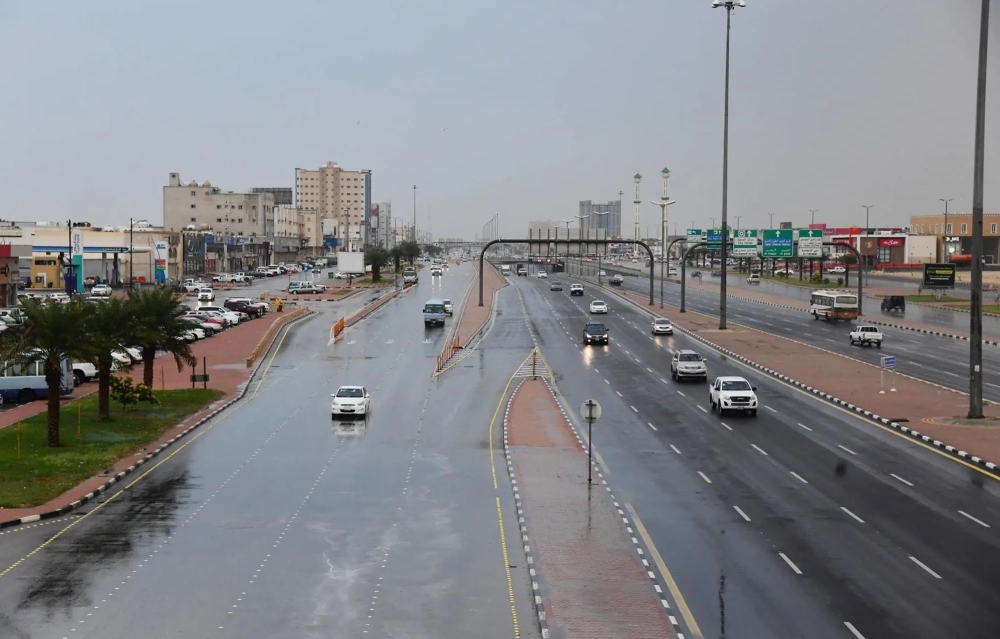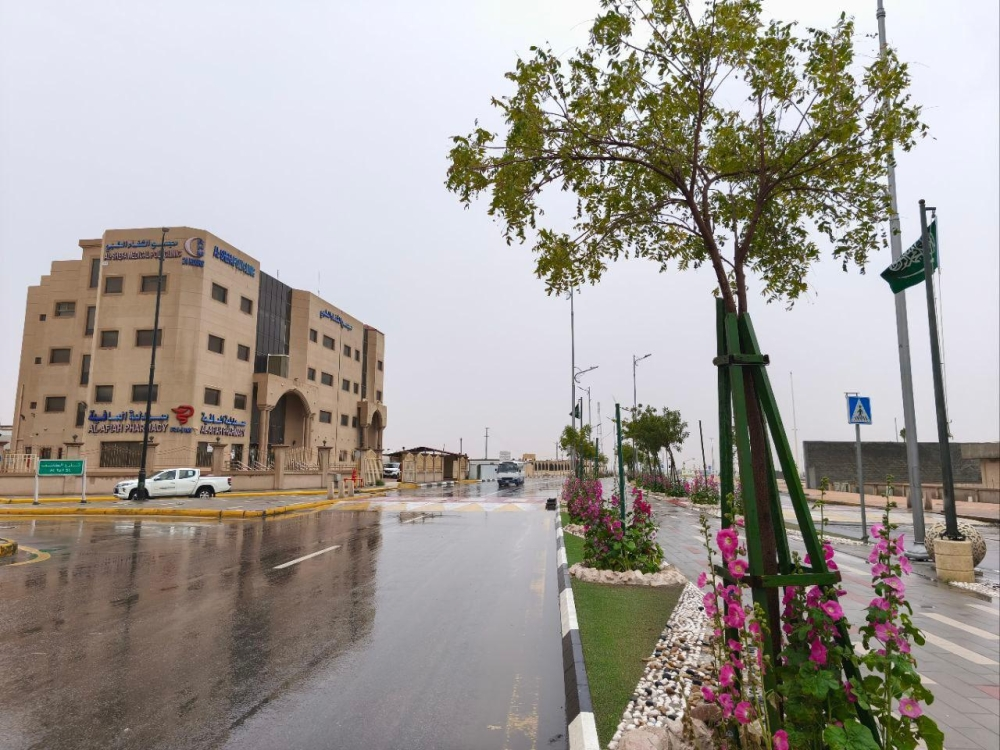
Recent reports from the Ministry of Environment, Water and Agriculture indicate promising rainfall figures across Saudi Arabia , with nine regions experiencing varying intensities of rain in the past 24 hours. The Tabuk region recorded the highest rainfall at 40.2 mm on King Abdullah Road in Tabuk city, reflecting an active weather system currently affecting the country and contributing to cooler temperatures and water resources.
Climate and rainfall history in the Kingdom
The Kingdom of Saudi Arabia is characterized by a dry desert climate for most of the year. However, transitional periods and the winter and spring seasons often witness weather fluctuations that bring much-needed rainfall. Historically, the Saudi government has paid close attention to monitoring and tracking these weather patterns, establishing an extensive network of dams and hydrological and climatological monitoring stations to conserve water and mitigate the risks of flash floods. According to the latest daily report, 115 hydrological and climatological monitoring stations recorded rainfall between 9:00 AM Wednesday and 9:00 AM Thursday in the regions of Riyadh, Makkah, Madinah, Qassim, Asir, Tabuk, Hail, the Northern Borders, and Al-Jawf.
Rainfall amounts in Saudi Arabia as recorded by stations
The report provided detailed information on rainfall amounts in Saudi Arabia . In the Riyadh region, 1.1 mm was recorded in Al-Kharouiyah in Al-Quway'iyah Governorate, and 0.8 mm in the Saja Al-Fara' Reserve in Afif. In the Makkah region, 3.6 mm was recorded in Al-Shafa in Taif, and 3.4 mm in Al-Quray' Bani Malik Center in Maysan. In the Madinah region, Al-Ula Airport recorded 23.8 mm, and the Hajar station in Al-Ula recorded 12.4 mm. In the Qassim region, Buraidah recorded 14.2 mm, and the Ministry of Environment branch station in Al-Nabhania recorded 5.2 mm.
The report indicated that the Asir region recorded 2.6 mm of rainfall in Wadi Ibn Hashbal in Khamis Mushait and 1.6 mm in Tabashah, also in Khamis Mushait. In addition to the highest rainfall recorded in Tabuk city, the Tabuk region also recorded 21.4 mm in Al Qulaybah in Tayma and 20.6 mm in Al Far'ah in Al Wajh. In Hail, the airport recorded 4 mm and the Al Madain district 2.7 mm. The Northern Borders region recorded 7.4 mm in Hazm Al Jalamid in Arar and 7.2 mm at Arar Airport. Finally, the Al Jawf region recorded 5.2 mm at the National Agricultural Station in Tabarjal and 4.8 mm in Abu Ajram in Dumat Al Jandal.
The economic and environmental impact of increased rainfall
These rainfalls are of great importance and have a wide-ranging positive impact at both the local and regional levels. Locally, they contribute to replenishing groundwater aquifers, a vital water source in the Kingdom, and support the agricultural sector by increasing vegetation cover and natural pastures, thus positively impacting livestock. Regionally and internationally, this increase in vegetation cover aligns with the goals of the Saudi Green Initiative, which aims to combat desertification and reduce carbon emissions, thereby strengthening the Kingdom's role in global efforts to address climate change.
Follow the latest weather updates
the official link to learn more details about the amounts of rainfall in all regions of the Kingdom during the past 24 hours, in order to follow the continuous updates on the rainfall situation and accurate climate data.