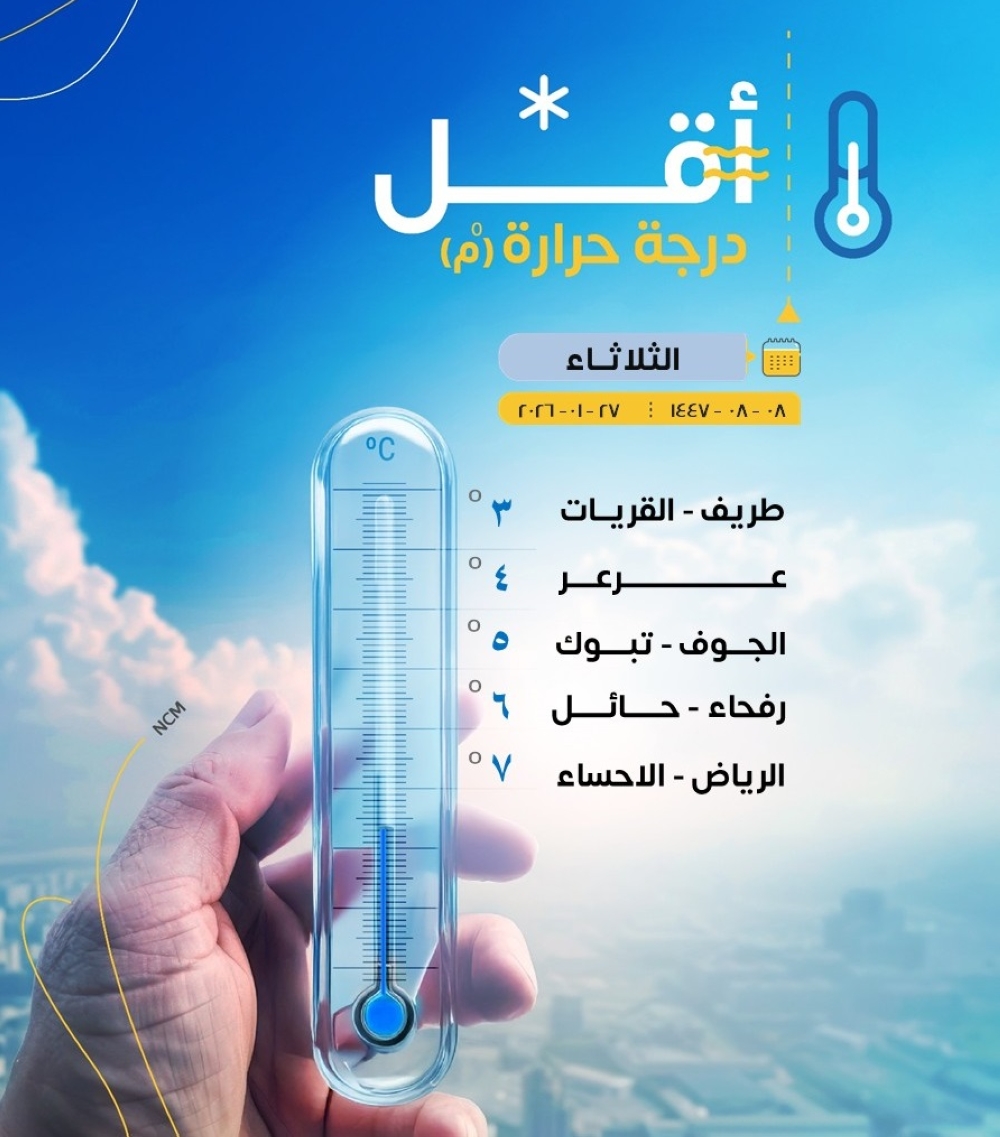
The National Center for Meteorology in Saudi Arabia announced a significant drop in temperatures across several regions, particularly in the northern parts of the country, in its weather report for Tuesday. The governorates of Tarif and Qurayyat recorded the lowest temperatures in the Kingdom, reaching only 3 degrees Celsius, reflecting the extremely cold winter conditions currently prevailing in these areas.
Temperature details in the cities of the Kingdom
According to the statement issued by the center, the cities that recorded the lowest temperatures were ranked as follows:
- Tarif: 3 degrees Celsius
- Al Qurayyat: 3 degrees Celsius
- Arar: 4 degrees Celsius
- Al-Jawf: 5 degrees Celsius
- Tabuk: 5 degrees Celsius
- Rafha: 6 degrees Celsius
- Hail: 6 degrees Celsius
- Riyadh: 7 degrees Celsius
- Al-Ahsa: 7 degrees Celsius
The climatic context of Saudi winter
The northern regions of Saudi Arabia, such as Tarif, Qurayyat, Arar, and Tabuk, are known for their continental desert climate, characterized by very hot summers and extremely cold winters. This significant drop in temperatures during winter is due to the region being affected by cold air masses coming from the north, which cause temperatures to plummet to near or even below freezing in some cases, resulting in frost and snowfall on mountain peaks like Jabal al-Lawz in Tabuk.
The importance of following weather reports and their impact
The National Center of Meteorology plays a vital role in monitoring weather phenomena and issuing early warnings that contribute to protecting lives and property. The importance of these reports lies in their direct impact on various sectors. At the local level, this data helps residents take necessary precautions, such as wearing warm clothing and heating their homes, and alerts drivers to the dangers of frost formation on roads. In the agricultural sector, farmers benefit from these forecasts to protect their crops from potentially devastating frost damage. These weather conditions also affect air traffic and navigation, making the accuracy of meteorological information crucial for ensuring public safety and business continuity.