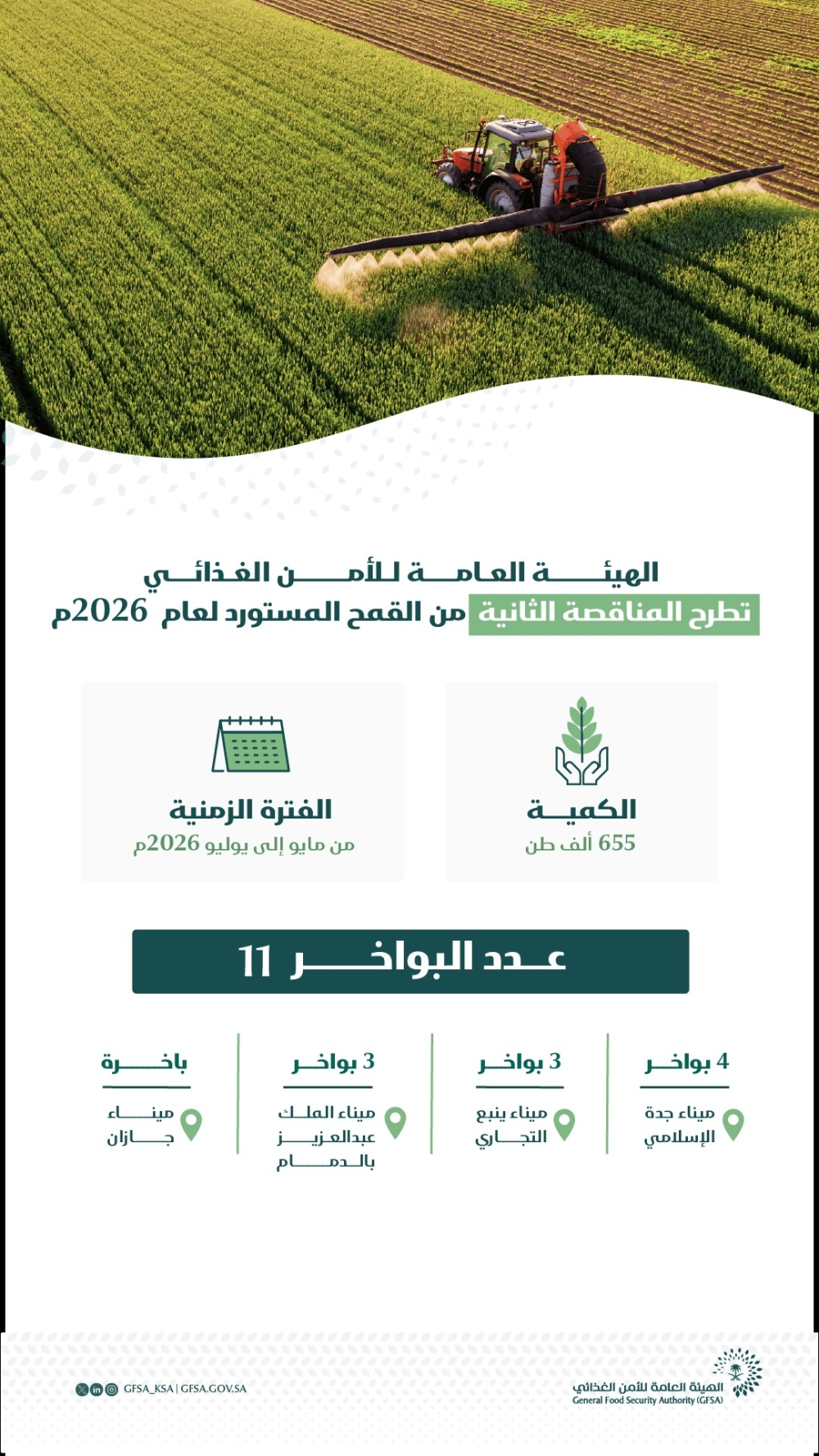
The Saudi Food Security Authority has announced its second tender this year for the import of 655,000 tons of milling wheat, a strategic move aimed at bolstering domestic reserves and meeting the growing demand from milling companies in the Kingdom. The imported shipments are scheduled to arrive between May and July 2026.
General context and historical background
This tender comes as part of the Kingdom's long-standing policy to ensure its food security, a key priority of Saudi Vision 2030. Historically, the Kingdom has gone through different phases in its approach to wheat. After achieving self-sufficiency and becoming an exporter in the 1980s and 1990s, it made a strategic decision in 2008 to shift towards importing wheat primarily, with the aim of conserving its non-renewable groundwater resources. Since then, the General Authority for Food Security (formerly known as the General Grain Corporation – Grain Silos) has been responsible for managing strategic reserves and regulating wheat imports to ensure the stability of the domestic market.
The importance of the event and its expected impact
Engineer Ahmed bin Abdulaziz Al-Fares, Chairman of the Authority, stated that this quantity is part of the approved plan to bolster the strategic wheat reserves and meet the needs of the milling sector. Domestically, this step ensures the continued availability of flour and bread at stable prices for consumers and supports the stability of milling operations, upon which millions of citizens depend. These tenders also reflect the Kingdom's strong planning capabilities in managing food supply chains and preventing any potential shortages of essential commodities.
At both the regional and international levels, Saudi Arabia is a key player in the global wheat market. Its tenders directly impact global grain trade and are closely monitored by major suppliers. Given current global challenges, such as climate change and geopolitical tensions affecting supply chains, these large-scale deals contribute to a degree of balance in global markets and provide a reliable destination for exporters. The imported quantity has been distributed across 11 vessels arriving at major ports in the Kingdom to ensure comprehensive geographical coverage. Jeddah Islamic Port will receive four vessels, Yanbu Commercial Port three, King Abdulaziz Port in Dammam three, and Jazan Port one, thus ensuring efficient distribution throughout the Kingdom.