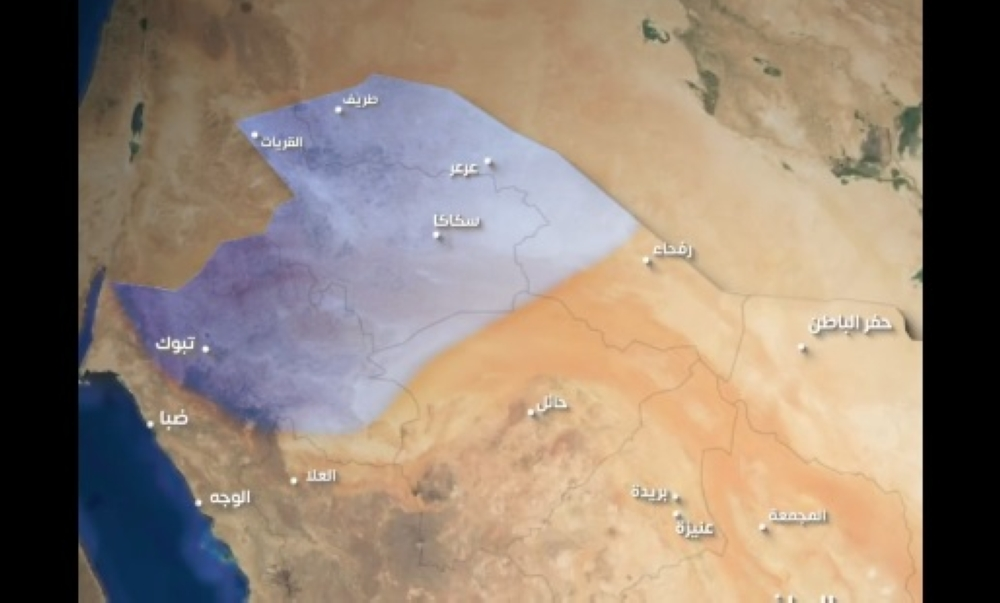
The National Center for Meteorology has announced its forecast of a strong cold wave and a sharp, noticeable drop in temperatures across large parts of northern and northwestern Saudi Arabia. This wave is expected to begin affecting the region starting next Saturday and Sunday, with minimum temperatures potentially reaching freezing point (0°C) in some areas. Residents are advised to take precautions and prepare for the extremely cold winter weather.
A sharp drop in temperature hits 3 regions
The center explained in its report that the epicenter of this cold wave will be primarily located in the Tabuk, Al-Jawf, and Northern Borders regions. Numerical weather models indicate that weather stations in these areas will record a sharp drop in minimum temperatures, ranging between 3 degrees Celsius and reaching zero degrees Celsius, especially during the late night and early morning hours. The center urged citizens and residents in these areas to take the necessary precautions to cope with these weather conditions, such as wearing heavy winter clothing and checking their heating systems to ensure they are functioning properly.
The climatic context of Saudi winter
This cold wave is part of the natural winter climate in the Kingdom, particularly in the northern regions, which are characterized by a continental desert climate. This type of climate is marked by significant temperature variations between summer and winter, and between day and night. These regions are directly affected by cold air masses originating from high-pressure areas in Siberia and Europe, which push southward during winter, causing a significant drop in temperatures. In some cases, these air masses lead to frost and snowfall in the mountainous regions, as sometimes occurs on Jabal al-Lawz in the Tabuk region, attracting tourists and weather enthusiasts.
Importance and expected effects
The impact of these cold waves isn't limited to the daily lives of residents; it extends to other vital sectors. In agriculture, frost poses a threat to exposed crops, requiring farmers to take measures to protect their produce. From a health perspective, respiratory illnesses increase during these periods, and the elderly, children, and those with chronic conditions are advised to avoid direct exposure to the extreme cold. Despite the challenges, this cold weather presents an opportunity for many to enjoy winter activities such as picnicking and camping in the desert, reflecting an aspect of local culture that adapts to weather fluctuations and utilizes them as a tourist and recreational attraction.