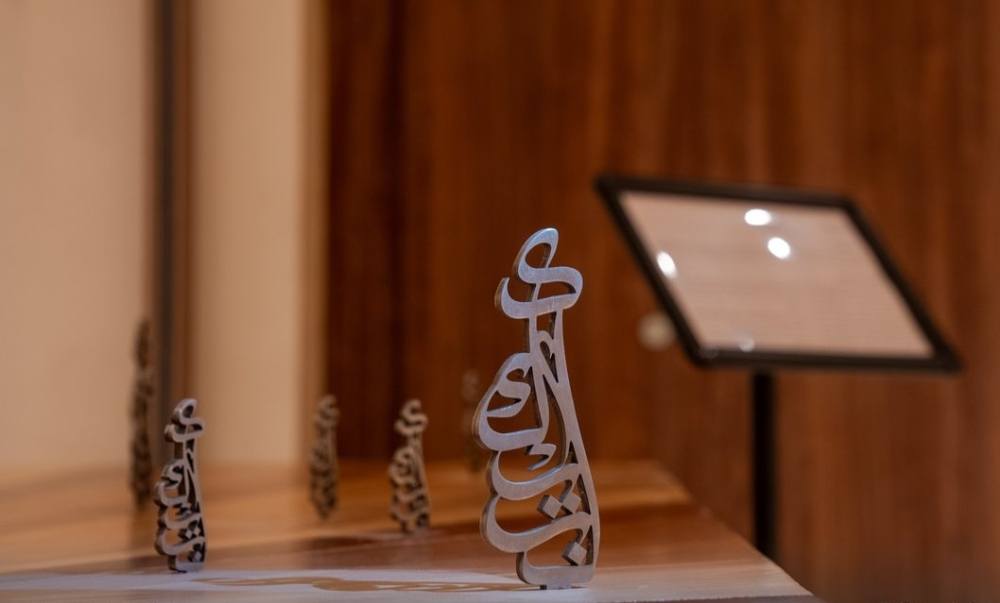
In a strategic move aimed at enhancing the status of Arabic calligraphy as a cultural symbol and a rich artistic heritage, the Saudi Ministry of Culture has issued new organizational arrangements for the “Prince Mohammed bin Salman Global Center for Arabic Calligraphy.” These arrangements outline the future of this authentic art form in the Kingdom and develop its institutional framework to become a global beacon for calligraphers, researchers, and enthusiasts, in line with the goals of the Kingdom’s Vision 2030 to preserve national identity and showcase Saudi culture globally.
Historical background and cultural significance
Arabic calligraphy holds a unique place in Arab and Islamic civilization. It is not merely a tool for writing, but a refined visual art form historically linked to the writing of the Holy Quran, thus endowing it with a special sanctity and aesthetic value. Throughout the ages, numerous schools and styles of calligraphy have developed, such as Kufic, Naskh, Thuluth, Diwani, and Ruq'ah, transforming it into a fundamental element of Islamic architecture, decorative arts, and manuscript design. This Saudi initiative culminates previous efforts, most notably the declaration of 2020 and 2021 as the "Year of Arabic Calligraphy," and the successful leadership of the nomination file for "Arabic Calligraphy: Knowledge, Skills, and Practices" to be inscribed on UNESCO's Representative List of the Intangible Cultural Heritage in December 2021, reflecting the Kingdom's commitment to safeguarding this shared human heritage.
Strategic objectives and expected impact
The new arrangements aim to transform the center into a global authority and a comprehensive knowledge platform. This step is expected to have far-reaching effects at the local, regional, and international levels. Locally, it will contribute to honing national talent and providing a nurturing environment for creative individuals through specialized educational programs, thus ensuring the continuity of this art across generations. Regionally, this step will enhance the Kingdom's position as a leading center for Arab and Islamic culture and open avenues for cooperation with similar institutions in neighboring countries. Internationally, it will promote the aesthetics and culture of Arabic calligraphy and utilize it as a means of intercultural communication.
Key features of the new arrangements
The new powers grant the center broad tools to achieve its objectives, including developing policies, plans, and projects related to Arabic calligraphy, supporting specialized research and studies, and encouraging scholarly publication. Among the most prominent projects included in the arrangements are:
- Creating a digital library: The library will collect and archive data, information, and rare manuscripts related to Arabic calligraphy, and make them available to researchers and interested parties around the world through a specialized platform, thus supporting the digital transformation in this sector.
- Establishing a specialized institute: The institute will be concerned with granting and accrediting certificates and licenses in calligraphy arts, and providing high-quality educational and training programs, in cooperation with relevant academic bodies.
- Museum and permanent exhibition: The center will establish a specialized museum and exhibition to acquire, preserve and display the physical assets related to Arabic calligraphy to the public, to be a window into the history of this art and its masterpieces.
Supervisory committee to ensure governance
To ensure the efficient achievement of these objectives, the arrangements stipulated the formation of an oversight committee chaired by the Minister of Culture, with representatives from key government entities such as the Ministries of Education and Culture, the Museums Authority, the King Abdulaziz Foundation, and the King Salman Global Academy for the Arabic Language, in addition to specialized experts. The committee will oversee the management of the center's affairs, approve its policies and plans, and endorse strategic partnerships, thus ensuring the integration of efforts and the realization of the ambitious vision for the future of Arabic calligraphy, originating from the Kingdom of Saudi Arabia.