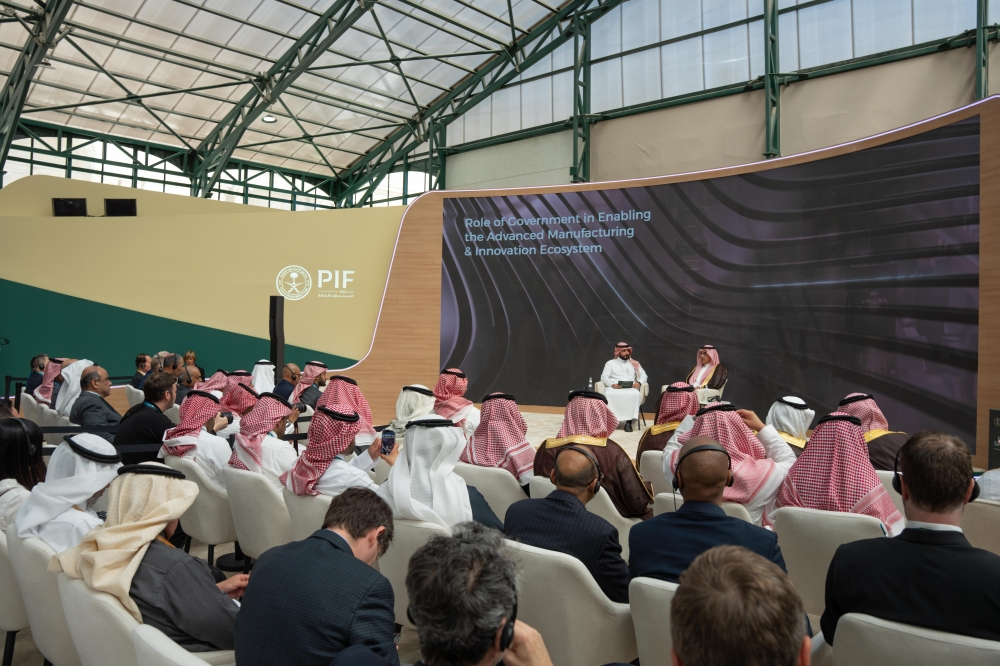
The Deputy Minister of Industry and Mineral Resources for Industrial Affairs, Engineer Khalil bin Salma, affirmed that the industrial system in the Kingdom of Saudi Arabia offers an integrated package of government enablers designed to stimulate private sector investments in advanced manufacturing and innovation, in a strategic step aimed at enhancing the Kingdom’s position as a leading industrial power.
His remarks came during his participation in a dialogue session entitled “The Role of Government Agencies in Enabling the Advanced Manufacturing and Innovation System,” which was held as part of the fourth edition of the Public Investment Fund and Private Sector Forum in Riyadh, an event that brings together industry leaders and decision-makers to discuss ways to enhance partnership to achieve sustainable economic development.
Vision 2030: The main driver of industrial transformation
These efforts are part of the broader Saudi Vision 2030 , which prioritizes diversifying the economy away from oil dependency. The National Industrial Development and Logistics Program (NIDLP) is a key component of this vision, aiming to transform Saudi Arabia into a leading industrial power and a global logistics hub. By enabling advanced manufacturing, the Kingdom seeks to build a knowledge-based and innovation-driven economy, increase the industrial sector's contribution to GDP, and create quality jobs for its citizens.
Programs and initiatives to support smart factories
Ben Salama reviewed the ministry's key initiatives, highlighting pivotal programs such as the Future Factories Program , which aims to transform traditional factories into smart factories that leverage Fourth Industrial Revolution technologies, such as artificial intelligence and the Internet of Things. He added that the Innovative Factories Grants Program plays a vital role in encouraging research and development activities within industrial facilities, thereby enhancing their global competitiveness.
He explained that these programs were carefully designed to reduce the investment risk gap and encourage the private sector to adopt long-term investments in modern manufacturing technologies, thereby increasing production efficiency and enhancing the sustainability of industrial processes.
Expected impacts at the local and regional levels
These enablers are expected to have a profound impact on the Saudi economy. Domestically, they will contribute to enhancing the competitiveness of national products, increasing local content, and localizing advanced industries. Regionally, this transformation will strengthen the Kingdom's position as an industrial and technological hub in the Middle East, attracting foreign direct investment and supporting regional supply chains.
Bin Salma pointed out that government efforts are not limited to programs alone, but also include developing regulatory and legislative frameworks, providing advanced industrial and technological infrastructure, stimulating demand for modern technologies, and supporting the innovation ecosystem and protecting intellectual property rights. The Saudi Industrial Development Fund also plays a key role by providing accessible financing loans for projects based on advanced technologies, thus complementing the comprehensive government support system for the sector.