An ambitious roadmap towards the 2026 World Cup
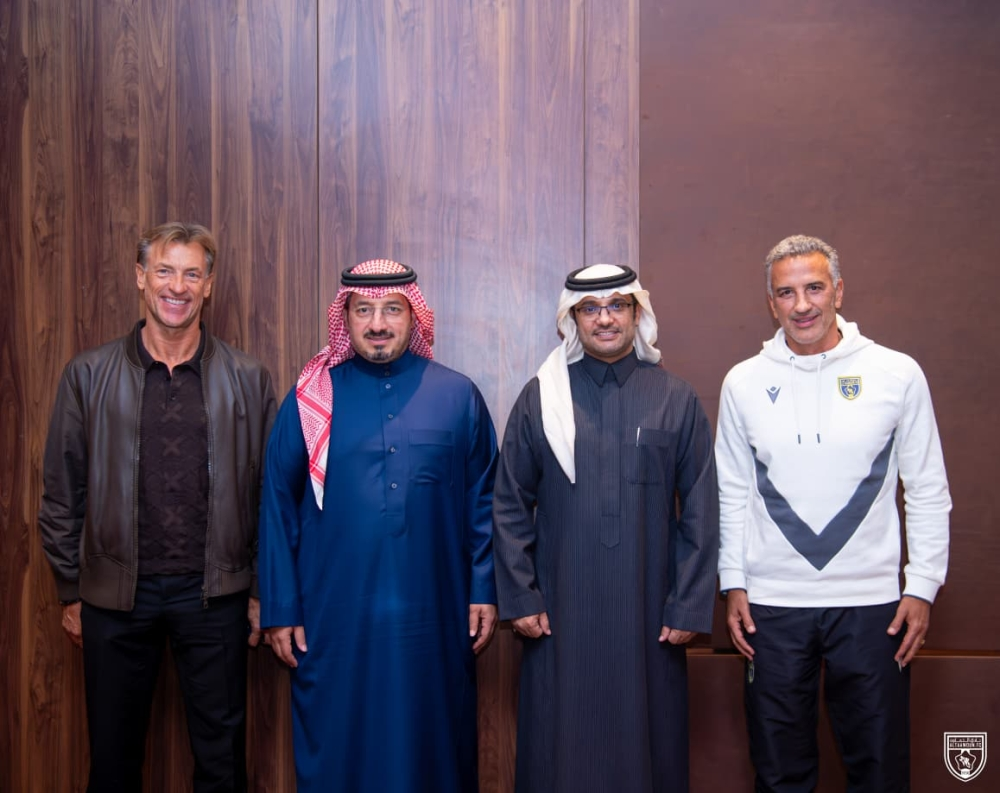
In a proactive move reflecting the ambitious goals of Saudi football, the Chairman of the Board of Directors of the Saudi Arabian Football Federation, Yasser bin Hassan Al-Misehal, and the then-National Team Manager, Hervé Renard, concluded the first phase of their field visit program to clubs in the Saudi Professional League. These visits are part of an early and intensive preparation program for the national team's participation in the 2026 FIFA World Cup, the global event to be held in the United States, Canada, and Mexico, which will feature 48 teams for the first time.
Historical context and building upon achievements
This strategy is based on the desire to build upon the achievements of the Saudi national team in recent years, most notably their impressive performance at the 2022 Qatar World Cup, which saw them achieve a historic victory over eventual champions Argentina. That participation demonstrated the Saudi player's ability to compete with the world's best talent, prompting the Saudi Football Federation to adopt a more comprehensive and integrated approach to ensure continued development and reach higher levels of competitiveness at the upcoming global tournament. Early preparation is no longer an option, but an absolute necessity given the increasing competition on the international stage.
Details and objectives of the first phase
The first phase of the visits included major and influential clubs in Saudi football: Al-Qadisiyah, Al-Taawoun, Al-Ittihad, Al-Ahli, Al-Nassr, and Al-Hilal. During these meetings, the national team's head coach outlined the objectives for the Green Falcons' participation in the 2026 World Cup, emphasizing the complementary roles required from the clubs. Emphasis was placed on the importance of coordination between the national team's technical and administrative staff and their counterparts at the clubs, ensuring the highest levels of technical and physical readiness for international players throughout the season. Renard stressed that monitoring would not be limited to on-field performance but would encompass the smallest details concerning shortlisted players, from fitness and technical indicators to adherence to comprehensive scientific programs that include sleep patterns, nutrition, and muscle development, with the aim of raising the quality of preparation to international standards.
The importance and expected impact of the strategy
Domestically, this partnership aims to raise the overall level of Saudi players and foster a professional culture within clubs, positively impacting the strength of the Saudi Professional League. Regionally, this integrated approach sets a new standard for national team planning and preparation in the region. Internationally, the Saudi Arabian Football Federation, through this plan, seeks to develop a national team capable of competing strongly in the 2026 World Cup, advancing beyond the group stage, and showcasing the remarkable progress of Saudi sports, particularly in preparation for hosting the 2034 World Cup.
A shared vision for the future of Saudi football
For his part, Yasser Al-Mishal praised the clubs' strong cooperation, emphasizing that this responsiveness reflects an institutional awareness of the importance of collaborative work to serve the national teams. He added that these visits represent a new working methodology aimed at unifying efforts and exchanging technical and medical data between the federation and the clubs, ensuring that decisions are based on sound scientific principles that serve the interests of both the player and the national team, and paving the way for a promising future for Saudi football on the global stage.