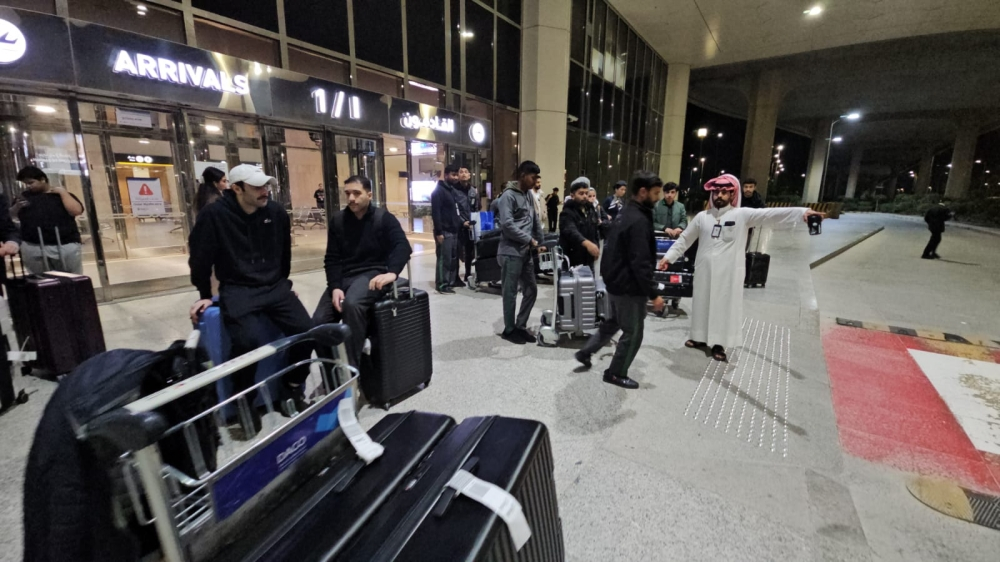
Amidst the ongoing escalations in the Middle East, the Kingdom's airports as a vital pillar and safe haven, ensuring the continuity of air traffic and protecting passengers. Recent regional crises have destabilized airspace in some Gulf countries and the wider region, prompting many airlines to seek immediate alternatives. In response, Saudi Arabia opened its doors and runways to welcome its Gulf neighbors, setting a commendable example in crisis management and providing logistical and humanitarian support under the most challenging circumstances.
The geopolitical context and the impact of tensions on air navigation
Historically, civil aviation in the Middle East has always been affected by political and security fluctuations. More recently, escalating tensions and reciprocal military operations, including Iranian threats and the repercussions of the Israeli-Palestinian conflict, have led to the temporary closure of several airspaces in the region as a precautionary measure to ensure passenger safety. This sudden closure has presented regional and international airlines with a significant challenge, requiring a rapid response and safe alternatives to avoid paralysis of air traffic. In this complex context, the critical need for robust infrastructure and stable airspace has become apparent, something Saudi Arabia has provided thanks to its strategic geographic location and security stability.
Logistical mobilization at airports in the Kingdom's Eastern Province
In response to these developments, the Kingdom's airports , particularly in the Eastern Province, undertook a large-scale logistical mobilization to accommodate the influx of passengers and diverted flights. Following wise leadership directives, all resources were mobilized to provide suitable accommodation and ensure safe transport for our Gulf brothers and sisters. King Fahd International Airport in Dammam, Al-Ahsa Airport, and Qaisumah Airport worked in close and seamless coordination with the Eastern Province Governorate to activate exceptional emergency plans. These swift actions not only reflect the depth of Gulf solidarity but also reaffirm Saudi Arabia's commitment to its leading role as a distinguished destination and a safe haven that welcomes everyone under all circumstances.
Strategic importance and impact of hosting flights regionally and internationally
The ability of Saudi Arabia's aviation infrastructure to absorb this sudden shift is of paramount importance and has far-reaching implications at the local, regional, and international levels. Locally, this success reflects the development of the Saudi air transport sector in line with the goals of Vision 2030, which aims to make the Kingdom a global logistics hub. Regionally, this measure helps mitigate the economic and operational crisis that Gulf airlines would have faced and maintains connectivity between neighboring countries. Internationally, it sends a reassuring message to global airlines that the region possesses a robust safety net capable of absorbing shocks and maintaining uninterrupted global supply chains and travel.
Kuwait Airways and Jazeera Airways find their safe haven
On the practical side, Kuwait's Jazeera Airways announced the relocation of its operations to Qaisumah Airport in Hafr al-Batin, in the Eastern Province, due to the temporary closure of Kuwaiti airspace for safety reasons. The airline explained that the airport is approximately two and a half hours from Kuwait, allowing arriving passengers to continue their journeys by land, and departing passengers to easily reach the airport, provided they possess a valid visa to enter the Kingdom. The airline operated its first flight from Qaisumah to Cairo, carrying 145 passengers. In a related development, Kuwait Airways announced a flight from London to Dammam Airport, urging passengers wishing to return to contact its customer service center to arrange their bookings.
Air and land bridge to serve Iraqi travelers
The support was not limited to the Gulf Cooperation Council (GCC) countries, but extended to our brothers in Iraq. Iraqi Airways announced the launch of special flights to evacuate Iraqi citizens stranded abroad amidst escalating regional tensions. The company stated that the national carrier had begun operating evacuation flights, with planes departing from Ankara Airport bound for Cairo Airport to rescue stranded Iraqis. To ensure their safe return, the company indicated that the returnees would be transported to Arar Airport in Saudi Arabia via an emergency air bridge, and then transported overland through the Arar border crossing into Iraqi territory. This high level of humanitarian coordination reflects joint logistical cooperation to ensure the safety of those returning under these exceptional circumstances.