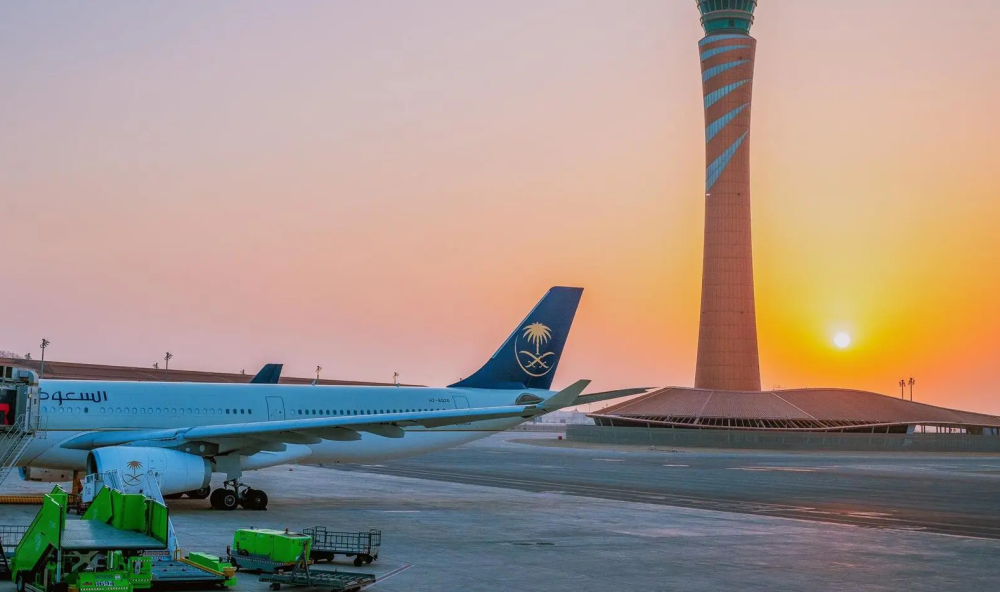
Airports Holding Company announced that it has raised the operational readiness level at the Kingdom's airports to its highest level as part of intensive preparations to receive pilgrims and travelers during the holy month of Ramadan, which represents the annual peak season for Umrah pilgrimage. This step comes within the framework of ongoing efforts to ensure a smooth and safe travel experience and to facilitate the journey of pilgrims coming from around the world to the Holy Land.
The importance of the Umrah season during Ramadan and its historical context
The month of Ramadan holds a special spiritual significance for Muslims, as it is a time when rewards are multiplied and the desire to perform acts of worship increases, most notably Umrah. This importance is based on the noble Prophetic traditions that encourage Umrah during Ramadan, such as the saying, “An Umrah in Ramadan is equivalent to a Hajj.” This great virtue motivates millions of Muslims annually to travel to Mecca and Medina, transforming this month into a major logistical challenge that requires the combined efforts of all sectors in the Kingdom to serve the pilgrims. Historically, the Kingdom of Saudi Arabia has given the utmost priority to serving the Two Holy Mosques and their visitors, resulting in a tremendous development of its services system, from basic resources to a state-of-the-art infrastructure that is among the most advanced in the world. Airports are considered the primary gateways for this spiritual journey.
A comprehensive operational plan to enhance efficiency
The operational plan developed by Airports Holding Company, which oversees the operation of 27 airports in the Kingdom, includes intensified 24/7 field monitoring and enhanced passenger flow management within terminals. The plan also focuses on strengthening technological solutions and digital services to expedite travel procedures and reduce waiting times, such as expanding the use of self-service kiosks and e-gates. This is being done in full coordination with all strategic partners from government and private entities operating at the airports, including the Ministry of Hajj and Umrah, the General Directorate of Passports, and security agencies, to ensure the smooth flow of pilgrims from arrival to departure.
Local and international impact and its role in Vision 2030
The successful management of the Umrah season has an impact that extends beyond the local dimension of stimulating economic activity in Mecca and Medina. It also enhances the Kingdom's international standing as a leading logistics hub for crowd management and serving pilgrims. Providing a distinctive travel experience reflects the Kingdom's civilized image and strengthens its soft power. These efforts align directly with the objectives of the "Guests of God Service Program," one of the key programs of the Kingdom's Vision 2030, which aims to increase the capacity to receive Umrah pilgrims to 30 million by 2030. Developing airport infrastructure and improving the quality of services provided are fundamental pillars for achieving this ambitious goal and ensuring the capacity to accommodate the growing number of travelers during different seasons.