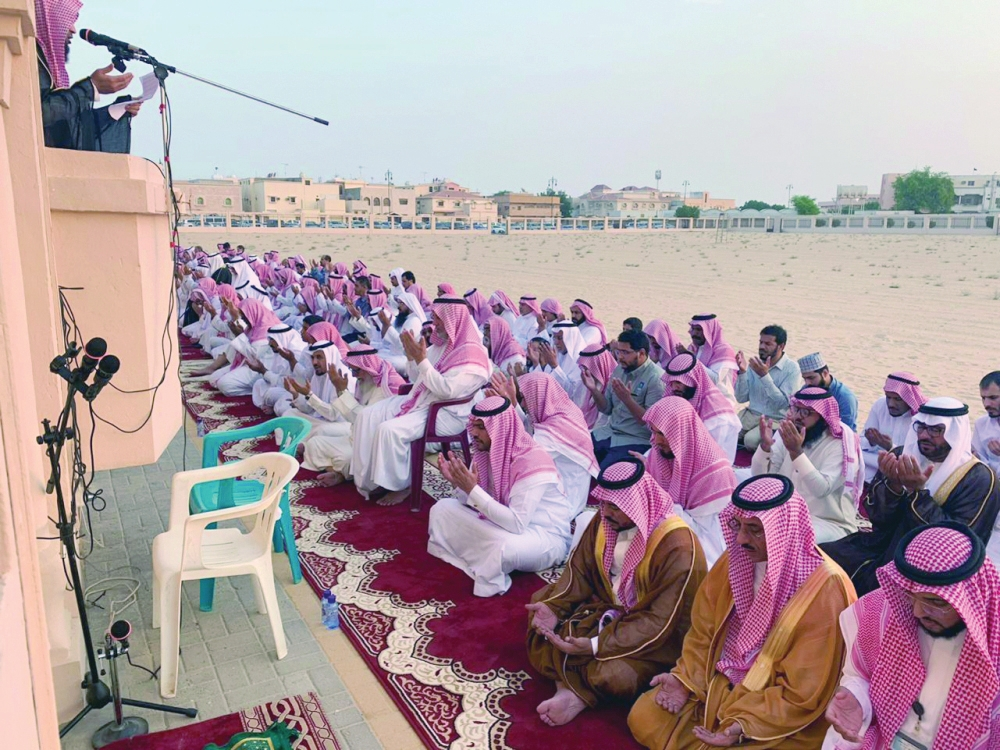
In response to the call of the Custodian of the Two Holy Mosques, King Salman bin Abdulaziz Al Saud, may God protect him, all regions of the Kingdom of Saudi Arabia are preparing to perform the Istisqa' prayer (prayer for rain) next Thursday. This call revives the Sunnah (practice) of the Prophet Muhammad, peace and blessings be upon him, when rain is scarce and the land and its people are in need of it. During this time, Muslims humbly beseech God for mercy and the sending down of rain.
The historical context and religious significance of the prayer for rain
The prayer for rain (Istisqa) is a confirmed Sunnah (recommended practice) of the Prophet Muhammad (peace be upon him). It is a communal act of worship performed by Muslims during times of drought and famine. Its significance lies in its being a sincere expression of reliance on God and recognition of His absolute power, as well as an acknowledgment that sins and transgressions may be a cause of the withholding of blessings. Historically, this prayer was a consistent practice during the time of the Prophet, the Rightly Guided Caliphs, and those who followed them, where people would gather in the desert or in open prayer areas, humbly beseeching their Creator for rain.
Local and regional importance in light of climate change
This call takes on particular significance in Saudi Arabia, a country characterized by its desert landscape and limited natural water resources. The lack of rainfall poses a significant challenge, impacting agriculture, groundwater reserves, and the environment as a whole. Regionally, the Middle East faces increasing water scarcity and desertification challenges, making spiritual recourse and collective prayer an integral part of community culture in coping with these difficult circumstances and serving as a reminder of the importance of preserving natural resources and expressing gratitude for blessings.
How to perform the prayer for rain (Istisqa) in detail
The prayer for rain (Istisqa') is similar in its general form to the Eid prayer, but differs in some details. It consists of two audible rak'ahs (units of prayer) without an adhan (call to prayer) or iqamah (second call to prayer), and is performed as follows:
- The first rak'ah: The imam begins with the opening takbir (Allahu Akbar), then says six more takbirs, raising his hands with each takbir. Then he recites Surah Al-Fatihah aloud and whatever else is easy for him from the Holy Quran.
- The second rak’ah: When rising from prostration for the second rak’ah, the imam says five takbirs (excluding the takbir of transition), then he recites Al-Fatihah aloud and whatever else is easy from the Qur’an, then he completes the prayer as usual.
Sermon for the prayer for rain
After the prayer, the imam delivers a single sermon (unlike the Eid prayer, which has two sermons). In his sermon, the imam focuses on reminding people of God's power and greatness, urging them to repent and seek forgiveness, to give generously in charity, and to return what is owed to its rightful owners, because sins are among the causes of drought. He cites relevant verses from the Quran and sayings of the Prophet Muhammad (peace be upon him).
Prayer and turning the cloak inside out
Among the confirmed Sunnahs in the sermon for Istisqa' (prayer for rain) is to supplicate and beseech Allah frequently. During the supplication, the Imam faces the Qibla and reverses his cloak (such as a bisht or abaya), turning the right side to the left and the left side to the right, and then turning it inside out so that the upper part becomes the lower. The worshippers do the same, and this action is done in the hope of a change of circumstances from hardship to ease and from drought to fertility. Everyone recites many of the established supplications, such as: "O Allah, send us rain, O Allah, grant us abundant, beneficial, wholesome, and plentiful rain, a general and beneficial rain, not harmful.".
General provisions and women's participation
Women may participate in the prayer for rain (Istisqa), provided they stand in rows behind the men, adhere to the Islamic dress code (hijab), and are not adorned with makeup or perfume. This prayer is also prescribed for both residents and travelers when needed. Those who miss the congregational prayer may perform it individually in the same manner, supplicating to God for rain.