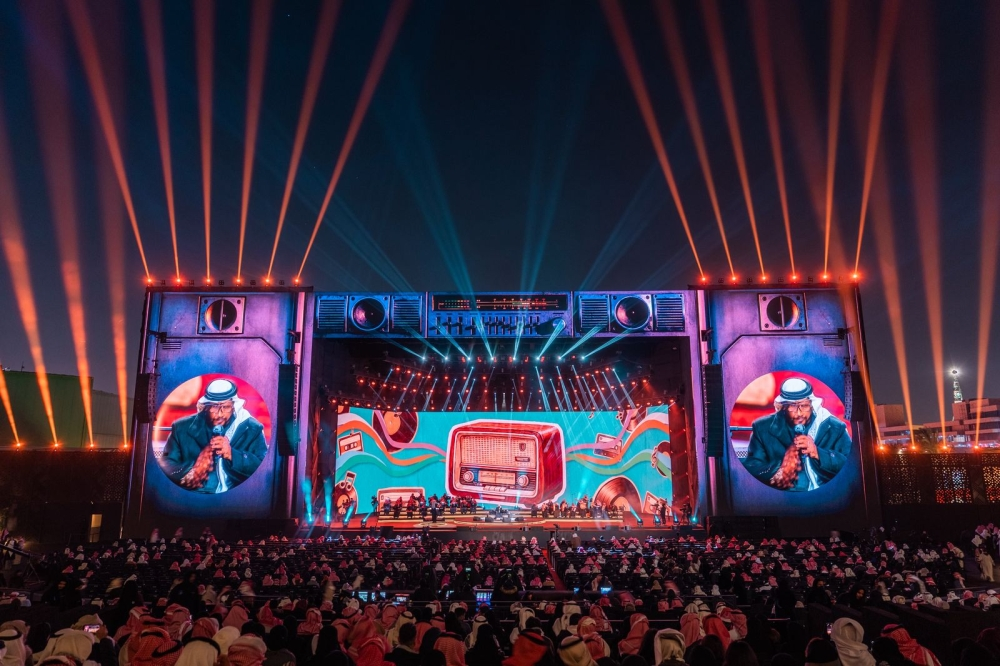
The esteemed Saudi artist Saad Jumaa the emotions of the Arab and Gulf audience with his insightful remarks on the radical transformations witnessed in the art scene, on the sidelines of his distinguished participation in the "Nineties of Makhawi Al-Layl" concert held at the Abu Bakr Salem Theater as part of the Riyadh Season . Jumaa's statements highlighted the significant gap between two generations of musicians, completely different in their formation and influence.
Authentic music... the memory of nations
Saad Jumaa emphasized that Arab art in its golden age was not merely a form of entertainment, but a complete cultural phenomenon characterized by a comprehensive and profound style of musical expression. He pointed out that songs of that era enjoyed a long lifespan, resonating in people's hearts for decades, as lyrics and melodies were crafted with meticulous care and artistic depth. He recalled Egypt's pioneering role during that period, as it served as a beacon for this broad genre of music, shaping the taste of Arab listeners from the Gulf to the Atlantic and establishing the concepts of musical expression that generations still cherish.
The rhythm of the times and the fading of artistic impact
In a detailed analysis of the current state of music, Jumaa explained that the "fast pace" of modern life has significantly impacted artistic production. Following the concert organized by Benchmark, he noted that modern songs have become short-lived, born and dying quickly. He attributed this to the reliance of modern songs on refrains and verses, and on fast, catchy melodies that lack the dramatic musical structure that characterized the songs of the golden age, despite his assertion that a large segment of the audience remains eager for authentic art.
The 1990s: Historical Context and Impact
Saad Jumaa's remarks take on particular significance as they come in the context of recalling the 1990s, a period that witnessed the flourishing and evolution of popular and Gulf music through cassette tapes. That era was not merely a passing phase, but rather established a broad fan base that remains loyal to its stars. This concert serves to reaffirm the value of that era, emphasizing that true art does not fade with time, and that Riyadh Season's in bringing together artistic giants contribute to preserving Saudi musical heritage and presenting it to new generations in a manner befitting its history.
The warmth of the audience breaks the chill of the weather
Regarding the atmosphere of the concert, Saad Jumaa expressed his deep gratitude to the large audience that filled the theater despite the bitterly cold weather in Riyadh. He emphasized that the audience's interaction gave the artists tremendous energy and a special warmth on stage, contributing to the evening's resounding success. In closing, he paid tribute to his colleague that evening, the renowned artist Khaled Abdulrahman (Makhawi Al-Layl), describing him as an artist of established stature and high moral character, and affirming his pride in sharing the stage with him on a night that will remain etched in the memories of lovers of folk music.