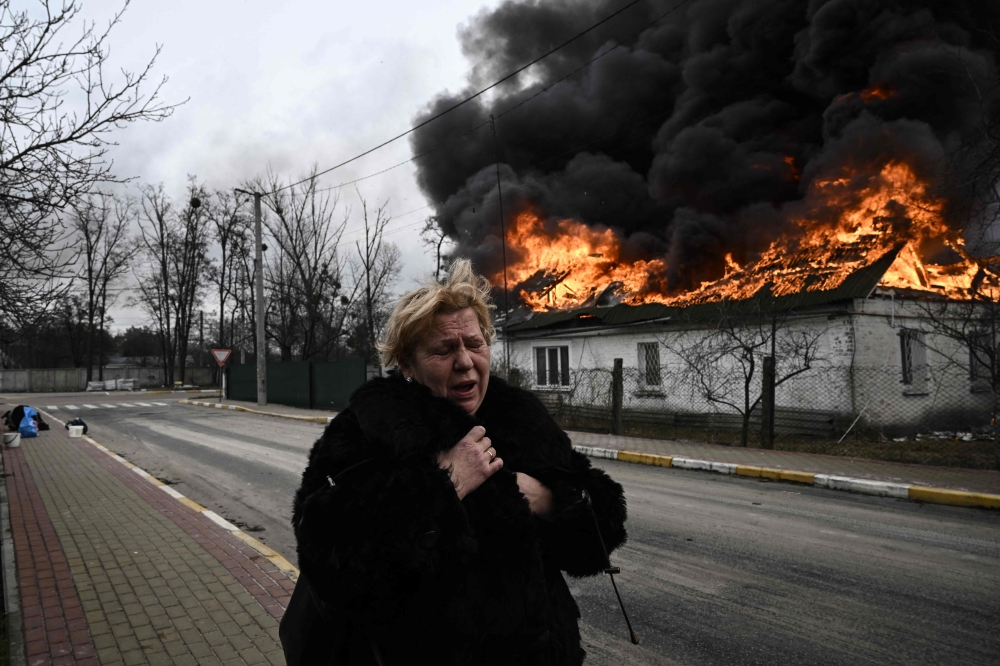
The Ukrainian capital, Kyiv, experienced a tense night as a series of violent explosions rocked the city early Sunday morning, just days before the second anniversary of the full-scale Russian invasion that began in February 2022. Military authorities declared an air alert in the capital, warning of an imminent ballistic missile attack and urging residents to take shelter immediately.
According to the Kyiv military administration, air defense systems were activated to counter the attack. Kyiv Mayor Vitali Klitschko stated that debris from the intercepted missiles fell in various parts of the city, injuring a woman and a child who were hospitalized. He confirmed that the attack was not limited to Kyiv, but also targeted other regions such as Dnipro and Odesa, primarily targeting critical infrastructure.
Context of the attack and historical background
This escalation comes at a sensitive time, as Ukraine and the world prepare to mark the second anniversary of the start of the war. From the early days of the invasion, Kyiv was a primary target for Russian forces, but it withstood attempts to capture it. As the conflict has transformed into a protracted war of attrition, Russia has increasingly relied on a strategy of long-range aerial bombardment using ballistic and cruise missiles, as well as Iranian-made drones. This strategy aims to terrorize the civilian population and destroy vital infrastructure, particularly in the energy sector, with the goal of crippling the Ukrainian state's ability to cope, especially during the harsh winters.
Importance and expected effects
On a local level, this attack serves as a painful reminder to the population of the daily realities of war. It not only causes physical destruction and loss of life, but also places immense psychological pressure on civilians. Furthermore, targeting energy infrastructure leads to power, water, and heating outages, exacerbating the suffering of millions and hindering economic recovery efforts.
At the regional and international levels, this attack underscores once again Ukraine’s urgent and ongoing need for advanced air defense systems from its Western allies. Ukrainian President Volodymyr Zelenskyy, commenting on the attack, stated that “Moscow is focusing its efforts on airstrikes instead of diplomacy,” emphasizing that his country will not back down. Such attacks serve to galvanize international support for Ukraine, as they are seen as evidence of continued Russian aggression and a direct challenge to European security and global stability. They also reinforce international condemnation of Russia and push for further economic and political sanctions.
The Ukrainian Ministry of Energy reported that the latest attacks caused power outages for residents of six regions in the east and southeast of the country, confirming that the energy sector remains the main target of these systematic attacks.