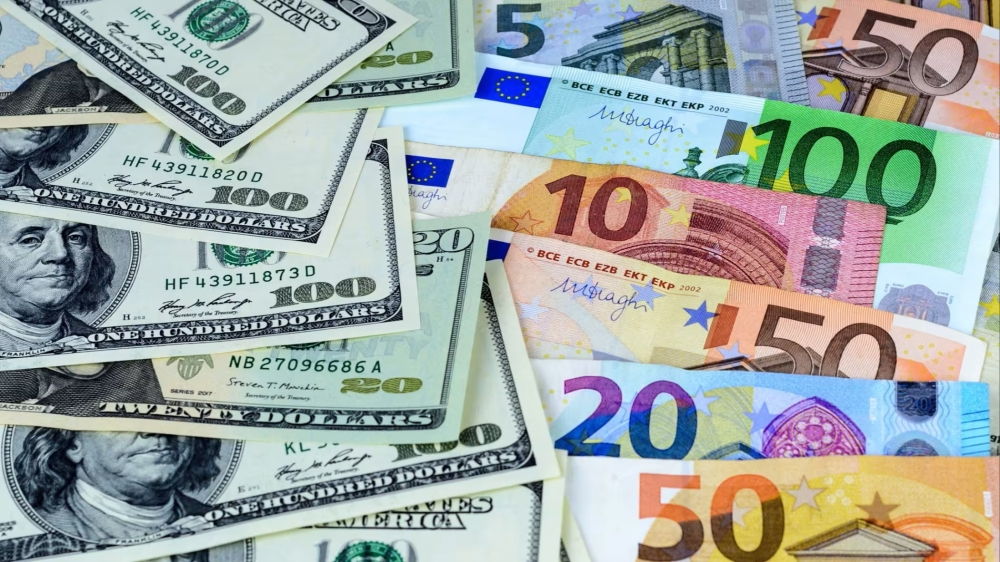
The Central Bank of Russia announced today, in an official statement, the exchange rates of major foreign currencies against the national currency (the ruble) for the period from December 27 to 29. Official data showed a positive trend for the Russian currency, with the ruble recording a notable rise against a basket of major currencies, reflecting the actions of Russian monetary policy in the face of global economic fluctuations.
According to the official figures, the Central Bank lowered the official exchange rate of the US dollar by 19 kopeks, settling at 77.6923 rubles. Similarly, the euro experienced a larger decline, with the bank reducing the official exchange rate by 68 kopeks to 91.2066 rubles. The Chinese yuan also weakened against the ruble, with its exchange rate decreasing by 3 kopeks to 11.0449 rubles.
Implications of timing and economic context
This announcement comes at a time when the Russian economy is striving to stabilize itself amidst complex geopolitical and economic shifts. The central bank's exchange rate mechanism is a vital tool for controlling inflation and maintaining domestic market stability. A rise in the ruble's value is typically linked to several factors, including improved global energy prices, central bank interest rate policies, and the balance of trade.
The importance of the yuan in the Russian equation
Official data consistently emphasizes the Chinese yuan exchange rate, reflecting a strategic shift in Russian foreign trade towards the East. As trade between Moscow and Beijing grows, the stability of the ruble-yuan exchange rate has become crucial for both Russian importers and exporters, particularly in the energy and technology sectors, where the Chinese currency has become a primary alternative to Western currencies in many financial transactions.
Expected impacts locally and internationally
Domestically, the ruble's appreciation helps lower the cost of imported goods, potentially curbing inflation and easing pressure on the purchasing power of Russian citizens during the holiday season and the end of the year. Internationally, these moves send signals to global markets about the Russian financial system's resilience and ability to absorb shocks, while striving to maintain the attractiveness of the national currency despite ongoing external challenges.