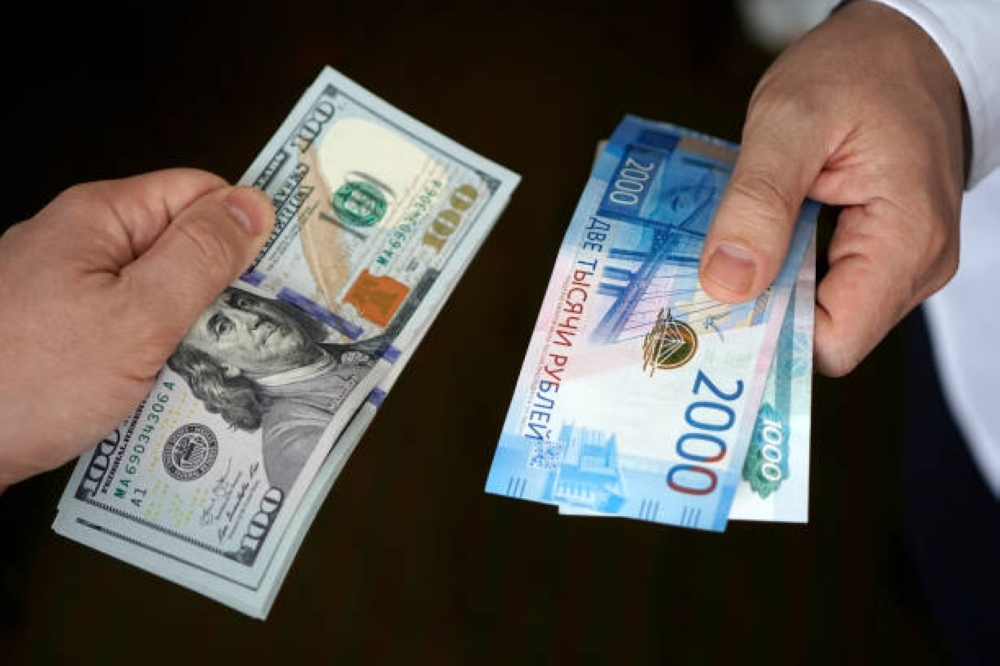
The Central Bank of Russia recently announced new updates to the ruble's exchange rate against a basket of major foreign currencies for the period from March 14 to 16. According to official data, the Russian currency experienced a significant decline, with the bank raising the official exchange rate of the US dollar by 1.1583 rubles compared to the previous day's rate, bringing it to 80.2254 rubles per dollar. The adjustments also included raising the official exchange rate of the euro by 59.54 kopeks to 91.9847 rubles, while the exchange rate of the Chinese yuan was raised by 14.77 kopeks to 11.6504 rubles. These figures reflect the continued volatility in Russia's foreign exchange markets.
Historical context of fluctuations in the ruble exchange rate
To understand the current fluctuations in the ruble's exchange rate , it's essential to consider the broader context and historical background of the Russian economy over the past few years. Since the onset of the geopolitical crisis in Eastern Europe and the imposition of unprecedented Western economic and financial sanctions on Moscow in 2022, the Russian Central Bank has faced immense challenges in maintaining the stability of the national currency. Initially, the ruble plummeted to record lows, prompting monetary authorities to impose strict capital controls and sharply raise interest rates to curb inflation. Over time, Russia adapted to the new economic reality by reorienting its supply chains and energy exports toward Asian markets, which explains the growing interest in pricing the Chinese yuan as a primary currency in Russian trade, rather than relying exclusively on the dollar and the euro.
The economic effects of the decline of the Russian currency, both domestically and internationally
The recent depreciation of the Russian ruble has multifaceted effects at the domestic, regional, and international levels. Domestically, the ruble's depreciation increases the cost of imported goods, placing additional inflationary pressure on Russian consumers and forcing the central bank to maintain high interest rates. However, from a government fiscal perspective, the weaker ruble helps maximize domestic revenues from oil and gas exports, which are sold in foreign currency, thus helping to reduce the budget deficit and finance increased government spending.
At the regional and international levels, these exchange rate movements highlight a strategic shift in the Russian financial system. The continued rise in trading volume in Chinese yuan on the Moscow Exchange reflects a broader trend toward dedollarization of the Russian economy and enhanced financial cooperation with BRICS countries. This shift not only affects Russia but also contributes to reshaping the global payments landscape, as other countries seek to diversify their foreign exchange reserves and reduce their reliance on the traditional Western financial system.
The future of Russian monetary policy
Given these circumstances, the Central Bank of Russia remains on constant alert, monitoring markets and intervening when necessary to ensure financial stability. Managing the exchange rate under sanctions requires a delicate balance between curbing inflation and supporting economic growth, a key challenge that will determine the trajectory of the Russian economy in the coming period.