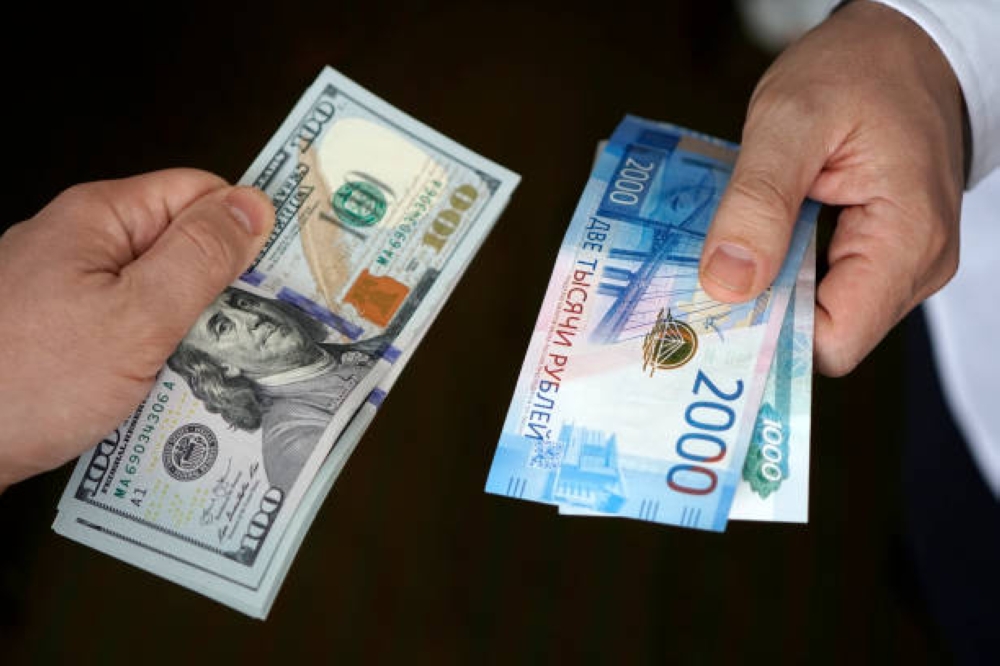
The Central Bank of Russia announced today significant updates to the exchange rates of major foreign currencies against the ruble for the period from March 21 to 23. Specifically, the financial market saw mixed adjustments. The US dollar was devalued by 83.97 kopeks compared to the previous day's rate, settling at 83.9982 rubles. Conversely, the official euro exchange rate was raised by 37.31 kopeks to 97.2886 rubles. The Chinese yuan was also affected, with its exchange rate depreciating by 16.53 kopeks to 12.2171 rubles. These moves reflect the close monitoring of the markets by the monetary authorities to ensure financial stability.
Russian Central Bank policies in the face of economic fluctuations
To understand these daily fluctuations in exchange rates, one must consider the broader economic landscape. Since the beginning of 2022 and the escalation of Western economic sanctions, the Central Bank of Russia a series of extraordinary measures to protect the domestic economy and control capital flows. These measures included restricting cash withdrawals in foreign currencies and requiring exporting companies to sell a significant portion of their hard currency earnings on the domestic market. These strict monetary policies helped absorb the initial shocks and made exchange rate determination largely dependent on the balance between daily supply and demand on the Moscow Exchange, with calculated interventions to ensure the ruble's stability and prevent its collapse against a basket of major currencies.
Strategic shift towards alternative currencies and the Chinese yuan
One of the most significant structural shifts in the Russian economy recently is the accelerating move away from using the dollar and the euro, which Moscow now describes as “unfriendly currencies.” In this context, the Chinese yuan has emerged as a strong strategic alternative. Trade relations between Russia and China have strengthened to an unprecedented degree, and an agreement has been reached to settle the majority of trade using national currencies (the ruble and the yuan). This shift has made the yuan the most traded foreign currency on the Moscow Stock Exchange, which explains the Central Bank’s keen interest in regulating the yuan-ruble exchange rate to ensure the continued flow of goods and services between the two countries, unaffected by Western financial restrictions.
Economic effects of exchange rate adjustments
The ongoing adjustments made by the Central Bank of Russia play a crucial role in shaping the country's economic landscape, both domestically and internationally. Domestically, fluctuations in the ruble's exchange rate directly impact inflation and the prices of imported consumer goods. When the ruble depreciates, the cost of imports rises, putting pressure on citizens' purchasing power. However, from a macroeconomic perspective, the ruble's depreciation against foreign currencies has a positive aspect for the Russian federal budget, as it leads to increased government revenues denominated in rubles from energy exports such as oil and gas. Regionally and internationally, these adjustments send clear signals to trading partners about the stability of the Russian financial system and its ability to adapt to complex geopolitical changes, thus fostering the development of new economic alliances based on alternative payment systems that move away from the traditional dominance of the US dollar.