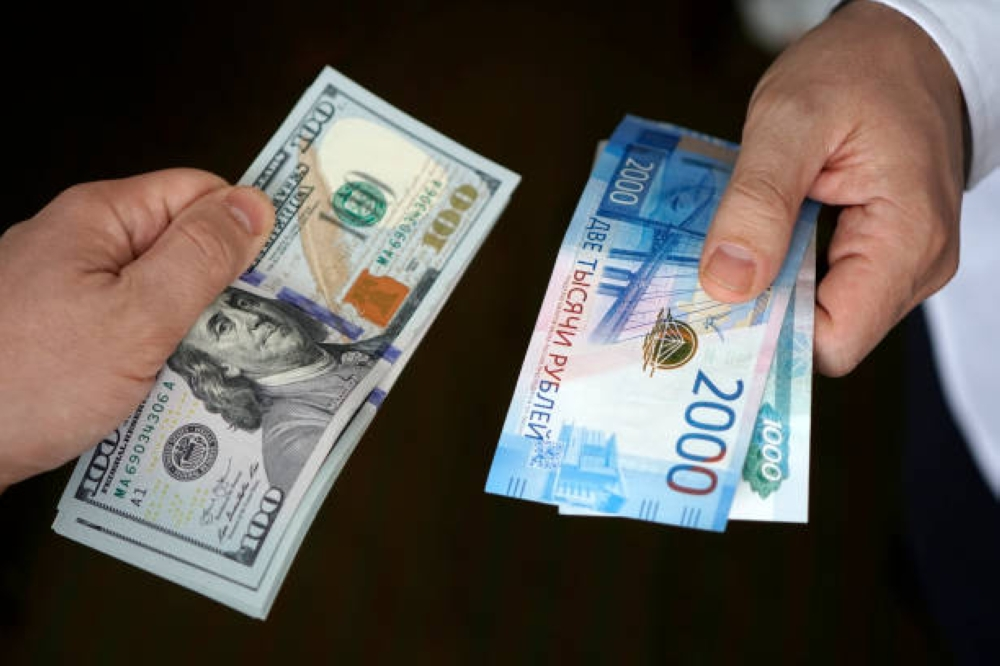
The Central Bank of Russia announced new exchange rates for major foreign currencies against the Russian ruble for the period from January 24 to 26. These updates revealed mixed performance among foreign currencies, with the US dollar experiencing a slight decline, while the euro and the Chinese yuan both rose, reflecting current market dynamics and ongoing shifts in the Russian economic landscape.
Details of the new exchange rates
According to official data from the Central Bank, the official exchange rate of the US dollar was lowered by 11.36 kopeks compared to the previous day's trading, settling at 75.9246 rubles. This decrease comes as Russian financial authorities seek to maintain the stability of the national currency amidst global volatility.
In contrast, other currencies saw significant gains against the ruble. The Central Bank raised the euro's exchange rate by 26.91 kopeks, bringing it to 89.0589 rubles. The Chinese yuan also continued its gradual rise, increasing by 0.78 kopeks to 10.8724 rubles, underscoring the growing importance of the Chinese currency in the Russian currency basket.
The economic context and the shift towards the East
These exchange rate movements come within a broader economic context characterized by Russia's ongoing efforts to reduce its reliance on the dollar and euro in its trade and financial transactions, a policy known as "de-dollarization." Since the imposition of extensive Western sanctions, the Russian economy has increasingly focused on strengthening trade ties with Asian powers, particularly China.
The slight appreciation of the yuan reflects this strategic trend; the Chinese currency has become pivotal in financing Russia's foreign trade and in the central bank's reserves, serving as an alternative to traditional Western currencies. These figures are an important indicator for Russian importers and exporters who are restructuring their supply chains away from Western markets.
The mechanism for determining prices and its impact
It is worth noting that the Central Bank of Russia sets the official exchange rates for foreign currencies based on the weighted average of prices traded on the Moscow Exchange. These official rates are used in government accounting, customs duties, and budget preparation, thus having a direct impact on inflation and the prices of imported goods in the domestic market.
Despite daily fluctuations, the stability of the ruble at levels in the seventies against the dollar is a tactical objective of monetary policy, balancing the interests of exporters (who benefit from a weaker ruble to increase export earnings) and the interests of consumers (who benefit from a stronger ruble to reduce import costs and curb inflation).