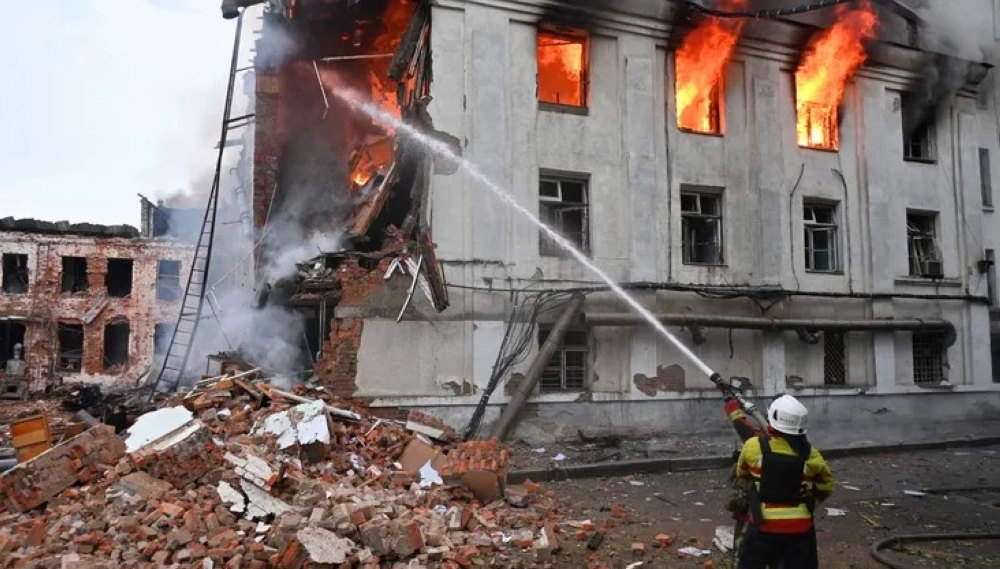
Ukrainian President Volodymyr Zelensky announced on Thursday that Russia began the new year of 2026 with an unprecedented military escalation, continuing the war between the two sides that has raged for nearly four years. Zelensky asserted that Russian forces launched more than 200 attack drones toward Ukrainian territory overnight, primarily targeting energy infrastructure, in a renewed attempt to plunge the country into darkness and cold as winter intensifies.
Energy targeting strategy and history of conflict
This intensified attack is part of a military strategy Moscow has consistently pursued since the outbreak of war in February 2022, with Russian strikes periodically targeting Ukrainian power plants and distribution networks. This tactic, which Kyiv describes as "energy terrorism," aims to demoralize Ukrainians and cripple the domestic economy, as well as further strain air defense systems already stretched thin by the depletion of their Western-made interceptor missiles against swarms of low-cost drones, such as the Shahed.
As the war enters its fifth year, the battles continue to see advances and retreats without a final resolution, as the confrontations have turned into a long-term war of attrition that increasingly relies on drone technology and long-range missile strikes, amid ongoing international calls for a diplomatic solution to end the escalating humanitarian suffering.
Mutual accusations and 24 killed in Kherson
In a significant development on the ground, Russia accused the Ukrainian army of launching a deadly New Year's Eve attack targeting a Russian-controlled area in the Kherson region of southern Ukraine. The Russian Investigative Committee stated in an official statement that a heavy Ukrainian drone strike targeted a cafe in the village of Khorly, killing 24 people and injuring dozens more.
Vladimir Saldo, the Moscow-appointed governor of the region, confirmed via Telegram that the attack targeted civilians celebrating the New Year, describing the incident as a serious act of aggression. The Kherson region is one of the most volatile and sensitive fronts in the conflict, as the Dnieper River bisects the region, and Russian and Ukrainian forces exchange artillery and air fire across its banks almost daily.
Regional and international impacts of the escalation
This dual escalation at the beginning of 2026 carries worrying implications for the international community, indicating that both sides still possess the capacity to launch large-scale attacks despite the heavy losses they have suffered in recent years. This situation further complicates Western and European diplomatic efforts to de-escalate the situation and places additional pressure on Ukraine's allies to expedite the delivery of advanced air defense systems to protect cities and vital infrastructure from ongoing air attacks.