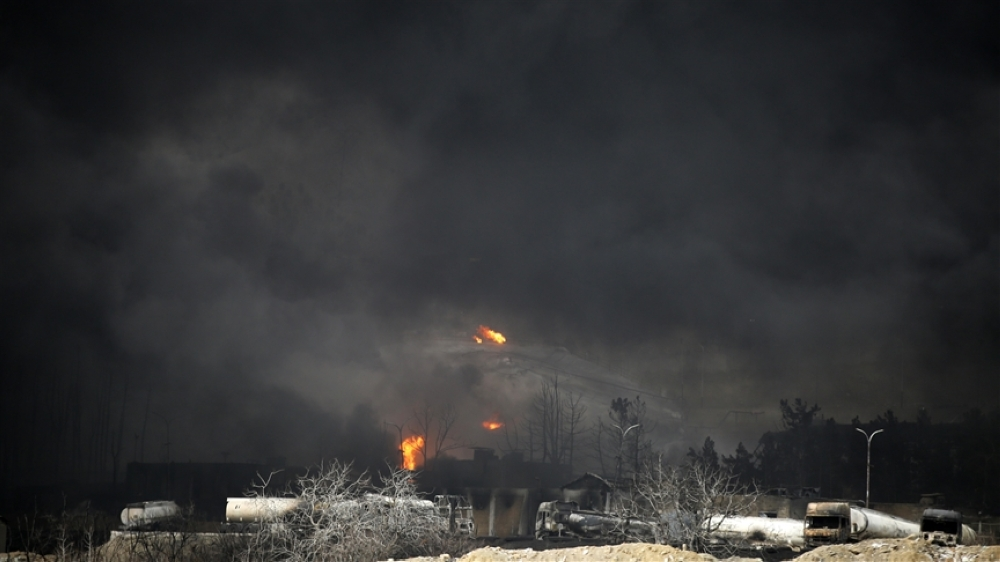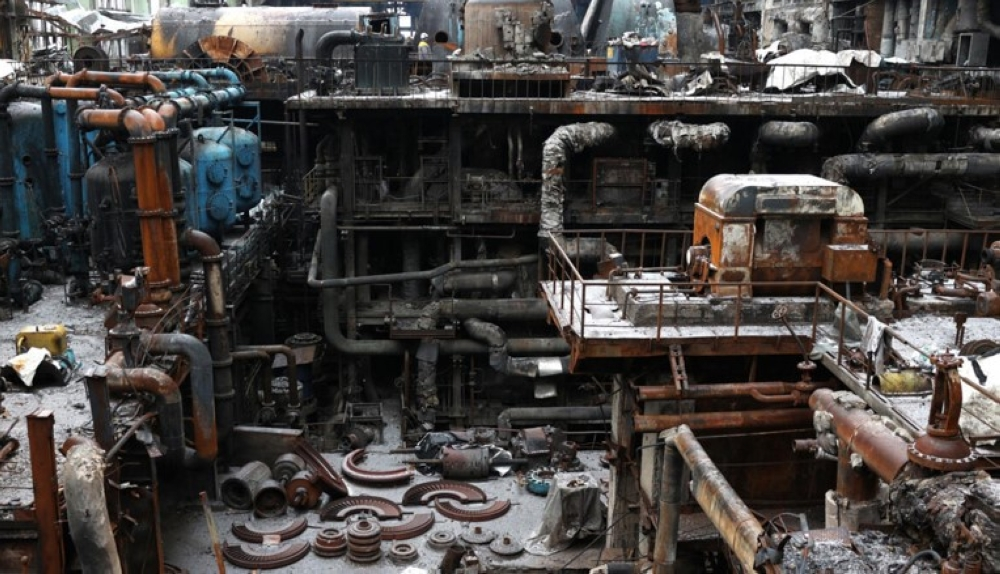
In a significant escalation of military operations, the Russian Ministry of Defense announced on Saturday a large-scale attack targeting Ukraine's industrial and energy infrastructure, employing a sophisticated arsenal of weapons including Kinzhal hypersonic missiles. This aggressive attack, according to the Russian narrative, is a direct response to recent Ukrainian attacks that reached deep into Russia and resulted in civilian casualties.
Details of the Russian attack and retaliatory response
Moscow confirmed that its forces successfully carried out precision strikes overnight Friday into Saturday, targeting vital infrastructure in Ukraine's military-industrial and power sectors. The Defense Ministry stated that the use of hypersonic Kinzhal (Dagger) missiles was intended to ensure the destruction of fortified targets, in response to what it described as "terrorist attacks" launched by Kyiv against civilian targets within Russian territory.
Ukrainian losses and the electricity crisis
For his part, Ukrainian President Volodymyr Zelensky revealed the extent of the severe damage caused by the Russian bombing, noting that more than ten vital civilian facilities were damaged. Zelensky explained via social media that the attacks left thousands of citizens without electricity in seven different regions, exacerbating the humanitarian crisis as winter approaches.
The Ukrainian president said: “It is important for the world to see the truth about Russian intentions. This bombing confirms that Moscow is not seeking to end the war, but rather aims to destroy the foundations of the state and inflict the greatest possible pain on the Ukrainian people.”.
The spark of escalation: the Saratov attack
This Russian escalation came after a Ukrainian drone attack targeted the city of Saratov in central Russia, killing two people and injuring others. The governor of the Saratov region, Roman Posargin, explained that one of the drones directly hit a residential building, damaging several apartments, and pledged to provide financial compensation to those affected.
Strategic context: Infrastructure warfare
This targeting is not new in the context of the Russian-Ukrainian war that erupted in February 2022. Russian forces have consistently employed a strategy of targeting power grids and electrical transformers, particularly during the winter months. This strategy aims to cripple the Ukrainian economy and undermine public morale by depriving residents of heating and electricity—a tactic Kyiv and its Western allies refer to as a “winter weapon.”.
The importance of Kinzhal missiles and their military impact
The use of Kinzhal hypersonic missiles sends a powerful military and political message. These missiles can fly at speeds of up to Mach 10 (10 times the speed of sound), making them extremely difficult to intercept with conventional air defense systems. The deployment of this type of weapon indicates Moscow's desire to achieve decisive hits and overcome the Western defense systems recently acquired by Ukraine, such as the Patriot systems.
Expected regional and international repercussions
This escalation is expected to cast a shadow over the international landscape, increasing Kyiv's demands for its Western allies and NATO to expedite the delivery of more advanced air defense systems to protect its airspace. Furthermore, continued targeting of energy infrastructure could trigger new waves of displacement, either internally or towards neighboring European countries, as people flee darkness and cold, placing additional strain on countries providing economic and humanitarian support to Ukraine.