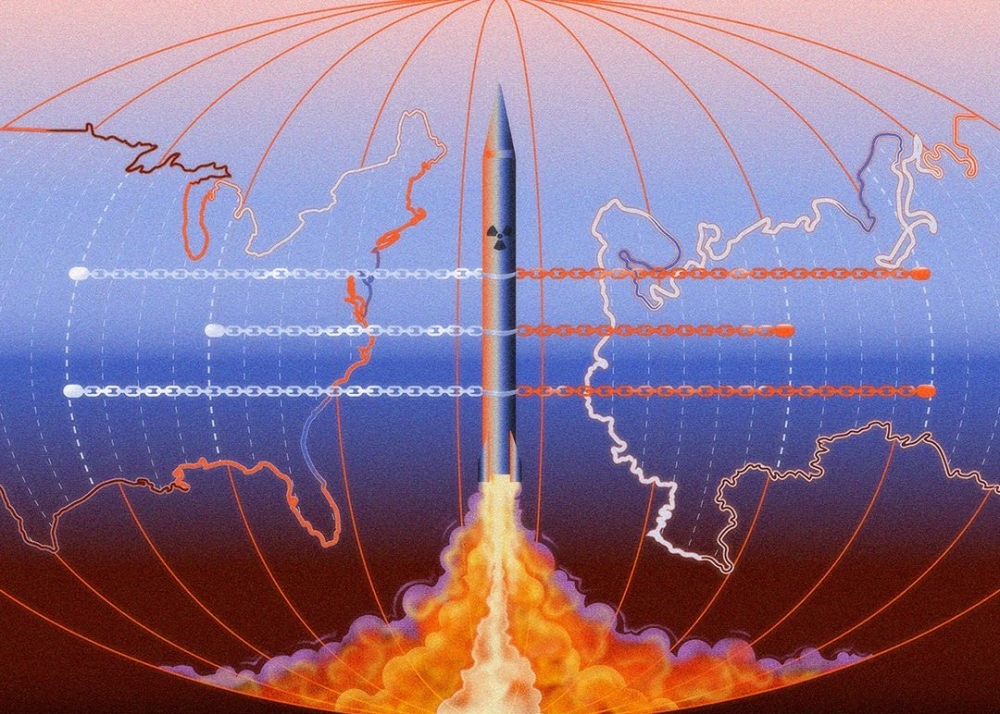
Moscow reaffirmed its cautious stance on the future of nuclear arms control, announcing on Wednesday that it would continue to respect the quantitative limits imposed by the New START treaty, provided the United States adheres to the same restrictions. This statement, coming amid escalating tensions between the world's two largest nuclear powers, adds a new layer of uncertainty to the fate of the last major strategic arms control agreement between the two countries.
Historical background: The New START Treaty and its significance
The New START Treaty (New Strategic Arms Reduction Treaty), signed in Prague in 2010 by then-US President Barack Obama and his Russian counterpart Dmitry Medvedev, has been a cornerstone of the global security architecture over the past decade. The treaty places verifiable limits on the world’s two largest nuclear arsenals, capping each side on a maximum of 1,550 deployed strategic nuclear warheads and 700 delivery systems, such as intercontinental ballistic missiles, submarine-launched ballistic missiles, and heavy bombers.
The treaty was extended in 2021 for an additional five years and was intended to provide a basis for future negotiations on new arms control agreements. However, relations deteriorated sharply, particularly after Russia’s invasion of Ukraine in February 2022, prompting Russian President Vladimir Putin to announce the “suspension” of his country’s participation in the treaty in February 2023, arguing that it was impossible to allow US inspections of Russian nuclear sites while Washington supported Kyiv.
Expected impacts and international repercussions
Russia’s decision to suspend its nuclear program has sparked widespread international concern, with NATO warning that it undermines the global arms control architecture. The alliance called on Russia to act responsibly and with restraint, emphasizing that nuclear stability is essential for global security. Russian Foreign Minister Sergey Lavrov’s recent statement, asserting that Russia’s self-imposed “freeze” remains in effect as long as the United States does not cross the established boundaries, carries a dual message. On the one hand, it reassures the world that an unrestrained nuclear arms race has not yet begun; on the other hand, it places the onus on Washington, holding it responsible for any future escalation.
The absence of a mutual verification mechanism, such as the suspended inspections, exacerbates mistrust and increases the risk of miscalculation between the two powers. With the treaty's official expiration date approaching in February 2026, experts fear a dangerous strategic vacuum that could encourage other countries to develop their nuclear capabilities, threatening the collapse of the decades-long nuclear nonproliferation regime.