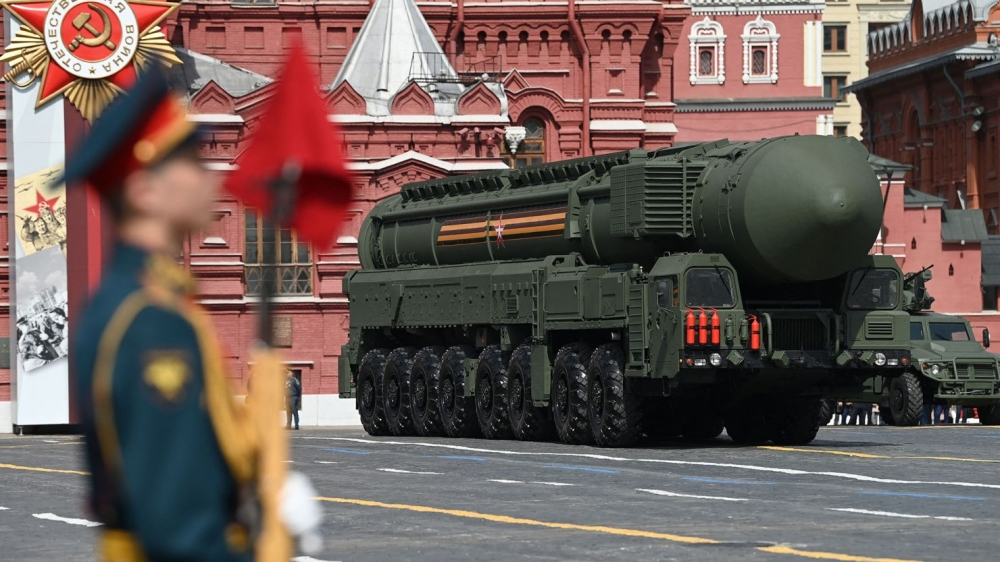
In a move that further escalates international tensions, Russia has officially declared that it no longer considers itself bound by the restrictions of the New START nuclear arms control treaty, the last major arms control agreement in force between it and the United States. The Russian Foreign Ministry stated unequivocally: “We assume that the parties to the New START Treaty are no longer bound by any mutual commitments or declarations under the treaty,” effectively ending decades of relative cooperation on arms control.
Historical context of the New START treaty
The New START Treaty, signed by U.S. President Barack Obama and Russian President Dmitry Medvedev in Prague in 2010 and which entered into force in 2011, has been a cornerstone of nuclear arms control efforts for a decade. The treaty aimed to cap the number of strategic nuclear warheads each country could deploy at 1,550, as well as limiting the number of land-based, sea-based, and heavy bombers to 700. It built upon a long legacy of negotiations that began during the Cold War, such as the SALT and START I treaties, which sought to establish a degree of stability and prevent a catastrophic nuclear arms race between the two superpowers.
The importance of the event and its expected impact
The collapse of the New START treaty is causing deep concern both regionally and internationally. Without any binding restrictions or transparent verification mechanisms, the door is wide open to a new and uncontrolled arms race between the world’s two largest nuclear powers, which together possess approximately 90% of the world’s nuclear weapons. This uncertainty increases the risk of miscalculation and accidental conflict, and undermines the global security architecture that took decades to build. This announcement was not entirely unexpected, as Russian President Vladimir Putin had already announced in February 2023 the “suspension” of his country’s participation in the treaty, accusing Washington of supporting Ukraine and undermining Russian security. For its part, the United States has repeatedly accused Russia of failing to comply with its obligations, particularly regarding reciprocal inspections.
An uncertain future for international security
Experts view the future with concern, as relations between Moscow and Washington enter a new era of strategic uncertainty. The end of New START not only marks the end of a treaty but could also be the beginning of a new and troubling chapter in the history of global nuclear arms, especially with the rise of other nuclear powers like China, which are not party to any similar treaties, making the global security landscape more complex and dangerous.