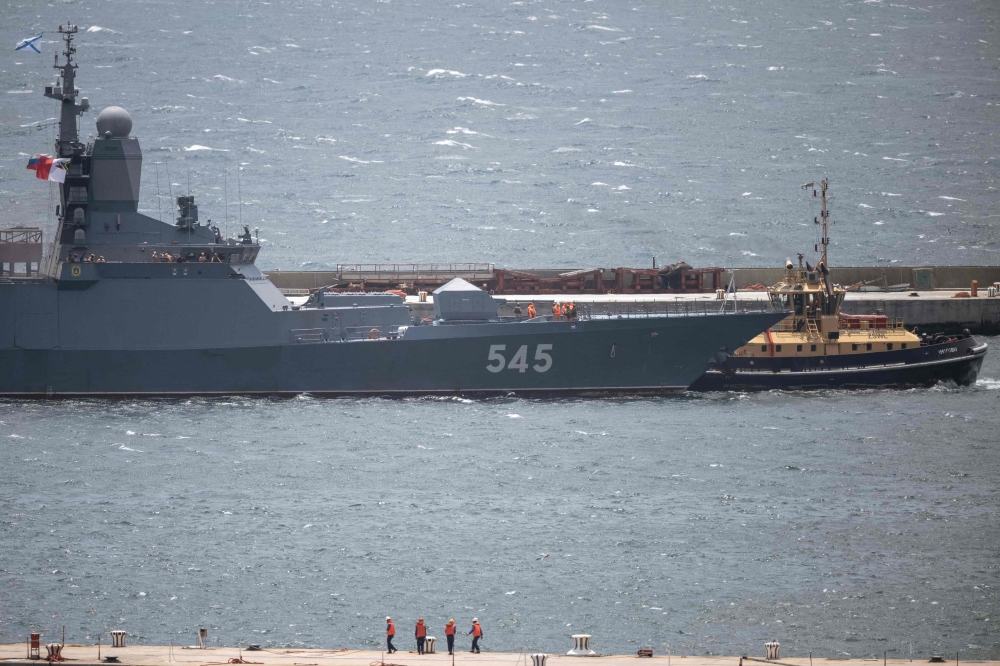
In a striking geopolitical development reflecting the growing trend of strategic alliances outside the Western sphere, a Russian warship joined a group of Chinese and Iranian vessels in South African territorial waters. These movements, part of the joint military exercises of the BRICS Plus group, dubbed "Will for Peace," have once again provoked Washington and heightened diplomatic tensions with Pretoria.
These intensive naval exercises are scheduled to continue until January 16, at a highly sensitive time marked by strained relations between the United States and South Africa. The South African military stated that the maneuvers are based on “joint measures primarily aimed at ensuring maritime security” and enhancing military coordination among the participating nations.
Context of international tensions and official denial
In a related development concerning rapidly unfolding global events, a spokesperson for the South African Ministry of Defence categorically affirmed that these exercises “have absolutely no connection to the recent developments in Venezuela.” This statement aims to deny any link between the maneuvers and the ship seizures carried out by Washington off the Venezuelan coast, or the military operation in Caracas that led to dramatic developments involving the Venezuelan leadership. The spokesperson explained that “these exercises have been in preparation since 2025 and were previously postponed due to a scheduling conflict with the G20 summit” hosted by Johannesburg.
Historical background: The rise of the BRICS military alliance
This event cannot be understood in isolation from the historical context of the BRICS group's development. Since South Africa joined the group in 2010, the member states (Russia, China, India, Brazil, and South Africa) have sought to create a strategic balance with Western powers. As the group expanded to include regional powers such as Iran and the United Arab Emirates, joint military exercises became more regular and serious, moving beyond purely economic cooperation to include security and defense coordination aimed at protecting these countries' interests in vital waterways.
Strategic importance and political messages
These maneuvers carry profound strategic implications that extend far beyond mere military training. South Africa, with its strategic location controlling the Cape of Good Hope route, represents a vital hub for global trade and naval movement between the Indian and Atlantic Oceans. The convergence of naval vessels from China, Russia, and Iran in this region sends a clear message about these powers' ability to operate jointly beyond their territorial boundaries and underscores their determination to challenge unilateral dominance over the open seas.
Broad international participation
China is leading the current “Will of Peace” military exercises, amid growing international participation that reflects the growing influence of the new bloc. In addition to the three major powers, South Africa’s Deputy Minister of Defence, Panto Holomesa, told Newsroom Africa that the United Arab Emirates will also be sending ships to participate in the drills. Other BRICS Plus member states, such as Indonesia, Ethiopia, and Brazil, will also be participating as observers, further enhancing the global reach of this military event.