In a significant development that threatens to further complicate the global geopolitical landscape, Moscow has leveled direct and strongly worded accusations against the United States, accusing it of deliberately provoking military and political tensions and threatening the safety of international navigation. This comes in the wake of Washington's announcement, with logistical and operational support from Britain, of the seizure of a Russian-flagged oil tanker in the North Atlantic.
Details of the interception operation in the Atlantic
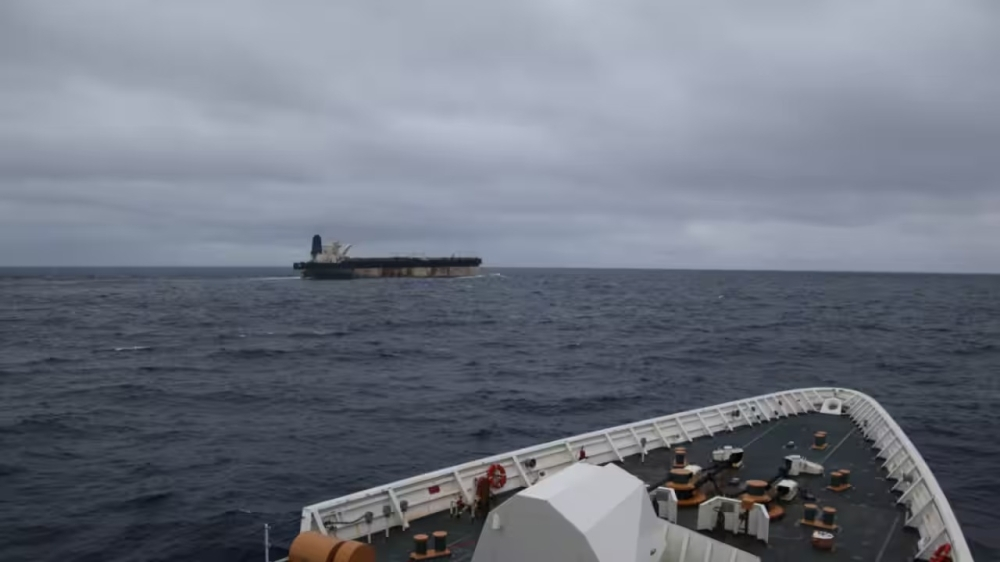
According to official data, US forces intercepted the vessel known as the Bella 1, later renamed the Marinera, after a pursuit that lasted several days. The operation took place in the strategic area between Britain, Iceland, and Greenland, a vital shipping lane known militarily as the GIUK gap.
The Russian Foreign Ministry considered that this American move "will only lead to further military and political tension," expressing its deep concern over what it described as "Washington's readiness to cause international crises," noting that such actions could open the door to dangerous scenarios on the high seas.
The British role in the process
The operation was not solely American, as the British Ministry of Defence revealed that it had provided "coordinated operational assistance" in response to a request from Washington. This assistance included:
- Providing the right to use at least one airbase for US forces.
- The British Royal Forces are responsible for close aerial surveillance of the area.
- Providing a supply ship to support US naval units during the pursuit and interception operation.
The context of sanctions and the shadow war
This incident comes within the broader context of the economic and political conflict between Russia and the West. Since the imposition of Western sanctions on the Russian energy sector, including price caps on oil, so-called "shadow fleets" have become active—ships that change their names and flags to circumvent sanctions and transport Russian oil to global markets.
Experts in international law and international relations point out that the United States' shift from financial sanctions to the "physical interception" of ships at sea represents a qualitative shift in its blockade strategy. This shift reflects the desire of Washington and its allies to close the loopholes that allow Moscow to reap huge oil revenues despite the sanctions, but it also increases the risk of direct confrontation between the superpowers.
Potential repercussions for international navigation
Observers believe that the recurrence of such incidents could threaten the stability of maritime trade in vital international waterways. Russian accusations against Washington of threatening navigation stem not only from an isolated incident, but also from fears that the oceans are becoming arenas for military influence and pursuit, which could affect global supply chains and already volatile energy prices.