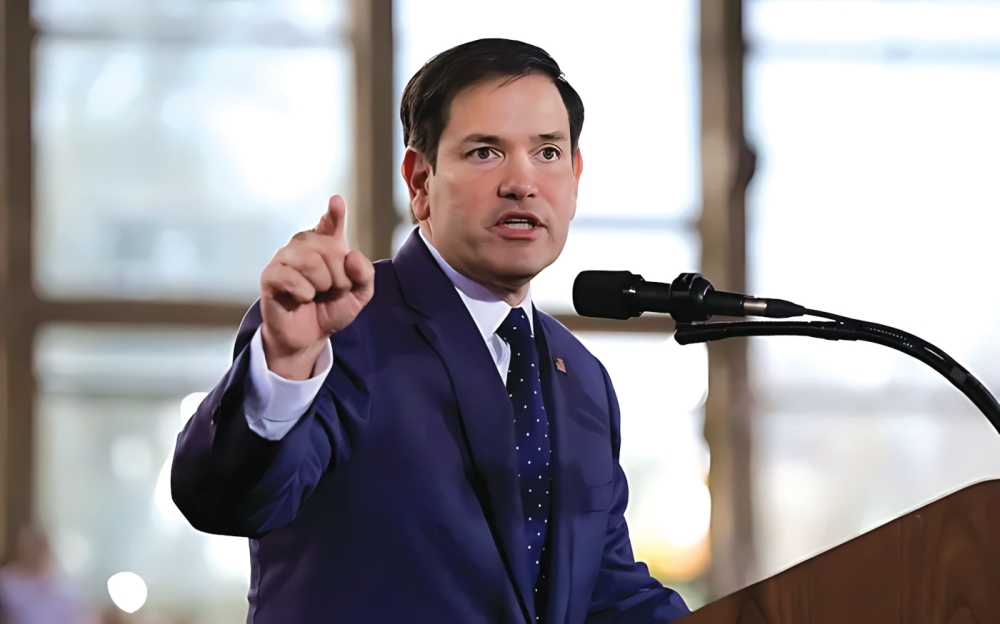
US Secretary of State Marco Rubio on Sunday that the United States is conditionally prepared to work with the remaining leaders in power in Venezuela , following the US-led operation that ousted and arrested Venezuelan President Nicolás Maduro . Rubio explained that the future of relations depends entirely on these leaders making the "right decision" at this critical juncture.
Washington's position: The ball is in Caracas's court
In an interview with CBS News, Rubio indicated that the US administration is closely monitoring the actions of current officials in Caracas. "Our position will be determined by what they do, and we will see what they do in the coming hours and days," he said. He added, in a warning tone, "What I do know is that if they don't make the right decision, the United States will retain several tools of pressure," hinting at the possibility of imposing further sanctions or taking strong diplomatic and economic measures to ensure a smooth transition of power.
Context of the crisis: Decades of tension and economic collapse
These rapid developments are the culmination of years of intense tension between Washington and Caracas. Since the rise of the Chavista movement to power, and subsequently the presidency of Nicolás Maduro, relations have steadily deteriorated. The United States and many Western countries accuse the Maduro regime of undermining democracy, particularly after the 2018 elections, which were marred by allegations of fraud, as well as economic mismanagement that has transformed Venezuela—which possesses the world's largest oil reserves—into a country suffering from hyperinflation and severe shortages of food and medicine, prompting millions to emigrate.
Observers believe that the recent US operation represents a radical turning point in US policy towards Latin America, as Washington has moved from a policy of maximum economic sanctions to direct intervention to change the political equation, which raises questions about the future stability of the region and global energy supplies.
Chinese anger and demands for immediate release
Internationally, Maduro's arrest has provoked angry reactions from Venezuela's traditional allies. China, one of Venezuela's largest creditors and a major energy trading partner, has demanded that the United States immediately release Maduro.
In a strongly worded official statement, the Chinese Foreign Ministry said, "China calls on the United States to guarantee the personal safety of President Nicolás Maduro and his wife, release them immediately, and cease its attempts to overthrow the Venezuelan government." Beijing described the US operation as a "clear violation of international law" and the principles of the UN Charter, which prohibit interference in the internal affairs of sovereign states, signaling a potential escalation of diplomatic tensions between the major powers over the Venezuelan crisis.