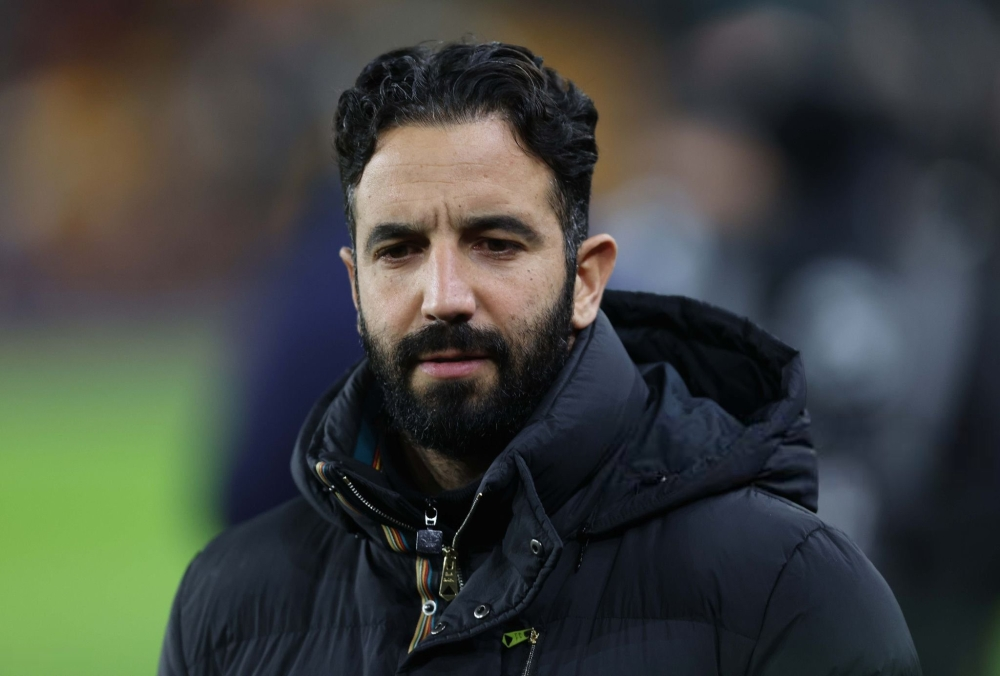
In statements reflecting his strong personality and independent artistic vision, Portuguese Ruben Amorim, the manager of Manchester United, confirmed that his decision to change the game plan recently was not a result of increasing media pressure, stressing that giving in to the demands of the press would have meant "the end" of his career at Old Trafford before it had even begun.
A new tactic and forced flexibility
These statements came on the eve of his team's upcoming match against Wolverhampton in the 19th round of the English Premier League. Amorim had surprised observers in the previous match against Newcastle United by abandoning his preferred tactical formation (three defenders at the back), opting instead for a traditional four-man defense, a change that contributed to a 1-0 victory.
The young coach, famous for his earlier statement "Even the Pope can't force me to change my system," demonstrated considerable tactical maturity by clarifying that stubbornness is not an end in itself. He said at the press conference: "When I arrived last season, I realized I might not have the players to perfectly implement the three-man defense, but it was essential to establish the team's identity first. Today the situation is different; we are short on players, and we had to adapt so the players understood that the change was for the benefit of the team and not a capitulation to external pressures.".
The philosophy of training in the face of the English press
Dealing with the English media has historically been one of the biggest challenges facing Manchester United managers, from the era of Sir Alex Ferguson to former managers like Jose Mourinho and Erik ten Hag. Amorim is well aware that appearing as a manager who changes his mind based on newspaper articles will cost him the respect of the dressing room.
The 40-year-old coach, who previously enjoyed considerable success with Sporting Lisbon, explained: "When you talk in the media about the need to change the system all the time, I can't do it immediately, because the players will think I'm doing it out of fear or to please you, and I think that's the moment the coach's authority ends." He added: "Changes should come when we're playing well, so it's a purely tactical decision. We'll become a better team over time, and we won't be playing with three defenders all the time when the squad is complete.".
The injury crisis and Bruno Fernandes' situation
Manchester United face Wolverhampton Wanderers in difficult circumstances, missing seven key players, which partly explains their recent tactical flexibility. Despite managing only two wins in their last eight matches before the Newcastle clash, United have a good chance of securing another victory, especially given Wolverhampton's disastrous season and their failure to win any of their 18 matches.
Regarding the team captain, Amorim settled the debate surrounding the participation of his compatriot Bruno Fernandes, who suffered a hamstring injury against Aston Villa. Amorim stated clearly: "Bruno tells me he wants to return and says he needs to train, but there is no chance of him playing against Wolverhampton. You can write that down." However, Amorim praised Fernandes' (31 years old) leadership role off the pitch, emphasizing that he remains influential with his voice and guidance to his teammates even when unavailable, embodying the leadership spirit the team needs at this crucial stage of the season.