The Riyadh Theatre Festival, in its third edition, organized by the Theatre and Performing Arts Authority, continues its creative momentum on its second day, presenting a rich artistic and cultural program that reflects the rapid development of the Saudi theatre scene. The festival, held at the Princess Nourah bint Abdulrahman University Conference Center until December 22, continues to attract audiences with high-quality theatrical performances and specialized workshops within an interactive artistic environment.
Cultural background and ambitious vision
This festival is a key outcome of the National Culture Strategy, stemming from Saudi Vision 2030, which aims to make culture a way of life for society. Since its inception, the General Commission for Theater and Performing Arts has been working to build a robust infrastructure for the theater sector by supporting talent, developing local productions, and providing professional platforms for showcasing theatrical works. The Riyadh Theater Festival represents the culmination of these efforts, offering Saudi theater groups an opportunity to compete and present their best work, thus contributing to raising the level of artistic quality and enhancing the theatrical movement in the Kingdom.
Specialized workshops and creative presentations
The second day of the festival saw the continuation of the training programs, including a specialized workshop on "Theatrical Space and Scenography" presented by Professor Mohammed Jamil. The workshop focused on the organic relationship between the visual composition of the stage and the dramatic structure of the text, and how scenography can transform from a mere decorative backdrop into an active element in the narrative, contributing to the construction of meaning and deepening the audience's experience. The workshop was met with great enthusiasm from the participants, who enriched the discussion with practical examples and case studies.
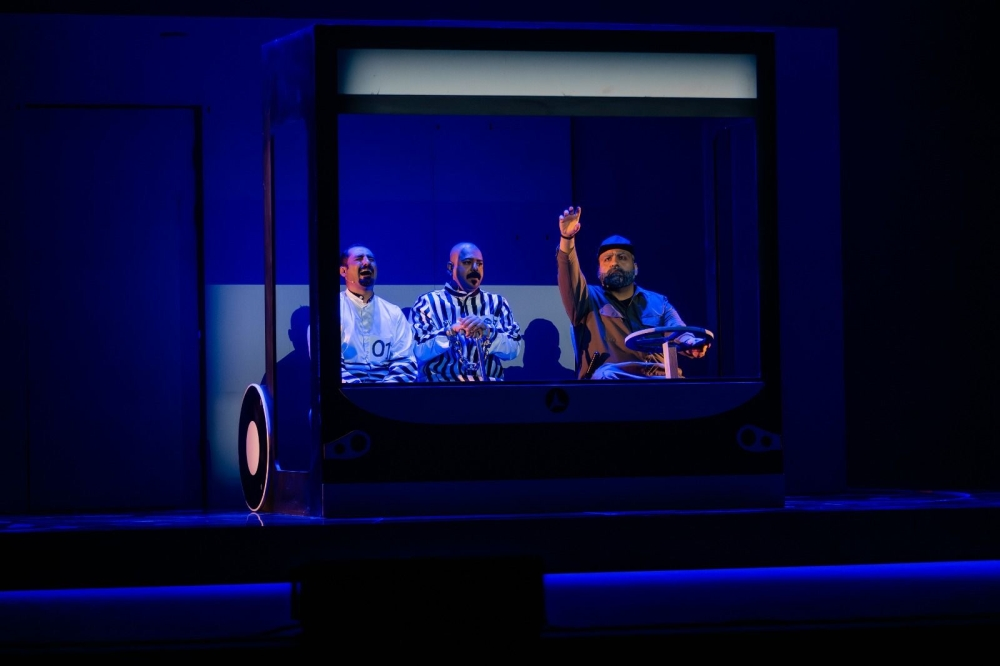
As part of the official theatrical program, the “Nuta” troupe presented the play “Utopia,” written and directed by Dr. Numan Kaduh. Set in a psychiatric hospital, the play raises profound philosophical questions about the human psyche and its contradictions, blurring the lines between normality and abnormality, with psychological disturbance affecting all characters, including the medical staff. In the critical discussion following the performance, critic Ayed Al-Baqmi praised the play's dramatic structure and its ability to pose bold intellectual questions.
Human impact and existential questions
The second day also featured the play “Disruption,” which presented a moving human story of a man in his forties facing cancer. The work explores the concepts of destiny, freedom, and the meaning of life in the face of death, and poses existential questions about how a person deals with their inevitable fate. In his critical reading, critic Nasser Al-Omari highlighted the profound human dimensions of the text and the dramatic treatment that successfully portrayed the suffering of the main character with artistic honesty.
The importance of the festival and its future impact
The impact of the Riyadh Theatre Festival extends far beyond its brief duration, serving as a vital contributor to the development of the theatre industry in Saudi Arabia. Locally, the festival helps discover and empower young talent, fostering a discerning theatre audience capable of critically engaging with performances. Regionally, it reinforces Riyadh's position as a cultural and artistic capital in the region, opening avenues for collaboration and artistic exchange with other Arab theatre traditions. The success of this edition is expected to solidify the festival as an annual event eagerly anticipated by both theatre professionals and the public, thus supporting the goals of Vision 2030 in building a thriving and sustainable cultural sector.