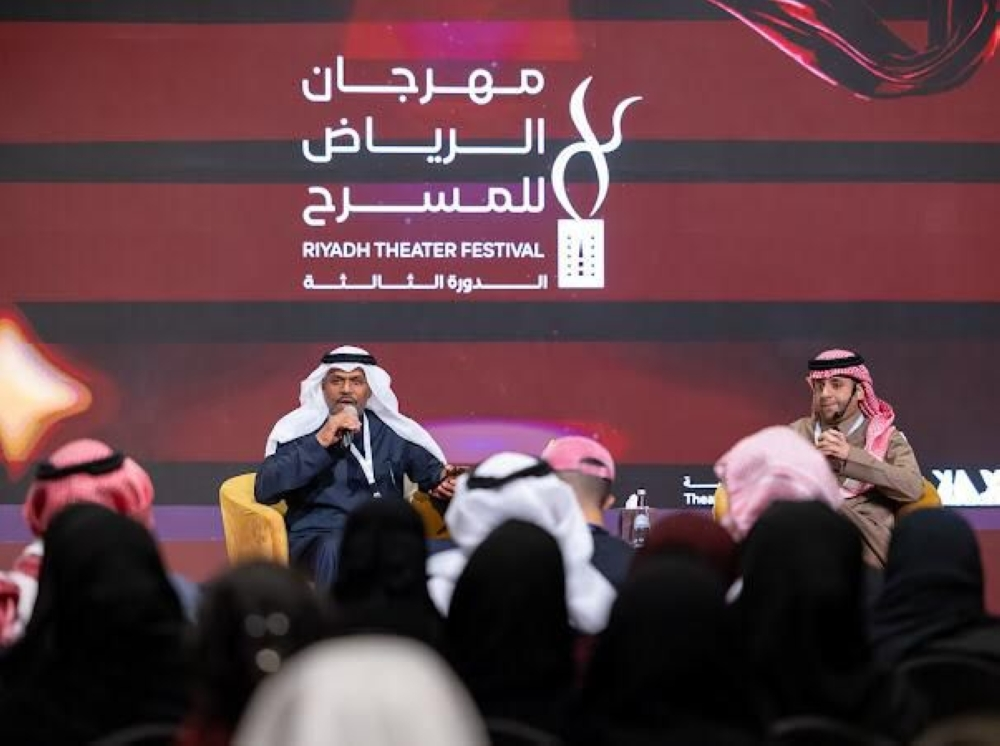
The Riyadh Theatre Festival, continued to solidify its position as a leading cultural platform in Saudi Arabia. The sixth day of the festival witnessed a vibrant artistic atmosphere and a remarkable audience turnout, reflecting the development of Saudi theatre's artistic and dramatic tools. This edition is an extension of the growing cultural movement led by the Theatre and Performing Arts Commission, aiming to strengthen the arts infrastructure and empower national talent, in line with the objectives of the National Cultural Strategy stemming from the Kingdom's Vision 2030.
Specialized workshops for skills development
The festival began with an intensive training program, featuring a specialized workshop titled "The Art of Theatrical Improvisation" presented by trainer Khaled Omar. The workshop focused on establishing the concepts of improvisation as an essential tool for the professional actor, moving beyond the traditional notion of deviating from the script to understanding it as a mental and physical technique that enhances the actor's quick thinking and ability to adapt to sudden changes on stage. This, in turn, contributes to improving the quality of the performance and ensuring the smooth continuation of the show.
"Peace Barracks": The Dilemma of War and Security
As part of the competitive performances, the DB House troupe presented the play "Peace Barracks," written and directed by Abdul-Ilah Al-Saykhan. The work offered a profound philosophical exploration of the concept of place, where the home transforms from a haven of tranquility into a cold military barracks, raising existential questions about the impact of conflict on distorting human nature. Theater critic Ahmed Al-Maliki, in his review of the performance, praised the director's sophisticated visual language and dense symbolism, noting that the work successfully transported the audience from a state of passive observation to one of contemplation and reflection on the duality of war and peace.
"Al-Saram": Documenting the Economic Transformation Phase
On another front, the play "Al-Saram" by the "Al-Laqta Al-Qariba" troupe transported the audience back to a pivotal era in the Kingdom's history, specifically in the Al-Ahsa region. Written by Abdulaziz Al-Smaeel and directed by Sultan Al-Nuh, the work highlighted the major social and economic transformations that accompanied the discovery of oil, and how this impacted traditional agricultural life and the date harvest season (Al-Saram). Critic Yahya Al-Alkami emphasized that the play was not merely a historical narrative, but an artistic document that captured feelings of nostalgia, alienation, and the changing social identity brought about by the rise of the oil industry.
The importance of the festival and its cultural impact
The Riyadh Theatre Festival derives its significance from being a true incubator of creativity, its role extending beyond mere performance to fostering a constructive critical environment and documenting theatrical heritage. This dynamic contributes to strengthening the Kingdom's soft power and showcasing its cultural identity to the world, affirming that Saudi theatre has developed a mature language capable of addressing local issues with a universal human dimension and blending heritage with modernity in innovative artistic forms.