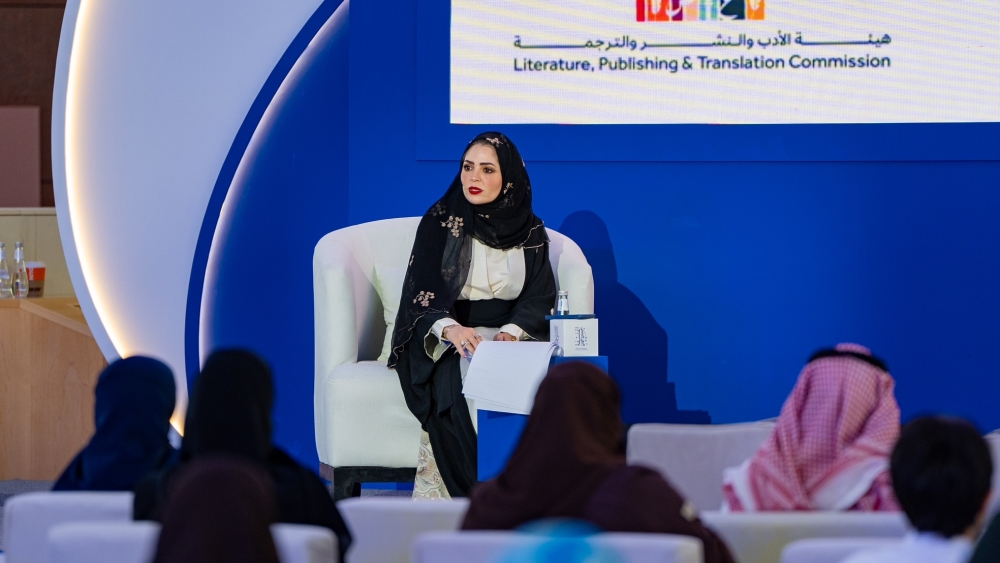
The Saudi capital witnessed an exceptional intellectual movement with the launch of the Riyadh International Philosophy Conference 2025 , organized by the Literature, Publishing and Translation Commission. This event comes within the context of the Kingdom's growing cultural landscape under Vision 2030, where philosophy is no longer merely an intellectual pursuit, but a fundamental tool for fostering critical thinking and building bridges of cultural exchange. Under the theme "Philosophy Between East and West: Concepts, Origins, and Mutual Influences," the conference opened its doors to bold discussions that transcend superficiality and reshape our understanding of the relationship between cultures.
Decentralization: An East-West Dialogue
In the opening session, titled "Philosophical Interactions Between East and West in Modern Times," and moderated by Professor Tarif Al-Sulaiti, Dr. Waleed Al-Zamil, Dr. Yasser Al-Ghamdi, and Dr. Amani Al-Zuaibi presented critical perspectives on the historical relationship between the two civilizations. The speakers did not merely recount history, but emphasized that philosophy is the product of an ongoing "cultural hybridization" through translation and the arts.
The concept of "geophilosophy," as proposed by Gilles Deleuze and Félix Guattari, was highlighted. This concept shifts philosophy from being merely a history of ideas to being a product of environment and geography. Participants pointed out that the ancient Greek environment was not isolated, but rather a commercial and cultural space that allowed philosophy to emerge, thus challenging Western centrism and emphasizing pluralism.
The Global City: Between Economy and Identity
In a discussion that touches on contemporary economic realities, Dr. Waleed Al-Zamil addressed the issue of "global cities." He explained that while the transformation of cities into centers of attraction for elites and multinational corporations has economic benefits, it can create what is known as the "dual city," where the gap widens between those integrated into globalization and those marginalized by it. This perspective gains particular importance in light of the major urban transformations taking place in Gulf cities, especially Riyadh, which necessitates policies that balance global openness with the preservation of social cohesion and local identity.
The session also touched on the model of “participatory Orientalism” through Goethe’s experience in “West-Eastern Divan,” presenting it as a model of intellectual cross-fertilization based on respect, far from the dominance of colonial narratives, thus opening a new horizon for understanding the relationship with the other.
Children's literature: Philosophy versus indoctrination
Moving from major issues to the foundations of reason, the second session, titled "Children's Literature, Philosophy, and Pedagogy," presented by Professor Dalia Tounsi, focused on the importance of picture books as a philosophical tool. The session emphasized that children's literature is not merely a means of moral instruction, but rather a "laboratory for thought" that allows children to confront fundamental existential questions.
Tunisi explored how stories like "Not Now, Bernard" reveal adult anxieties and turmoil more than they reflect the world of children, noting that the challenge lies in adults' fear of open-ended texts that don't offer ready-made answers. She then invoked the model of philosopher Matthew Lipman, founder of "Philosophy for Children" (P4C), who employs "narrative illustration" to integrate argumentation with storytelling.
The discussions concluded by emphasizing the need to avoid shielding children from sensitive topics such as death and fear, as excluding them does not eliminate their questions but rather leaves them searching for answers in unsafe environments. This approach represents a qualitative shift in educational concepts in the region, moving from rote learning to intellectual empowerment, reflecting the profound impact of such conferences in shaping the future of education and culture.