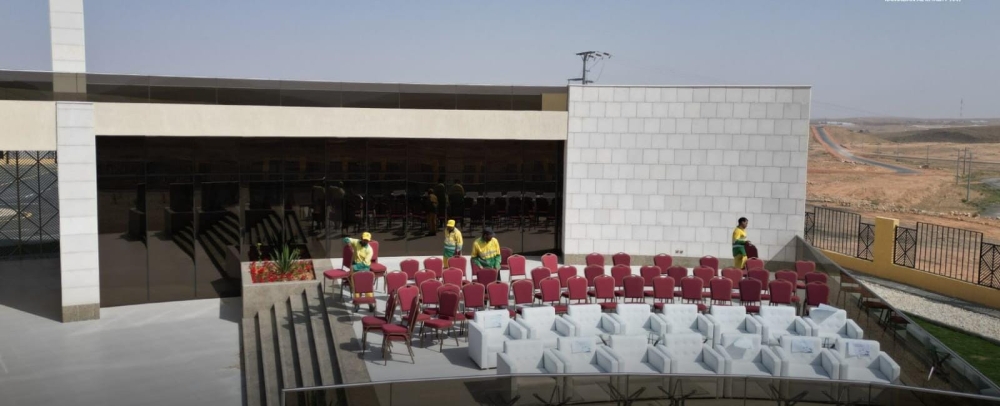
The Riyadh Municipality announced the completion of all necessary preparations and arrangements at the region's observatories, a proactive step aimed at supporting official committees and specialists in their preparations for the Eid crescent sighting . These concerted efforts ensure an ideal environment for astronomical observation at several strategic locations, including the observatories in Tumair, Shaqra, and Al-Hariq, reflecting the commitment of the relevant authorities to conducting this religious ritual with utmost precision.
The historical and religious significance of the Eid crescent sighting process
The sighting of the new moon is one of the most important Islamic rituals, closely linked to the Islamic calendar and the determination of the beginnings of lunar months. Historically, since the dawn of Islam, Muslims have relied on direct visual observation with the naked eye to determine the start of Shawwal and the end of Ramadan. Over time, with the advancement of science, religious scholars have combined their efforts with modern astronomical techniques to enhance the accuracy of observation and documentation.
In Saudi Arabia, this event receives significant attention from the wise leadership and religious institutions, most notably the Supreme Court, which invites all Muslims and specialists to participate in the moon sighting. Observation sites have evolved from individual efforts in high-altitude areas to institutional observatories equipped with state-of-the-art telescopes and optical technologies that facilitate the work of those observing the crescent and document the sighting scientifically and accurately, keeping pace with modern times.
Riyadh Municipality's efforts in developing the infrastructure of observatories
In its efforts to facilitate the work of the monitoring committees, the Riyadh Municipality has prepared and paved the roads leading to the designated observatories, thus enhancing accessibility and traffic flow for official delegations and interested parties. Comprehensive maintenance has also been carried out on existing sites and facilities, and reception areas and parking lots have been prepared to accommodate the increasing number of visitors and specialists during the moon sighting period.
The efforts were not limited to construction alone, but extended to raising public safety standards around the observatories and providing comprehensive logistical support to the monitoring committees. This support effectively contributes to organizing fieldwork and creates a suitable working environment that allows specialists to focus on performing their tasks of observing celestial objects with ease.
Features of the observatories of Tamir, Shaqra and Al-Hariq
The Riyadh region boasts several accredited sites that have proven their high efficiency in astronomical observation. Among the most prominent is the Tumair Observatory, which includes an upgraded observation site and a modern observatory, and is considered one of the most important sites that has undergone significant development in its infrastructure and technical equipment. In addition, the Shaqra Observatory stands out as one of the official and reliable sites for crescent moon sighting. Furthermore, the observation site in Al-Hariq Governorate is distinguished by its strategic geographical elevation and its heavy reliance on clear, direct visibility, making it a major attraction for observers.
Local and regional impact of monitoring results
The significance of announcing the monitoring results extends beyond local boundaries to encompass a wide-ranging regional and international impact. Locally, citizens and residents of the Kingdom eagerly await this announcement to begin the Eid al-Fitr celebrations, which will positively impact economic and commercial activity and revitalize the retail and domestic tourism sectors. Furthermore, the high level of organization of this event showcases the Kingdom's capabilities in professionally managing major events and religious occasions.
At the regional and international levels, many Islamic countries and Muslim minorities around the world follow with great interest the pronouncements of the Supreme Court of Saudi Arabia regarding the sighting of the new moon. This international recognition reinforces the Kingdom's position as a leading Islamic authority and underscores the importance of the ongoing investments made by the state, through entities such as the Riyadh Municipality, in developing and equipping moon-sighting observatories with the best expertise and technologies.
A sustainable future vision
In conclusion, these integrated facilities reflect the Riyadh Region Municipality's commitment to aligning with the Kingdom's Vision 2030. It strives to be a leading municipality that guides the capital towards a prosperous and sustainable future, by improving the quality of life, promoting sustainable urban development, and providing high-quality services that meet the aspirations of the community and serve religious rites in the best possible way.